
In the catalog: 1916 Mercury Dime, Mercury Dimes 1916-1945 and 1916 Dime Patterns
The Mercury Dime Isn't Mercury
Millions of Americans have called it the Mercury dime for more than a century. The coin's designer never meant it to show Mercury at all.
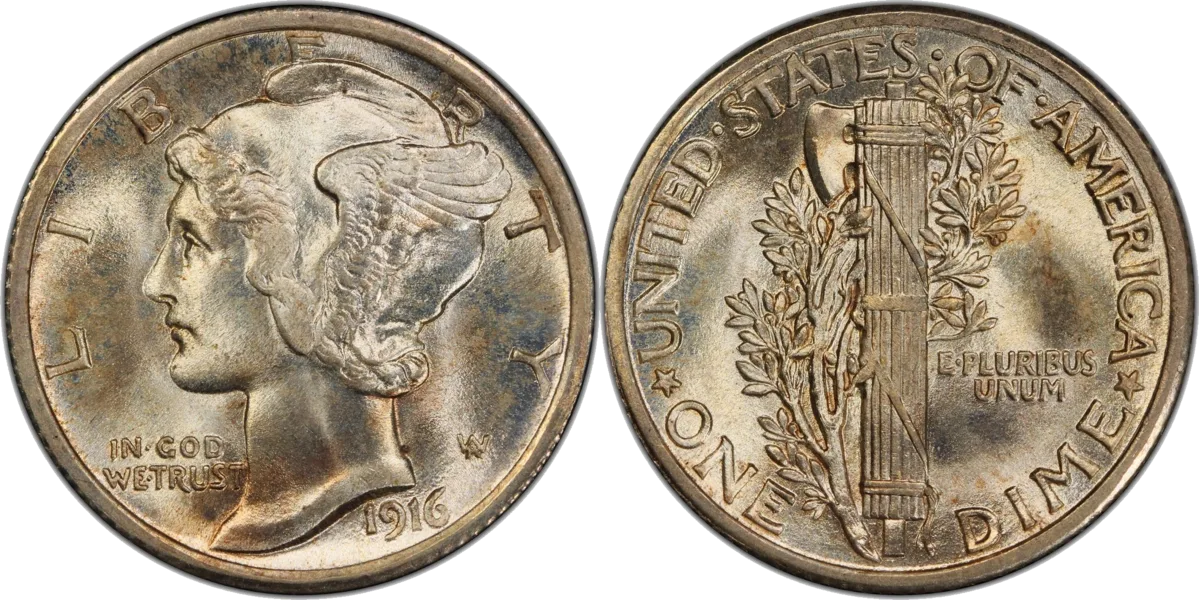
Lady Liberty in a Winged Cap
The dime that went into circulation on October 30, 1916 was designed by the sculptor Adolph A. Weinman. It shows a young Liberty wearing a cap with wings. Weinman said the wings stood for "liberty of thought." To many people, though, a head with wings looked like Mercury, the Roman messenger god, and the nickname stuck. Its proper name is the Winged Liberty Head dime.
Out With the Barber Dime
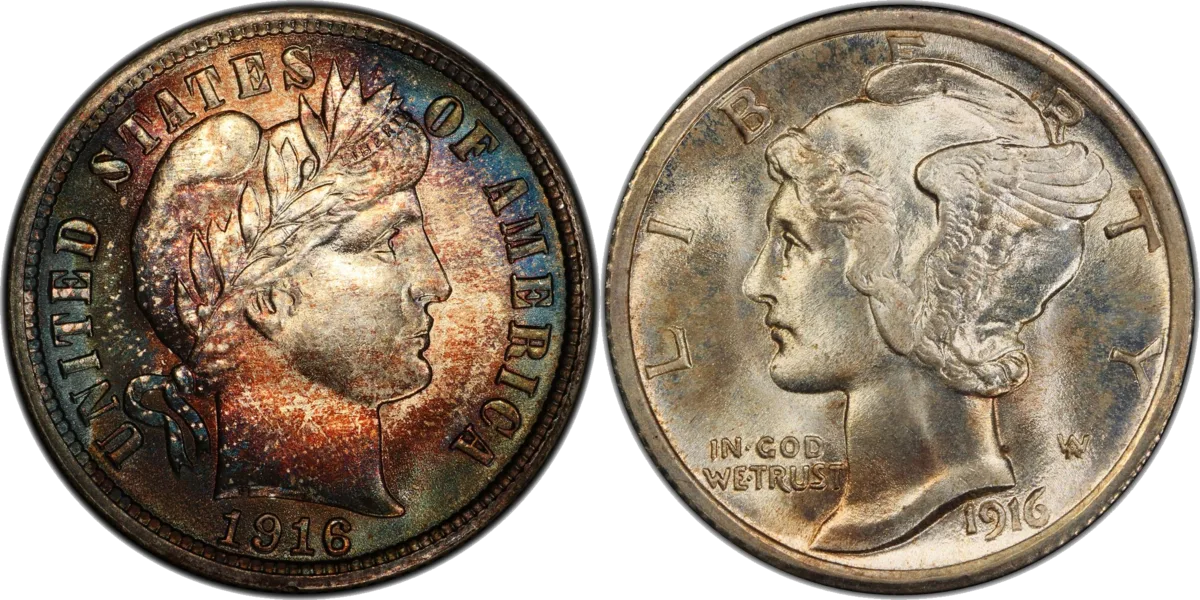
It replaced Charles Barber's design, which had been on the dime since 1892. An 1890 law barred changing a coin design more than once in 25 years, and officials read that as meaning the Barber designs had to go once the 25 years were up. Numismatist David Lange later called that a misreading of the law, but 1916 brought new designs for the dime, the quarter and the half dollar.
What's on the Back
The reverse shows a fasces, a bundle of rods standing for unity and strength, wrapped in an olive branch for peace.
A Bumpy Start
The new dime didn't go smoothly at first. In September 1916, AT&T and a vending machine company reported that the coins wouldn't work in their machines. The cause was a "fin," a thin raised edge where the rim had been struck too high. Production stopped, Weinman revised the design, and striking resumed on October 6.
The One That Got Away
The dimes that jammed the phones were not a few test pieces. According to researcher Roger Burdette, writing for USPatterns.com, a high-relief version of the design was approved around August 20, 1916, and up to 2,000,000 were struck between August 30 and September 6, meant for circulation. Tests by AT&T found them too thick at the rim, from that same "fin" or "wire rim," and they stuck in its pay-phone boxes. Production was halted and nearly all of them were condemned and melted. At least 50 had left the Mint for testing and for the Director's office; 40 were accounted for as returned.
One is known today. It is catalogued as Judd-1984, one of the four 1916 dime patterns that the 8th edition of the Judd reference split out of the old J-1794. Burdette suggests it is better described as a failed production trial than a true pattern. The coin was offered by Heritage in September 2020 as part of the Bob R. Simpson collection. See it in the catalog.
The Key Date: 1916-D
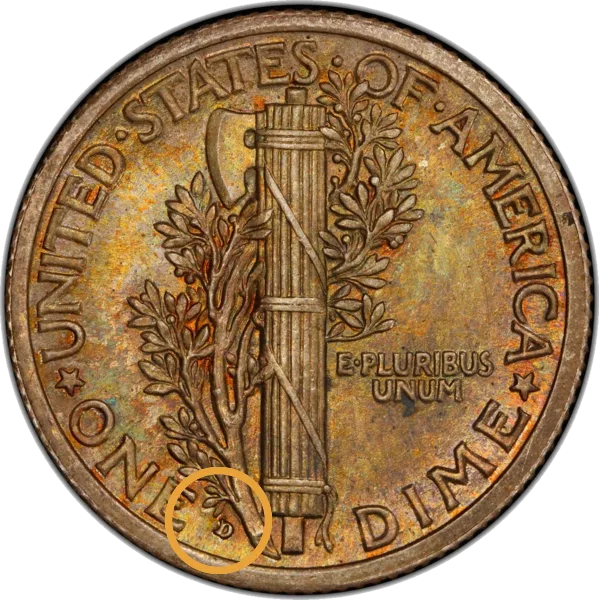
The Denver Mint struck only 264,000 dimes dated 1916, because it spent part of that year striking only quarters. That makes the 1916-D the key to the series. On these dimes the mint mark sits on the back, at the bottom of the bundle of rods.
The End of the Run
The design lasted until 1945. After President Franklin Roosevelt died that April, the Treasury chose the dime for his portrait, partly because of his link to the March of Dimes, and the Roosevelt dime took over in 1946.
See every date in the catalog: Mercury Dimes 1916-1945, including the 1916 year page.
Sources: Wikipedia, "Mercury dime" (citing David W. Lange, Roger W. Burdette's Renaissance of American Coinage 1916-1921, and Cornelius Vermeule); PCGS, "The Weinman Legacy, Part 1"; Coin World, "1916 Winged Liberty Head Mercury dime."
0 Replies
Related Threads
- The $2.50 Coin Is Coming Back: What Collectors Need to Know About HR 56160 replies · 4mo ago
- The End of the Penny: What HR 4459 (MINT Act) Means for Collectors0 replies · 4mo ago
- What Is the CCAC? How America's Coin Designs Get Chosen0 replies · 4mo ago
- The Last Penny: US Mint Ends 232 Years of Cent Production on November 12, 20250 replies · 4mo ago