
In the catalog: Lincoln Wheat Cents 1909-1958, 1943 Lincoln Wheat Cent and 1944 Lincoln Wheat Cent
The 1943 Penny: America's Most Famous Mistake (and the One That Happened Backwards)
You've probably heard that you should check your 1943 pennies. Here's the real reason — and it's stranger than the rumor.
Why 1943 Was Different
Copper was a war metal in 1943 — needed for shell casings and wire — so for one year the U.S. Mint struck the Lincoln cent in zinc-coated steel. More than a billion were made. They're the silver-colored pennies you still find in old jars, and a magnet sticks to them.
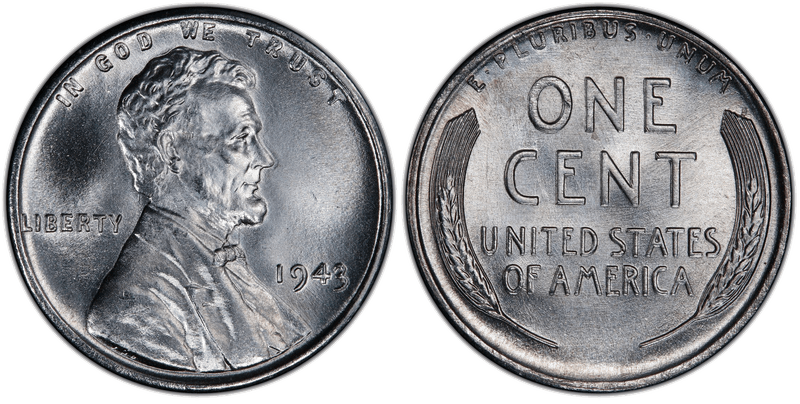
The Mistake
As the Mint switched over, a few leftover bronze blanks from 1942 stayed in the presses and were struck with a 1943 date. These copper 1943 cents weren't supposed to exist — and for years the Mint insisted they didn't, even telling people who found one that it was fake.
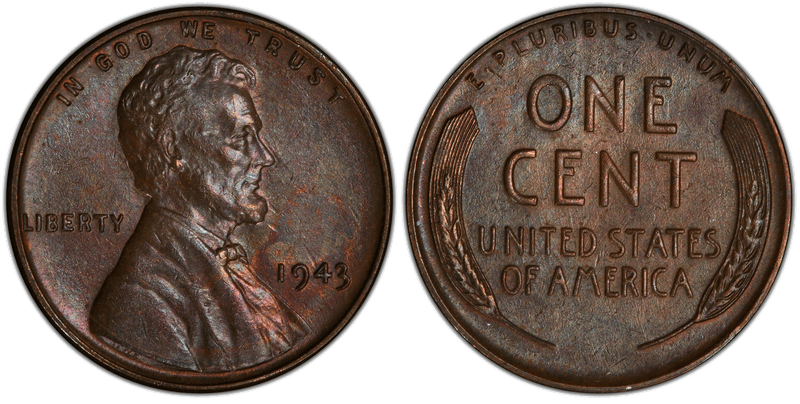
All Three Mints Did It — But Not Evenly
Copper 1943 cents are known from Philadelphia (roughly 15-20), San Francisco (about 5-6), and Denver — where exactly one is known: the unique 1943-D bronze cent.
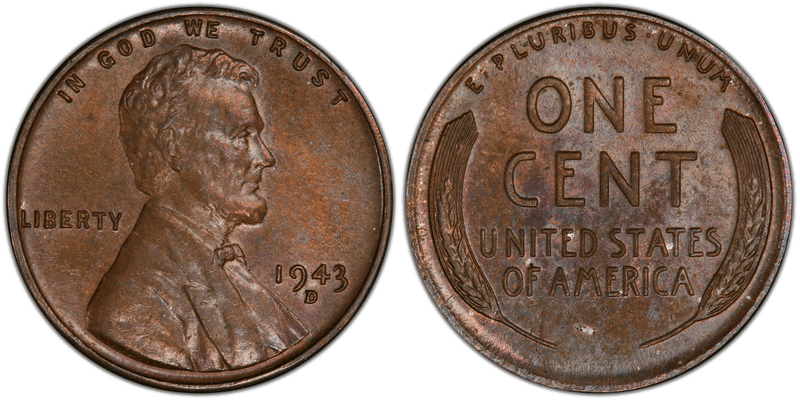
A Teenager, a Myth, and a Lunch-Money Penny
A rumor spread that Henry Ford would give a new car to anyone with a 1943 copper cent. It was never true — but it sent a generation digging through their change. In 1947, 16-year-old Don Lutes Jr. found a genuine one in his school-cafeteria lunch money. The Treasury told him no copper cents had been made in 1943. He kept it for more than 70 years; after he died, it was sold at auction in 2019, with the proceeds going to his hometown library.
The Mistake That Ran Backwards
In 1944 the Mint went back to copper — reportedly using salvaged brass from spent shell casings, so the metal that went to the war came back from it. But a few leftover steel blanks from 1943 were struck with a 1944 date, creating the mirror-image error: the 1944 steel cent.
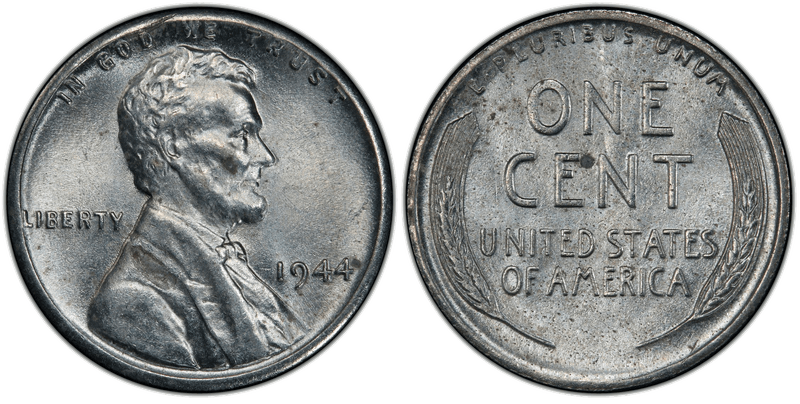
One More "What If"
Before settling on steel, the Mint tested other materials for the 1942-43 cent — including other metals, plastics, and even glass. The penny you know was almost made of something else entirely.
How to Check Yours
A magnet is the quick test: a 1943 cent that sticks is ordinary steel; a copper-colored 1943 that does not stick is worth authenticating. It's also one of the most counterfeited coins — fakes are copper-plated steel cents, or cents dated 1945, 1948 or 1949 with the last digit altered — so have any copper-colored 1943 confirmed before you celebrate. Then catalog it.
Census counts vary by source; the figures above are given as ranges.
0 Replies
Related Threads
- The $2.50 Coin Is Coming Back: What Collectors Need to Know About HR 56160 replies · 4mo ago
- The End of the Penny: What HR 4459 (MINT Act) Means for Collectors0 replies · 4mo ago
- What Is the CCAC? How America's Coin Designs Get Chosen0 replies · 4mo ago
- The Last Penny: US Mint Ends 232 Years of Cent Production on November 12, 20250 replies · 4mo ago