
By Brandon Norris
Patterns: The Coins That Were Never Adopted
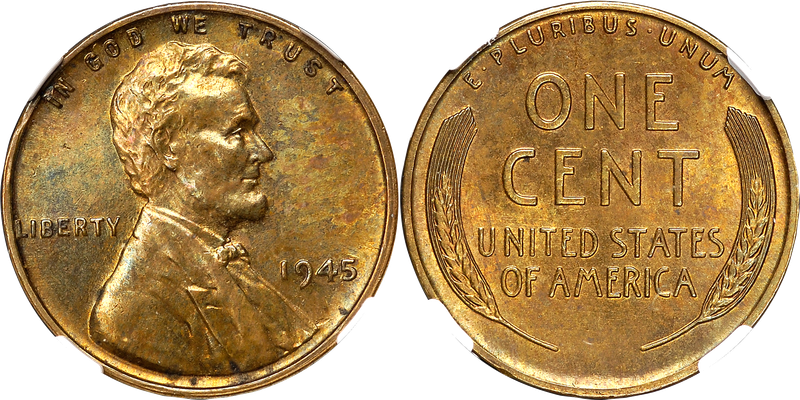
A Coin That Was Made and Then Rejected
Almost every coin you can hold was approved. A pattern is one that was not.
The Mint designed it, engraved the dies, struck it — and then chose something else. Patterns are the alternative designs, the metal experiments and the proposals that lost. Most never circulated, and a great many exist in single figures.
Our catalogue holds 2,864 of them.
What P-2079 Actually Is
This 1945 cent is Pollock-2079, and the honest description of it is narrower than you might expect: struck from regular issue dies, in normal bronze alloy, with a plain edge — but on a thick planchet.
Normal dies. Normal metal. Abnormal thickness.
It is not an alloy experiment and it is not a rejected design. It is a cent struck on stock that was not the right gauge, catalogued as a pattern because that is where such pieces are recorded.
And it was not a one-off: 1944 cents are also known on thick stock, catalogued as Pollock-2078. Two consecutive years of cents struck on the wrong thickness, both preserved in the pattern literature.
How Patterns Are Catalogued
Patterns are not organised by date and mint the way circulating coins are. They are organised by reference number, and there are two competing systems that both remain in use.
Judd numbers (J-) come from the standard reference on United States pattern coinage. Pollock numbers (P-) come from a later catalogue that renumbered the series. Most pieces carry both, which is why a pattern listing often reads something like "Judd-1, Pollock-1" — one coin, two identifiers, depending on which book the describer reached for.
Rarity is recorded on the R-scale rather than by mintage, because mintages for patterns are frequently unknown and often unknowable. A piece rated R-8 is extremely rare; many patterns exist in single figures, and some are unique.
That combination — no mint marks to chase, no date runs to complete, numbers from two systems, and rarity measured on a scale rather than in thousands — is why patterns stay a specialist corner. There is no obvious way in.
Why Patterns Are Worth Knowing About
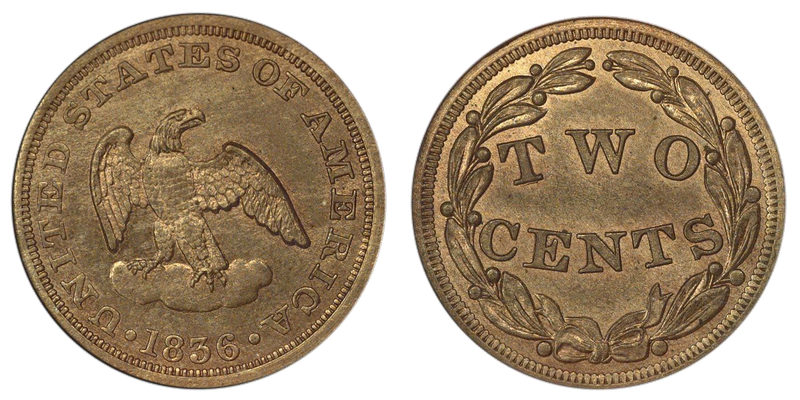
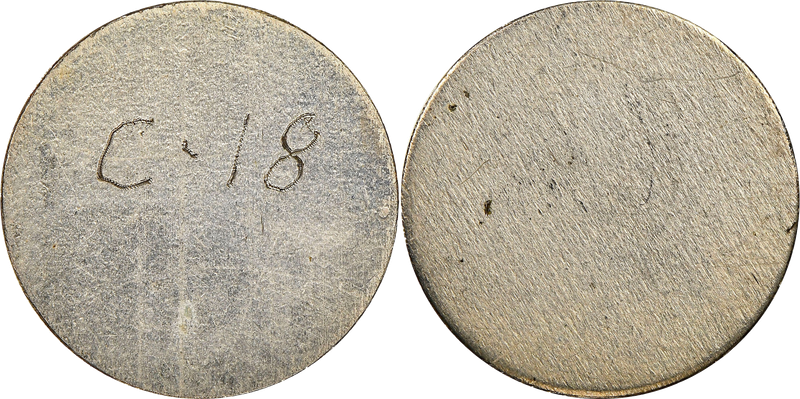
The 1836 two-cent pattern is a denomination that would not be adopted for another twenty-eight years. The 1964 blank is a pattern in the most literal sense — a planchet tested for a composition decision, carrying no design whatsoever.
Between those two sits most of what patterns are: the record of decisions the Mint considered and did not take. They are the only part of American numismatics that documents what almost happened.
Where to Start
If the series interests you, the approachable entry is not the famous rarities — it is the trial pieces and off-metal strikes of designs you already recognise. A familiar coin struck in the wrong metal, or on the wrong stock, costs a fraction of a unique proposal design and tells the same story about how the Mint tested things.
P-2079 is exactly that kind of piece. It is a Lincoln cent. You know what it looks like. The only thing unusual about it is the thickness of the metal it was struck on — and that small difference was enough for it to be recorded, catalogued and preserved for eighty years.
The 2,864 patterns in our catalogue run from the 1790s to the present. Most people never encounter one.