
In the catalog: 1946 Lincoln Wheat Cent, 1948 Lincoln Wheat Cent and Lincoln Wheat Cents 1909-1958
Laminations: Still Hanging On, or Already Gone
A penny that's peeling usually sounds like damage. Sometimes the Mint did it.
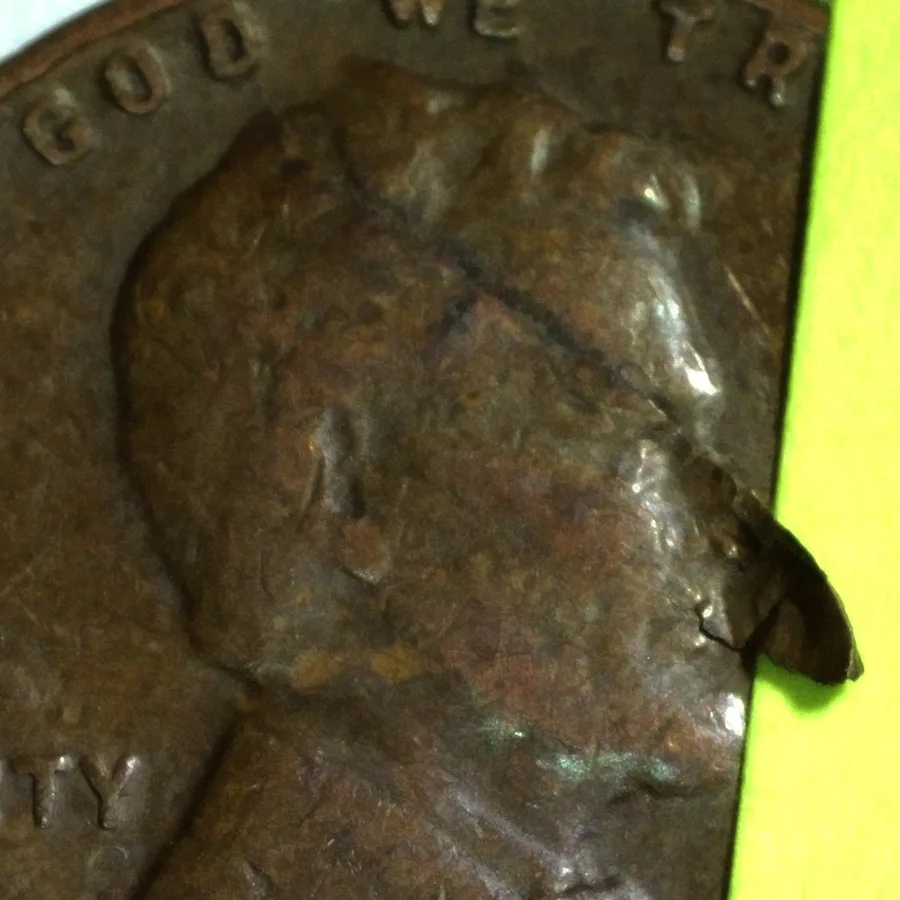
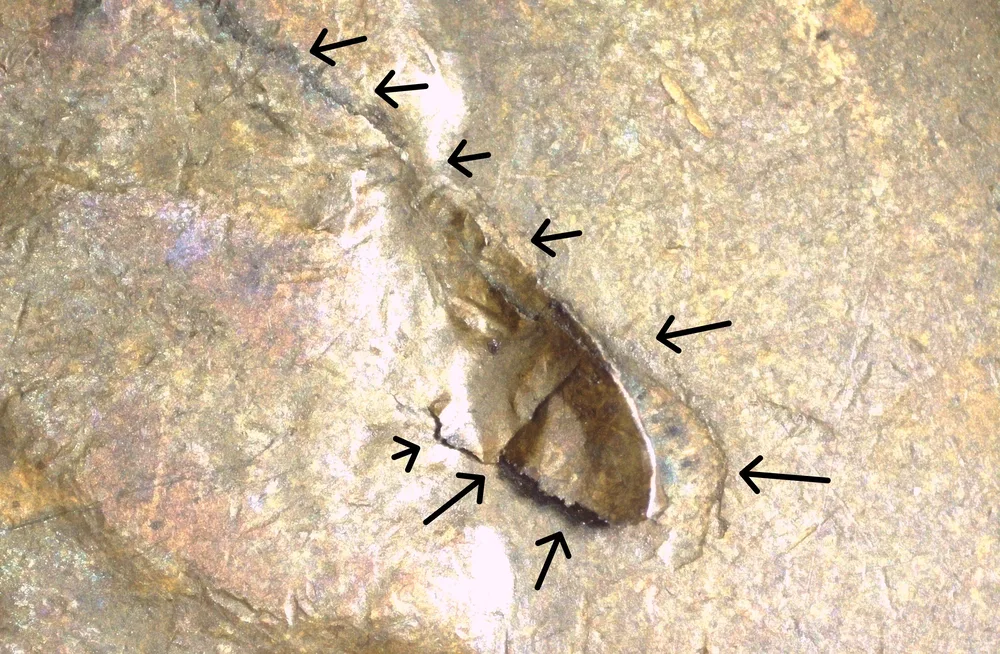
What a Lamination Is
A lamination is a weak layer in the coin's metal. Impurities in the alloy get flattened into thin planes when the metal strip is rolled, and a layer can split, flake or peel along one of those planes before, during or after the strike. It is a mint-made planchet flaw, not something that happened in a pocket.
Still Hanging On
On this 1946 cent the layer split along a line from Lincoln's hairline down across his forehead, and the end of the strip lifted into a flap at his nose. It's still attached to the coin and stands up off the surface. Collectors call that a retained lamination.
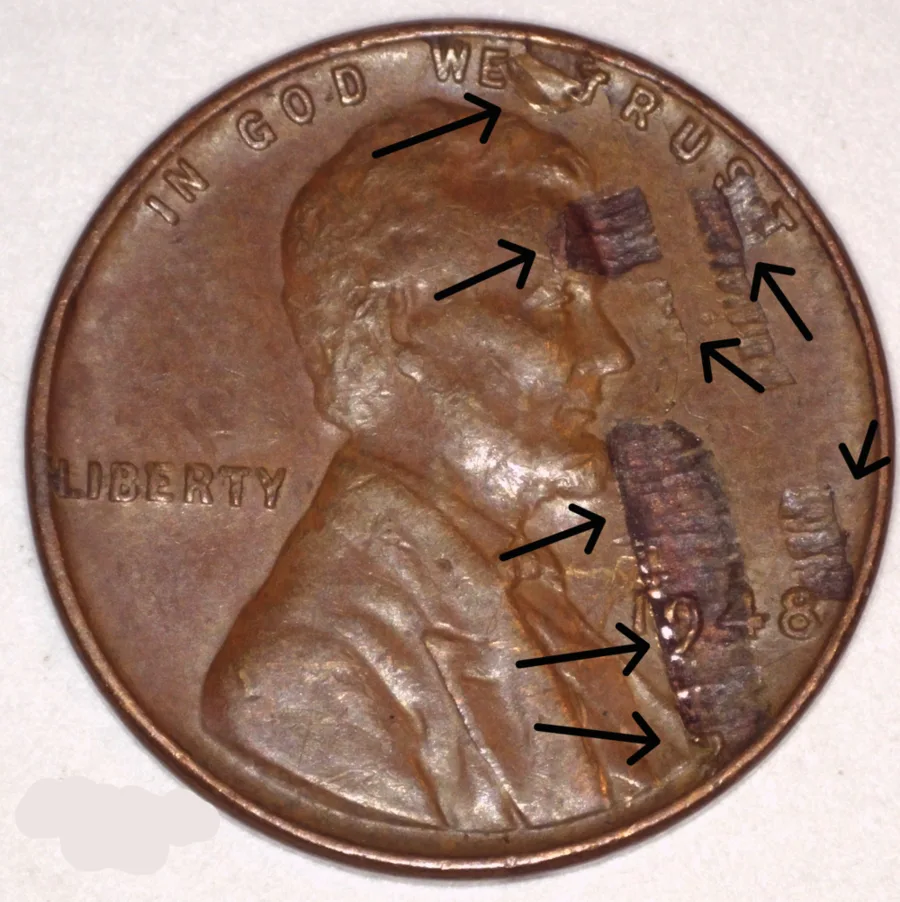
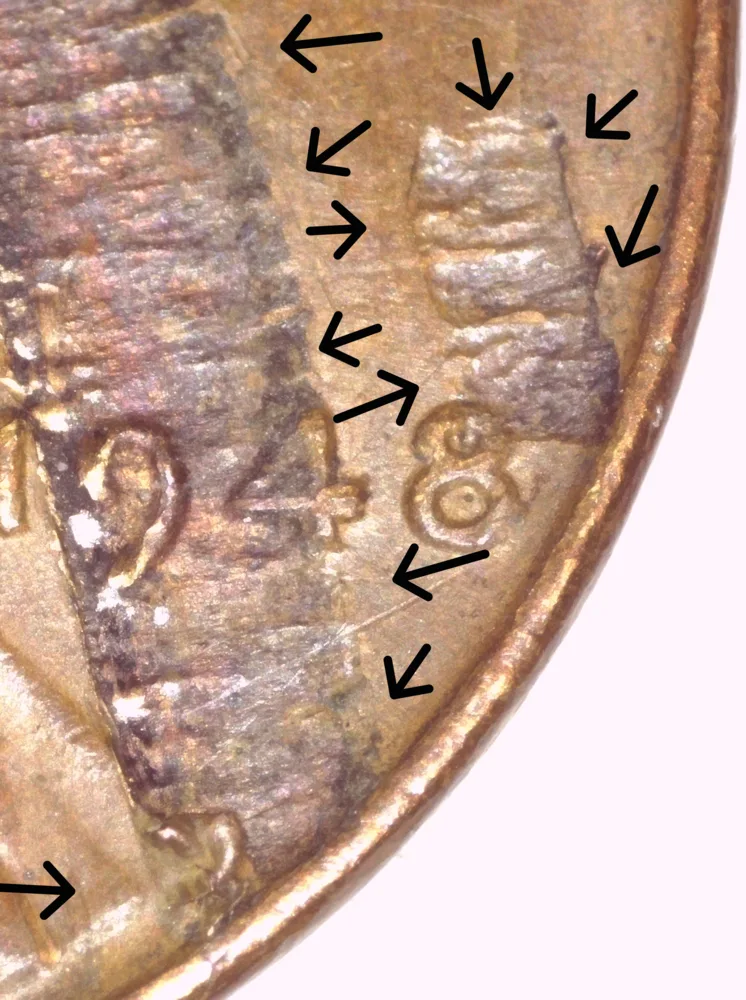
Already Gone
This 1948 cent went further. Large patches of the top layer have broken away in front of Lincoln's face, over the date and under TRUST. What's left in those patches is rough, streaky metal that was never meant to be a surface. Same flaw; the pieces just broke away.
Not a Woodie
A woodie (an improper alloy mix) is a different error: streaks through the metal from poorly mixed alloy. A lamination is a layer coming apart. The two do turn up together, though. Mike Diamond wrote in Coin World that on ordinary improper alloy mix coins, lamination errors are "both common and expected." We covered woodies in Week 18.
What to Check
On old wheat cents, look for a raised flap with a clean edge, or a rough, recessed patch where the surface should be. Both coins here came out of our own wheat cent hunting and have since been sold; they're catalogued as 1946 Lincoln Wheat Cent - LAM 001 and 1948 Lincoln Wheat Cent - LAM 001. More on the error type: Lamination.
Sources: NumisDex Learn, "Lamination" (citing Error-Ref); Error-Ref planchet errors (retained lamination, lamination loss); Mike Diamond, Coin World, "Different causes of stripes on coins are not fully understood" (Sept. 30, 2014).