
What Does "Details" Mean on a Graded Coin? Understanding Problem Coins
"Details" Grades: What They Mean and Why They Matter
If you've seen a graded coin labeled "AU Details — Cleaned" or "XF Details — Scratched," you've encountered a details grade. Understanding what this means — and how it affects a coin's value — is essential for anyone buying or selling certified coins.
What Is a Details Grade?
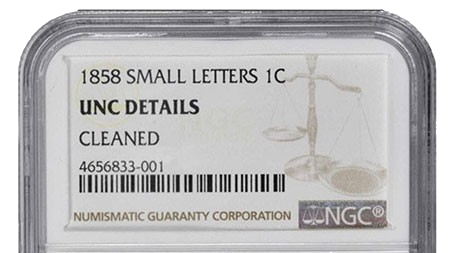
When PCGS or NGC grades a coin, they evaluate it on a 1-70 scale (the Sheldon scale). However, if a coin has been damaged, cleaned, or altered in a way that prevents it from receiving a straight numeric grade, it instead receives a "Details" designation.
A Details grade tells you two things:
- The grade the coin would have received if not for the problem — "AU Details" means the coin's wear level is About Uncirculated
- The specific problem that prevented a straight grade — Cleaned, Scratched, Environmental Damage, etc.
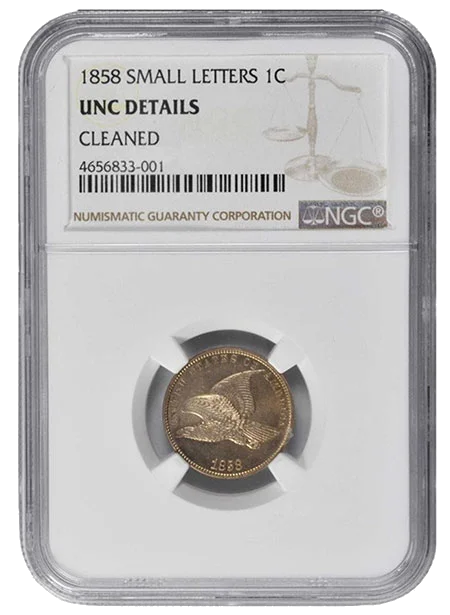
Common Details Designations
- Cleaned — The most common. Evidence of cleaning is visible (hairlines, unnatural brightness, stripped patina). This includes past cleaning that has since retoned.
- Scratched — One or more significant scratches that impair the coin's appearance beyond what's acceptable at any numeric grade.
- Environmental Damage — Corrosion, pitting, or surface damage from exposure to moisture, chemicals, or adverse storage conditions.
- Damaged — Physical damage such as deep gouges, bent coin, hole, or similar alteration.
- Tooled — Evidence that the coin's surface has been deliberately altered with tools — smoothing, re-engraving, or adding detail.
- Repaired — A previous problem (hole, damage) has been filled or repaired, often with solder or putty.
- Whizzed — The surface has been abraded with a wire brush to simulate mint luster.
- Mount Removed — The coin was previously mounted in jewelry, and the mount has been removed, leaving evidence of attachment.
- Rim Filing — The rim has been filed or altered.
How Details Grades Affect Value
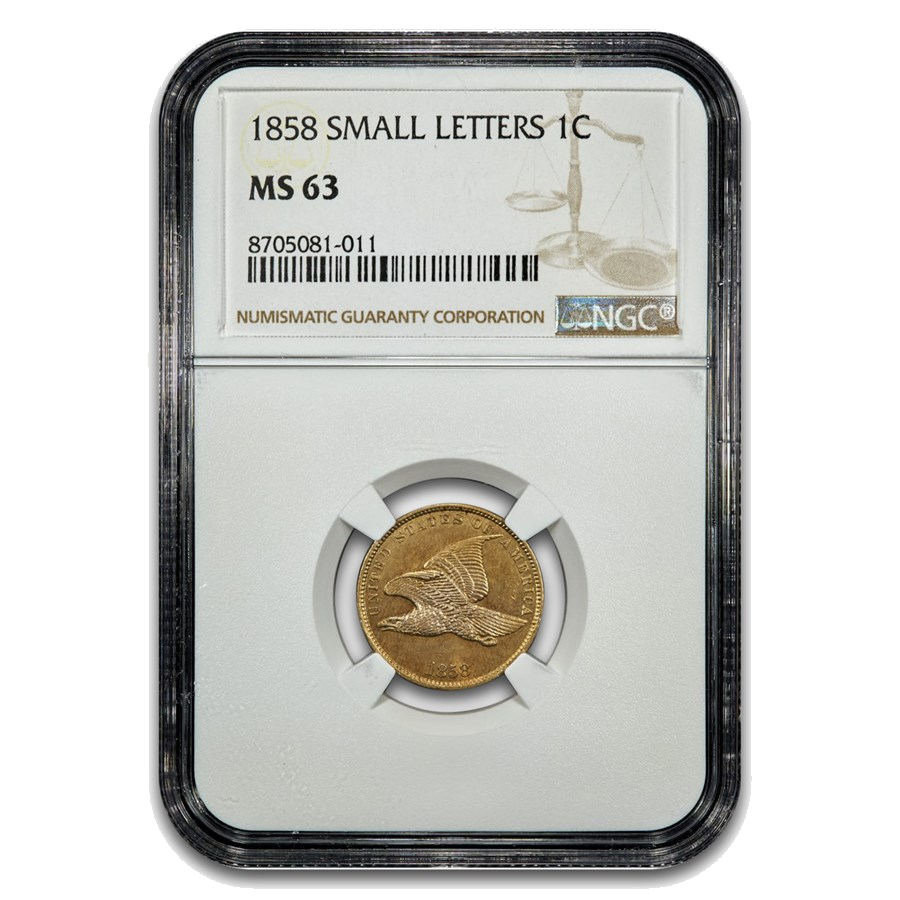
Details-graded coins typically sell for 50-80% less than straight-graded coins of the same apparent grade, depending on the severity of the problem and the coin's rarity. For common coins, the discount is steep — a cleaned common-date Morgan dollar sells for a fraction of a problem-free example. For rare coins where problem-free examples are extremely scarce, the discount may be smaller because the Details-graded coin may be the only affordable option.
Should You Buy Details-Graded Coins?
Details-graded coins can be a smart purchase in specific situations:
- Key dates on a budget — If a straight-graded 1909-S VDB is out of reach, a "Details" example lets you own the coin at a lower price point
- Type collecting — Filling a type set with one example of each design, where condition is secondary to representation
- Minor problems — A lightly cleaned coin that has retoned naturally may be nearly indistinguishable from a problem-free example in hand
Avoid Details-graded coins when:
- You're building a registry set or competing for grade-based rankings
- The problem is severe (heavy damage, tooling, repair)
- Problem-free examples are readily available at a reasonable price
0 Replies
Related Threads
- Cherry-Picking Error Coins at Coin Shows: What to Bring and Where to Look0 replies · 3mo ago
- Working Dog Commemorative Coins: CCAC Recommends Designs for Three New Denominations0 replies · 3mo ago
- Billie Jean King Congressional Gold Medal: Tennis Legend Reviews Her Own Coin Designs at CCAC0 replies · 3mo ago
- How to Safely Store and Handle Coins to Protect Their Value0 replies · 3mo ago
- What Tools Do You Actually Need for Coin Collecting? (and at What Magnification)0 replies · 3mo ago