
0
How to Safely Store and Handle Coins to Protect Their Value
Posted by NumisdexDealer· 0 replies
Storage and Handling: Protecting Your Investment
Improper storage and handling are among the most common ways collectors accidentally damage their coins. The oils in your skin, reactive storage materials, and environmental factors can all permanently reduce a coin's grade and value. A few simple habits prevent the most common problems.
How to Handle Coins
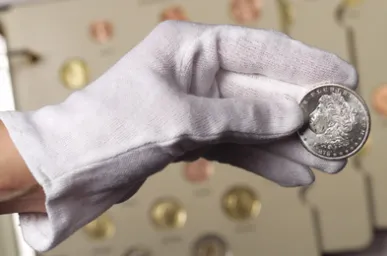
Always hold coins by the edges. This is the most fundamental rule. The oils and acids in your fingerprints can etch permanent marks into a coin's surface — especially on copper coins, which are highly reactive. On an uncirculated coin, a fingerprint can reduce the grade by several points and appear as a permanent dark spot after the oils oxidize.
- When examining a coin, pinch it gently between your thumb and forefinger at the rim
- Hold the coin over a soft surface (a cloth or felt pad) in case you drop it
- For valuable coins, use clean cotton gloves or nitrile finger cots
- Never touch the obverse or reverse surfaces with bare skin
Storage Options
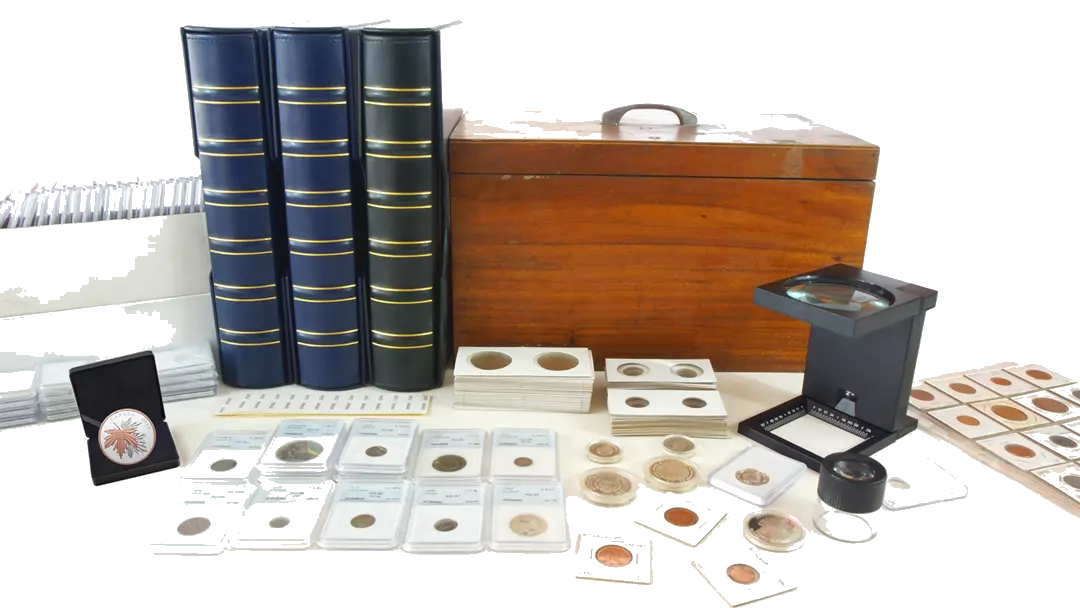
Individual Coin Holders
- Mylar flips (2x2) — Clear, inert plastic holders that fold over the coin. Safe for long-term storage. Make sure they're Mylar (PET), not PVC. PVC flips are soft and flexible; Mylar flips are stiffer and crinkle when bent.
- Cardboard 2x2s (staple holders) — Cardboard holders with a Mylar window. Widely used, inexpensive, and safe. The staples can scratch coins if not handled carefully.
- Air-Tite capsules — Hard plastic capsules sized to fit specific coin diameters. Excellent protection but more expensive. Ideal for valuable individual coins.
- PCGS/NGC holders — Professional grading holders provide the best protection and have the added benefit of an authenticated grade.
Collection Storage
- Albums (Dansco, Whitman) — Organized by date and mint mark. Good for building sets. Some album materials can cause toning over time — this is generally considered acceptable or even desirable.
- Boxes and trays — For larger collections. Use compartmented boxes with felt or flocked surfaces to prevent contact between coins.
- Bank safe deposit boxes — Excellent security, but some bank vaults have humidity issues. Use silica gel packets if humidity is a concern.
What to Avoid
- PVC flips and holders — PVC (polyvinyl chloride) plasticizers break down over time and deposit a greenish, oily film on coins. The damage is initially reversible with acetone conservation but becomes permanent if left untreated. If a flip feels soft and pliable, it's probably PVC.
- Rubber bands — Sulfur in rubber reacts with silver and copper, causing toning and surface damage.
- Paper envelopes (for long-term storage of silver) — Paper contains sulfur that causes silver toning. Some collectors value this toning; others prefer to avoid it by using inert materials.
- Loose storage in containers — Coins rubbing against each other create contact marks and scratches.
- High humidity — Accelerates corrosion and toning, especially on copper coins. Store in a controlled environment or use silica gel desiccant.
Environmental Considerations
- Temperature — Stable is more important than cool. Avoid attics, garages, and basements where temperature fluctuates dramatically.
- Humidity — Keep below 50% relative humidity if possible. Silica gel packets help in enclosed spaces.
- Air quality — Avoid storing coins near household chemicals, paints, or cleaning supplies. Volatile organic compounds can accelerate tarnish.
0 Replies
Related Threads
- Cherry-Picking Error Coins at Coin Shows: What to Bring and Where to Look0 replies · 3mo ago
- Working Dog Commemorative Coins: CCAC Recommends Designs for Three New Denominations0 replies · 3mo ago
- Billie Jean King Congressional Gold Medal: Tennis Legend Reviews Her Own Coin Designs at CCAC0 replies · 3mo ago
- What Tools Do You Actually Need for Coin Collecting? (and at What Magnification)0 replies · 3mo ago
- What Does "Details" Mean on a Graded Coin? Understanding Problem Coins0 replies · 3mo ago