
Colorized, Toned, and Rainbow Coins: Error, Treatment, or Natural?
Why Is My Coin Colorful?
Coins with unusual colors — rainbow hues, deep blues, vivid reds, or painted designs — generate a lot of questions. Is it an error? Is it valuable? Is it natural or artificial? The answer depends on what kind of color you're seeing and how it got there.
There are three fundamentally different phenomena at work: natural toning (a chemical process valued by collectors), artificial toning (deliberately accelerated or faked coloring), and colorization (paint or coating applied to the surface). Understanding the differences is essential for any collector.
Section 1: What Is Toning and How Does It Happen?
Toning is a natural chemical reaction between a coin's metal and its environment. The process and appearance differ significantly depending on the coin's composition.
Silver Coins (Morgans, Peace dollars, pre-1965 dimes/quarters/halves)
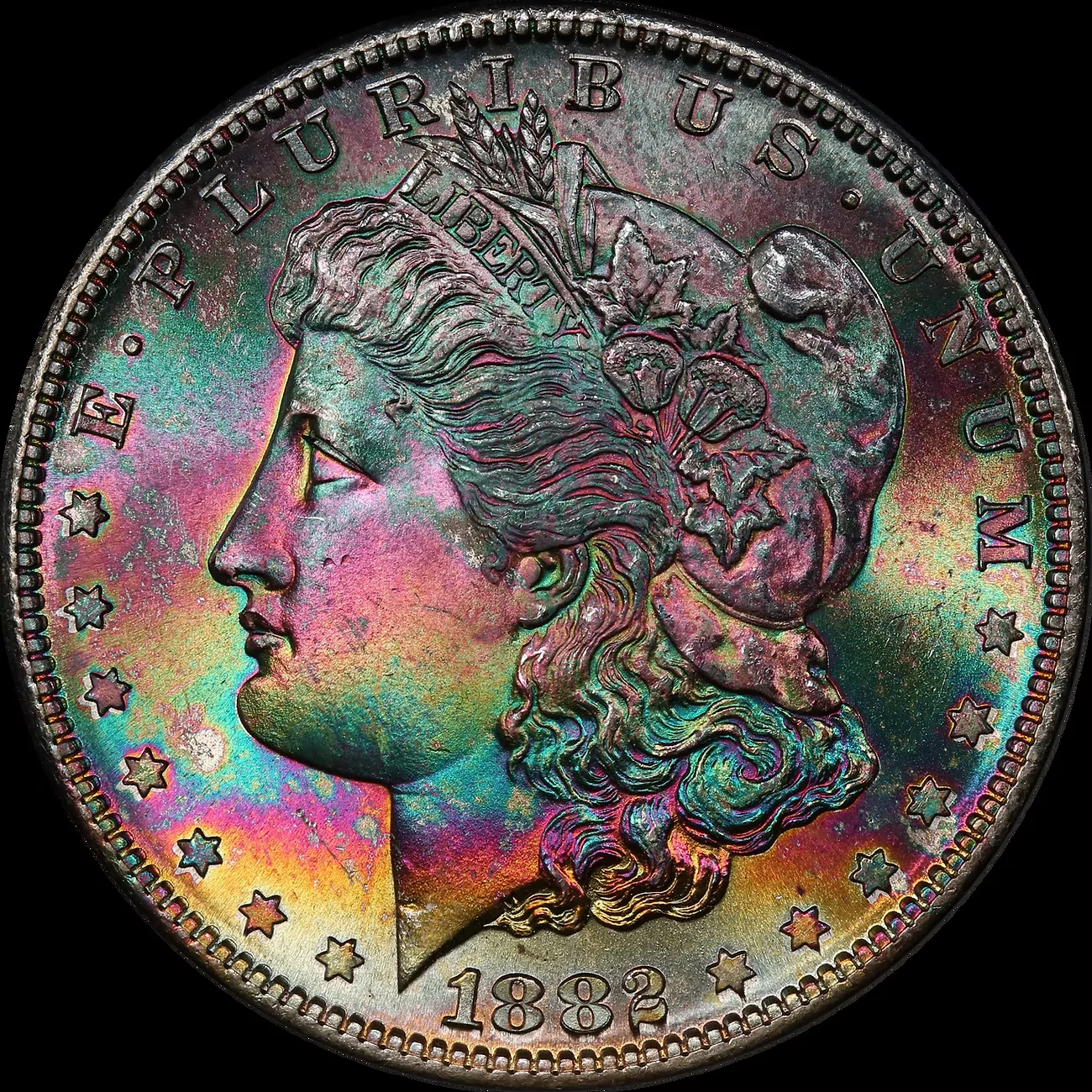
Silver toning occurs when silver reacts with sulfur compounds in the environment to form silver sulfide on the coin's surface. As this layer thickens over time, it produces colors through thin-film interference — the same physics that creates rainbow colors in soap bubbles and oil slicks. Light waves reflecting off the top and bottom of the thin sulfide layer interfere with each other, and the color you see depends on the layer's thickness.
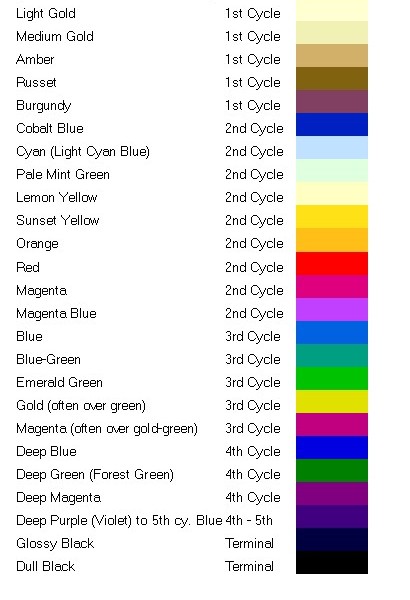
The classic silver toning color progression (from thinnest to thickest film) is:
Gold → Peach → Amber → Russet → Blue → Violet → Yellow-green → Magenta → Royal Blue → Deep Green → Burgundy → Teal → Plum → Charcoal
Common sources of sulfur exposure that create natural toning include paper coin envelopes (sulfur in the paper), cloth mint bags (textile dyes and treatments), and cardboard album pages. "Target toning" — concentric rings of color radiating from the rim — is characteristic of coins stored in paper envelopes, where sulfur exposure is greatest at the edges.
Copper Coins (cents, half cents, large cents)
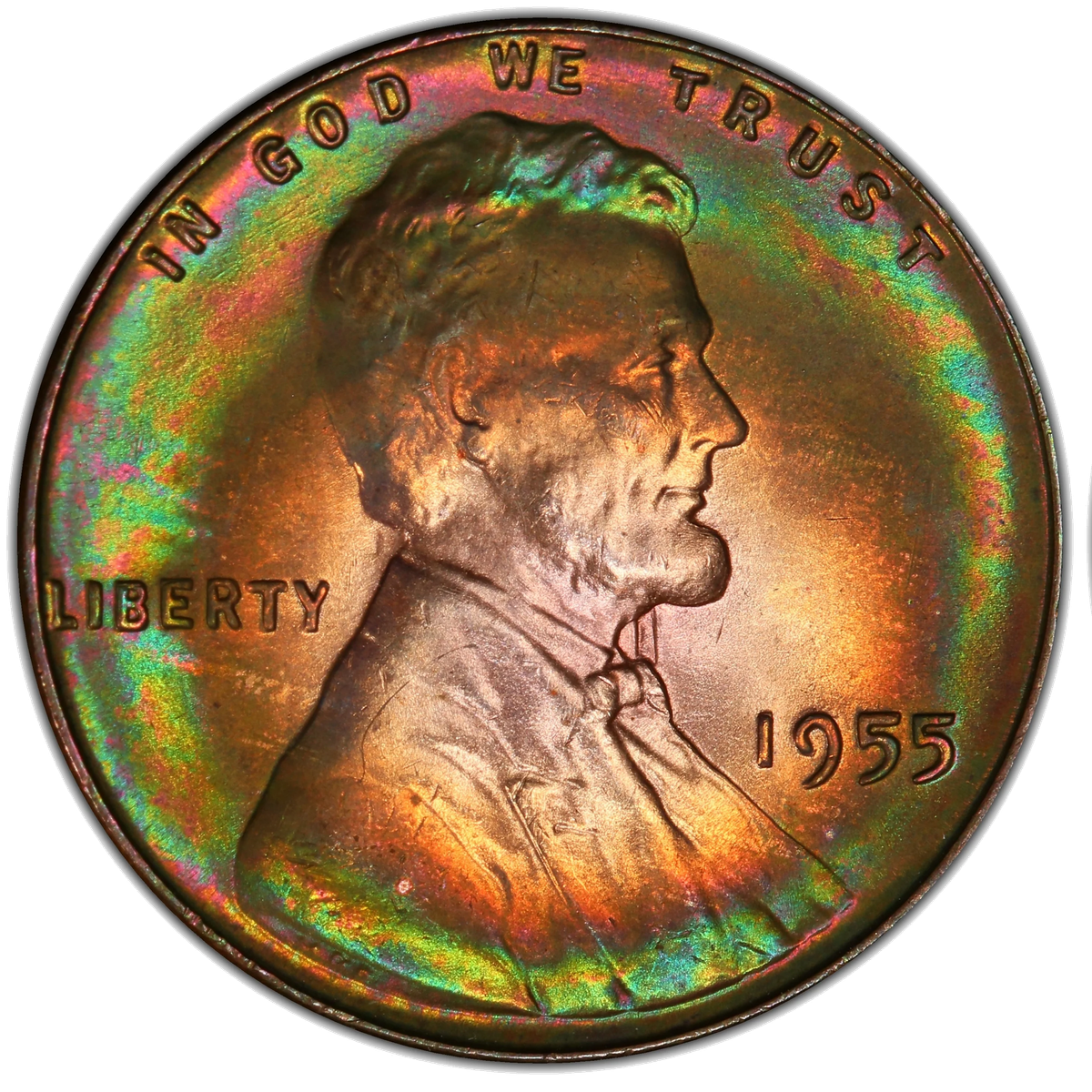
Copper toning works through an entirely different mechanism. Copper reacts with oxygen and carbon dioxide to form copper oxide and copper carbonate compounds. This is patination, not thin-film interference — so you don't see the rainbow spectrum that silver produces. Instead, copper coins progress through a color range from original red (RD) to red-brown (RB) to brown (BN). Grading services assign these color designations to uncirculated copper coins.
Factors that accelerate copper toning include humidity, handling oils from fingerprints, and environmental pollutants. A copper cent with original red surfaces is more valuable than a brown one at the same grade, which is why proper storage is critical for copper coins.
Copper-Nickel and Clad Coins (modern dimes, quarters, nickels)
Copper-nickel and clad coins tone much more slowly than silver or copper because nickel oxide forms a stable, protective surface layer. When these coins do develop toning, it tends to be more muted — subdued golds, light grays, and subtle haze rather than the vivid rainbow colors seen on silver. Dramatic toning on modern clad coins should be viewed with extra skepticism.
Section 2: Natural Toning vs. Artificial Toning
Natural toning (NT) is valued by many collectors — a beautifully toned Morgan dollar can sell for a significant premium over an untoned example. Artificial toning (AT) is considered damage and reduces a coin's value.
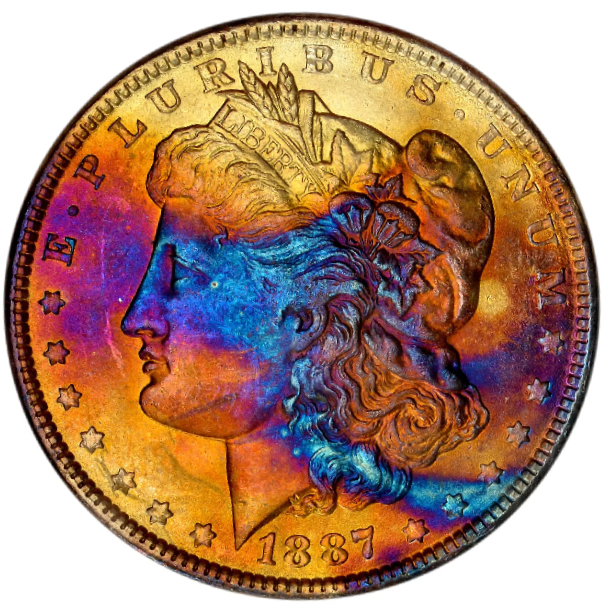
Artificial toning is created by deliberately exposing coins to chemicals (liver of sulfur, heat, hard-boiled eggs) to rapidly produce surface colors. Several diagnostics can help distinguish natural from artificial toning:
1. Color Progression (silver-specific)
Natural silver toning follows the thin-film interference progression — the colors transition smoothly and in the correct order (you won't see blue next to gold without the intermediate colors). Artificial toning often skips steps in the progression or shows colors that don't follow the natural sequence.
2. Pullaway Effect (silver-specific)
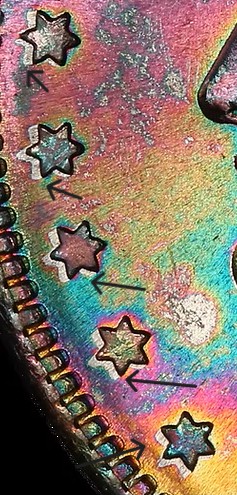
On naturally toned silver coins, the areas immediately around raised design elements (letters, stars, portrait details) often show less toning or a different color — this is the "pullaway" effect. During striking, the metal stretches over the die's design elements, creating a slightly different surface texture that tones differently. Artificially toned coins typically show uniform color across all surfaces, including these pullaway zones.
3. Elevation Chromatics (broadly applicable)
On naturally toned coins, the high points of the design (which are more exposed to the environment) often tone differently than the protected recesses. Artificial toning tends to be more uniform across all elevations of the design because the chemical exposure is rapid and indiscriminate.
4. Certification Research (broadly applicable)
If a coin was previously certified as untoned and now shows heavy toning, that's a red flag. Certification lookup tools from PCGS and NGC can reveal a coin's grading history.
5. Signs of Cleaning or Other Problems (broadly applicable)
Artificial toning is sometimes applied to hide evidence of cleaning (hairline scratches). If you see toning over what appears to be a cleaned surface, the toning was likely added after the cleaning to mask the damage.
Section 3: Colorized Coins
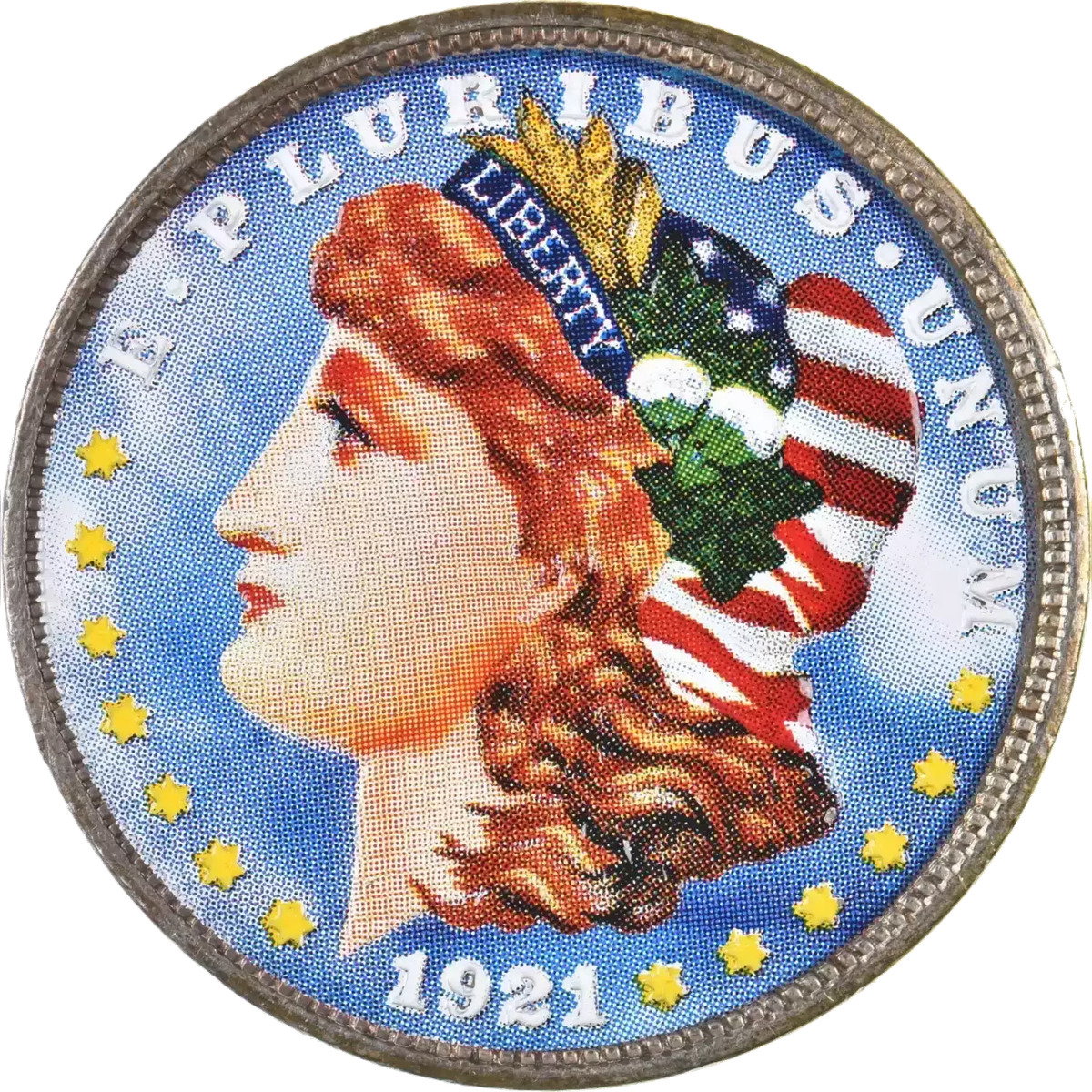
Colorized coins are fundamentally different from toned coins. Colorization involves applying paint, enamel, or other coatings on top of the coin's surface. This is not a chemical reaction with the metal — it's an applied layer.
Colorized coins are typically:
- Produced by private companies, not the U.S. Mint
- Sold as commemorative or gift items at a markup over face value
- Worth face value to serious numismatists (the colorization is considered damage)
- Not eligible for straight grades at PCGS or NGC
The most common colorized coins are State Quarters and other modern commemoratives. While they can be fun display pieces, they should not be confused with naturally toned coins or mint errors.
0 Replies
Related Threads
- Cherry-Picking Error Coins at Coin Shows: What to Bring and Where to Look0 replies · 3mo ago
- Working Dog Commemorative Coins: CCAC Recommends Designs for Three New Denominations0 replies · 3mo ago
- Billie Jean King Congressional Gold Medal: Tennis Legend Reviews Her Own Coin Designs at CCAC0 replies · 3mo ago
- How to Safely Store and Handle Coins to Protect Their Value0 replies · 3mo ago
- What Tools Do You Actually Need for Coin Collecting? (and at What Magnification)0 replies · 3mo ago