
Sommer Islands Coins
Base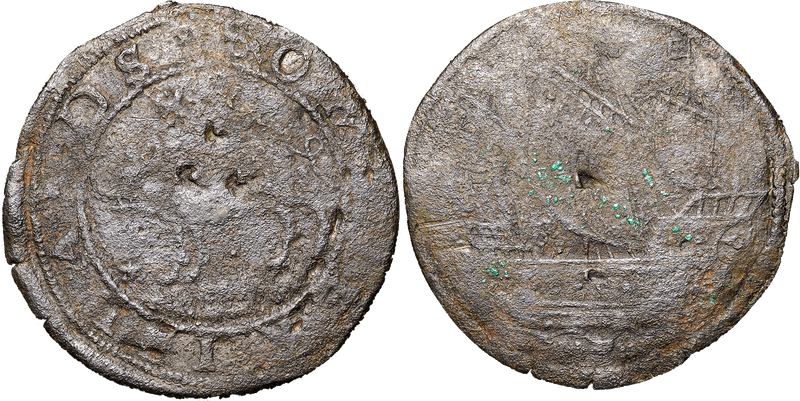
About This Coin
Commonly known as "Hogge Money" after the wild hog on the obverse, the Sommer Islands coinage represents the earliest English coinage struck for use in the Americas. Produced circa 1615-1616, possibly at the Royal Mint in London, these coins served the tiny English colony on the Sommer Islands (present-day Bermuda), named after Sir George Somers whose 1609 shipwreck inspired Shakespeare's The Tempest. Struck in copper-tin alloy (approximately 80% copper, 16-22% tin) with a silver wash, the obverse features feral hogs introduced by earlier Spanish visitors, while the reverse depicts a three-masted sailing ship. Four denominations were produced — twopence, threepence, sixpence, and shilling — distinguished by Roman numeral value marks. The Sommer Islands coins predate the New England shilling by over three decades and occupy a position of unparalleled historical significance as the foundational issue of English colonial American numismatics. Each surviving specimen is individually tracked by scholars, and appearances at major auctions generate significant attention from specialists in the earliest colonial coinage.
Specifications
Strike Types & Varieties(8)
(1616) Sommer Islands Shilling - Large Sails
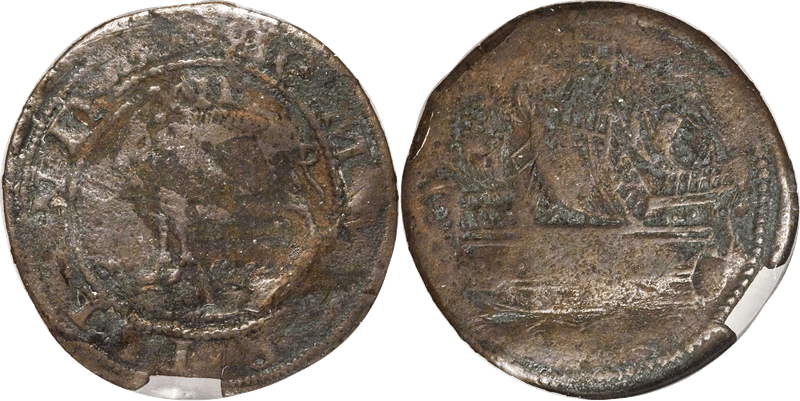
(1616) Sommer Islands Shilling - Small Sails
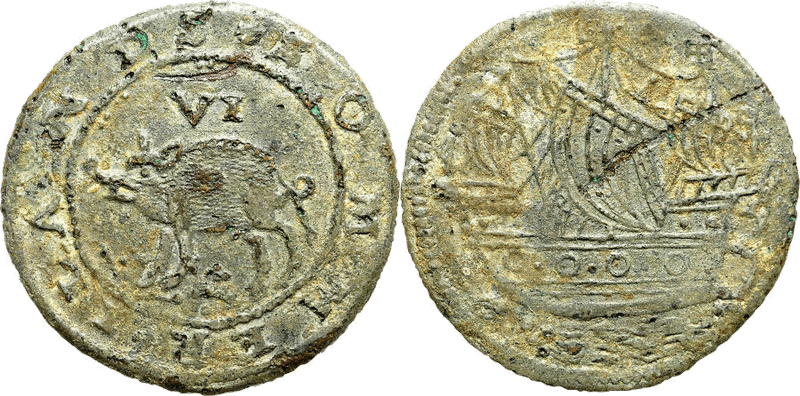
(1616) Sommer Islands Sixpence - Large Portholes
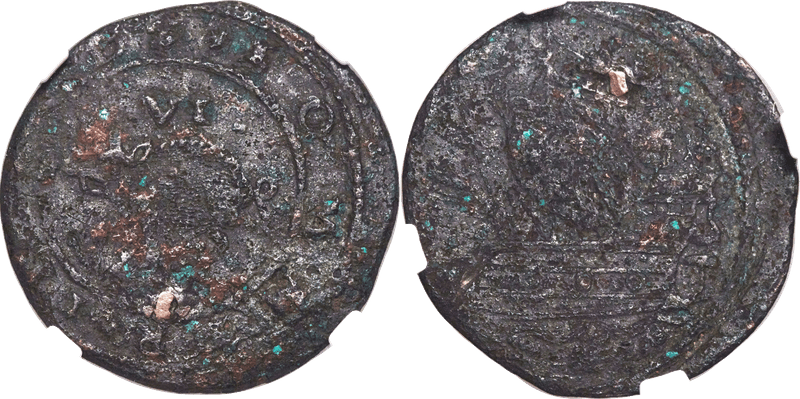
(1616) Sommer Islands Sixpence - Small Portholes
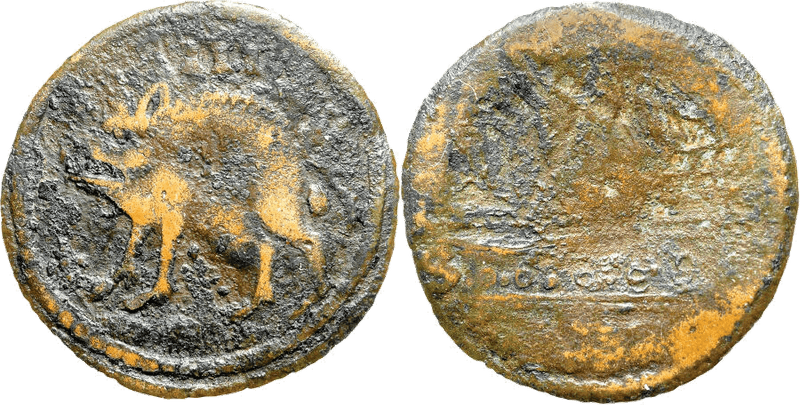
(1616) Sommer Islands Threepence
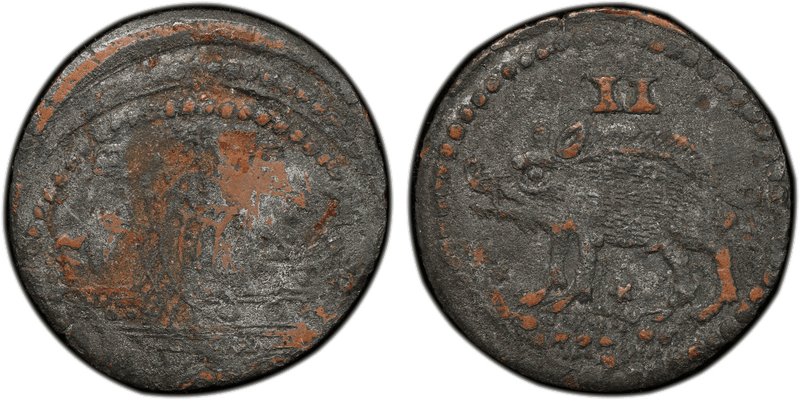
(1616) Sommer Islands Twopence
(1616) Sommer Islands Twopence - Large Star
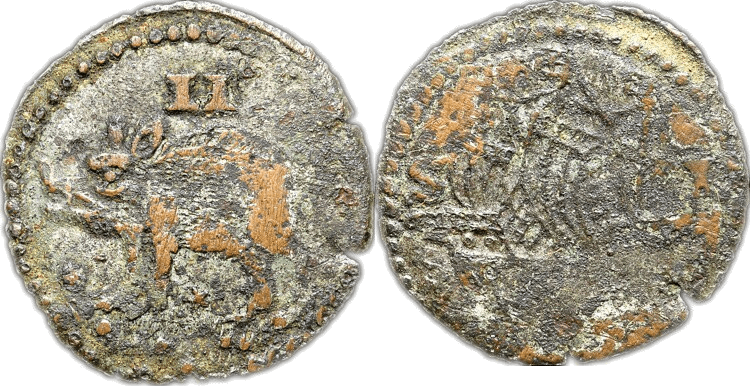
(1616) Sommer Islands Twopence - Small Star
Other Base Coins in This Series
Collector Essentials
Tools and references for building and protecting your coin collection.
10x-20x Jeweler's Loupe
A must-have for examining coin details, mint marks, and surface quality
Red Book — Guide to U.S. Coins
The essential annual reference for U.S. coin values, history, and mintages
Coin Albums & Storage
Archival-quality albums and holders to protect and display your collection
USB Digital Microscope
Capture detailed images for documentation and community submissions
As an Amazon Associate, NumisDex earns from qualifying purchases.