
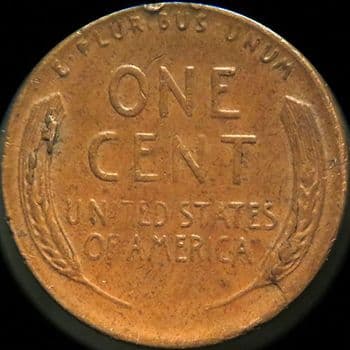
1953 Lincoln Wheat Cent - RCD-1c-1953-12R Retained Cud
Error
Attribution
Discovered by
Chuck Newman
Verified by
Cuds on Coins
Original Research
Description
Twelfth reverse retained cud documented for the 1953 Lincoln wheat cent, RCD-1c-1953-12R adds to the substantial die failure record for this early 1950s production date. Philadelphia struck approximately 256.9 million cents in 1953, a moderate output that consumed a significant inventory of working die pairs across the production year. Twelve documented reverse retained cuds indicate that multiple reverse dies developed advancing rim cracks during 1953 cent production, each representing an independent structural failure at a different position along the die periphery. The retained cud mechanism is a transitional phase in die failure progression — positioned between the pre-cud stage (where the crack exists but the die surface remains intact) and the full cud (where the broken die fragment falls out of the die entirely). In a retained cud, the cracked section has broken away from the die body but is held in place, moving slightly during each strike and producing coins with a raised zone near the rim where the reverse design appears subtly out of line. Victor David Brenner's wheat reverse design, entering its final decade of production in the early 1950s before the 1959 transition to the Lincoln Memorial reverse, provides the artistic framework for these die failure manifestations. The wheat ears, denomination text, and motto elements within the retained cud zone are fully present but take on a raised, shifted appearance that distinguishes them from the cleanly struck areas outside the crack boundary. Twelve retained cuds for a single date represents a mature census, though additional undocumented examples likely exist among the millions of surviving 1953 cents that have never been subjected to systematic die break examination. Collectors should examine the entire reverse rim under low-to-moderate magnification, looking for raised zones where the surface texture and design alignment differ from the surrounding normally struck field.
External References
Community & Reference
Related Errors


More Retained Cud Errors
Collector Essentials
Tools for examining and preserving error coins and die varieties.
10x-20x Jeweler's Loupe
Essential for examining die varieties, doubled dies, and RPMs
Cherry Picker's Guide
The definitive reference for U.S. error coins and die varieties
2x2 Coin Flips & Holders
Protect and organize your finds with archival-quality holders
USB Digital Microscope
Capture detailed images for documentation and community submissions
As an Amazon Associate, NumisDex earns from qualifying purchases.