
RCD-1c-1952-04R Retained Cud
Error
Description
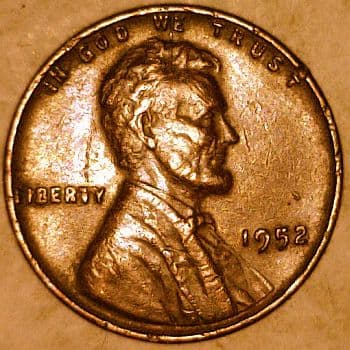
Cataloged by the Cuds on Coins attribution service, RCD-1c-1952-04R documents the fourth identified reverse retained cud on the 1952 Lincoln wheat cent. The systematic naming convention — RCD for retained cud, 1c for the one-cent denomination, 1952 for the date, and 04R indicating the fourth reverse retained cud cataloged — places this variety within the broader census of die failures tracked across the Lincoln cent series. Retained cuds form when a die crack propagates from the rim inward and a fragment of the die begins to separate, but instead of breaking away entirely, the fractured piece remains attached to the die body. During striking, this partially detached section shifts slightly under pressure, creating a raised, distorted area on the resulting coin that shows both the displaced design elements and the irregular surface texture of the cracked zone. Unlike a full cud — where the die fragment breaks free and planchet metal fills the void, producing a featureless raised blob — a retained cud preserves a ghostly impression of the original design within the affected area, making it a more complex and informative diagnostic of the die's structural failure. Victor David Brenner's obverse pairs with a reverse featuring two wheat ears flanking ONE CENT and E PLURIBUS UNUM, a design that served from 1909 through 1958. Philadelphia struck approximately 186.9 million cents in 1952, a robust production run that subjected individual dies to millions of striking cycles and made rim-area die failures statistically inevitable. Four documented reverse retained cuds for this single date indicate that multiple reverse dies developed advancing cracks during the 1952 production campaign, each representing an independent structural failure at different positions along the die periphery. Collectors examining specimens for this variety should look for a raised, slightly irregular zone near the rim on the reverse where the design appears shifted or distorted relative to the surrounding normally struck area.
Attribution History
- Discovered by Louis A
- Expert attribution by Cuds on Coins
External References
Community & Reference
Related Errors



More Retained Cud Errors
Collector Essentials
Tools for examining and preserving error coins and die varieties.
10x-20x Jeweler's Loupe
Essential for examining die varieties, doubled dies, and RPMs
Cherry Picker's Guide
The definitive reference for U.S. error coins and die varieties
2x2 Coin Flips & Holders
Protect and organize your finds with archival-quality holders
USB Digital Microscope
Capture detailed images for documentation and community submissions
As an Amazon Associate, NumisDex earns from qualifying purchases.