
PC-10c-1891-02R Pre-Cud
Error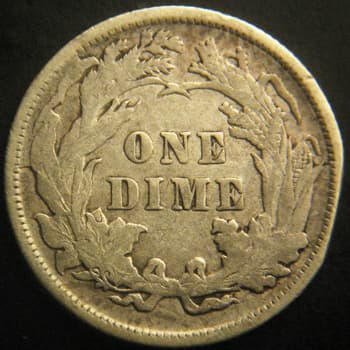
Description
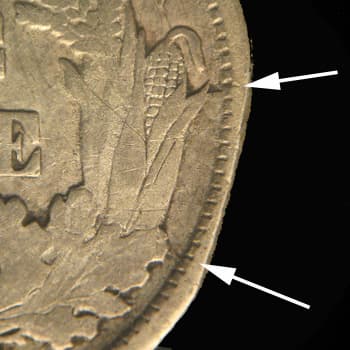
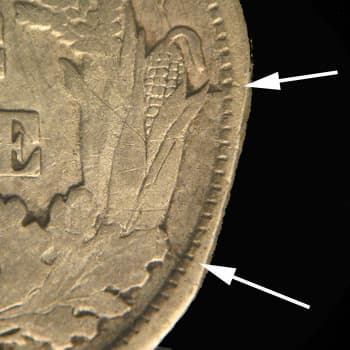
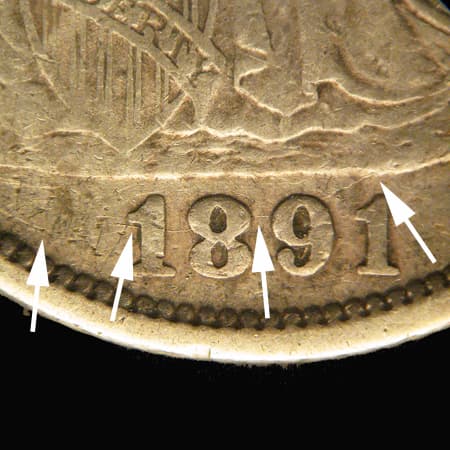
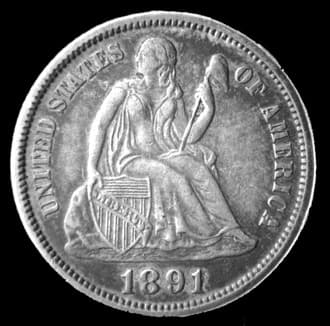
Preserved in the Cuds on Coins registry, PC-10c-1891-02R documents the second identified reverse pre-cud on the 1891 Seated Liberty dime — the final year of this long-running design that had been in production since 1837. The designation follows the standardized naming convention: PC for pre-cud, 10c for the dime denomination, 1891 for the date, and 02R indicating the second cataloged reverse pre-cud. Christian Gobrecht originally designed the Seated Liberty motif, and by 1891 the reverse featured a wreath of corn, wheat, maple, and oak encircling ONE DIME, with the words UNITED STATES OF AMERICA running along the upper rim. Philadelphia struck approximately 15.31 million Seated Liberty dimes in 1891, the final year before Charles E. Barber's new design replaced the Seated Liberty motif across the dime, quarter, and half dollar denominations in 1892. Two documented reverse pre-cuds for the final year of the series provides evidence of die condition during the terminal production run, when the existing inventory of Seated Liberty dies was being depleted before the transition to the Barber design. Pre-cuds develop when the die steel begins to fracture near the rim — the zone of maximum mechanical stress during striking — but has not yet separated into the broken fragment that characterizes a full cud or retained die break. On struck coins, this incipient fracture appears as a raised, slightly irregular area near the rim where the weakened die surface transmitted the beginning of structural failure without yet allowing planchet metal to escape into the developing gap. The reverse rim area on Seated Liberty dimes, adjacent to the wreath and peripheral lettering, concentrates the outward metal flow pressure that drives rim-area die cracking, and the 02R designation confirms that multiple reverse dies developed this pattern during the 1891 production run.
Attribution History
- Discovered by Chuck Newman
- Expert attribution by Cuds on Coins
External References
Community & Reference
Related Errors
More Pre-Cud Errors
Collector Essentials
Tools for examining and preserving error coins and die varieties.
10x-20x Jeweler's Loupe
Essential for examining die varieties, doubled dies, and RPMs
Cherry Picker's Guide
The definitive reference for U.S. error coins and die varieties
2x2 Coin Flips & Holders
Protect and organize your finds with archival-quality holders
USB Digital Microscope
Capture detailed images for documentation and community submissions
As an Amazon Associate, NumisDex earns from qualifying purchases.