
RCD-1c-1867-01R Retained Cud
Error
Description
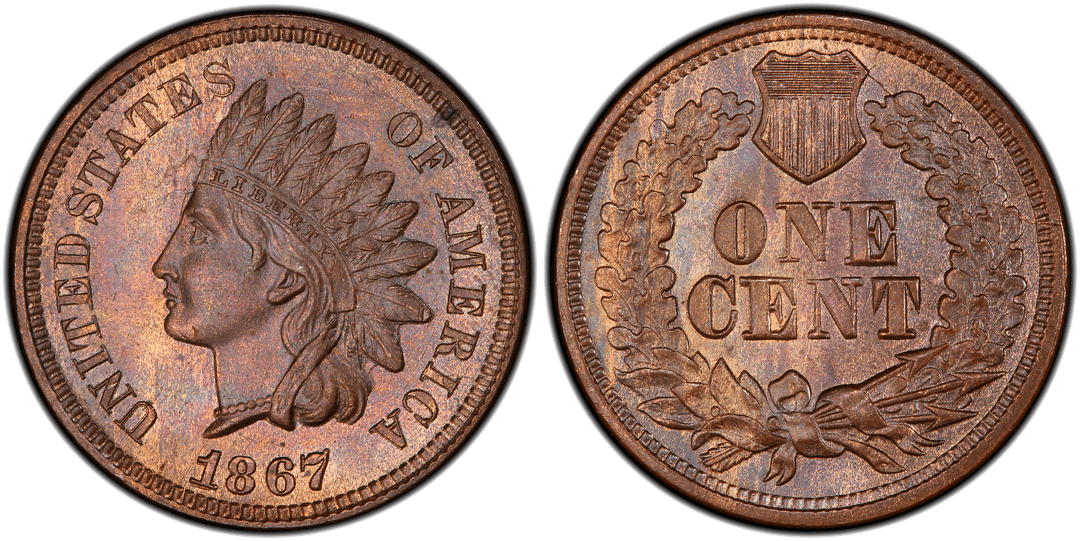
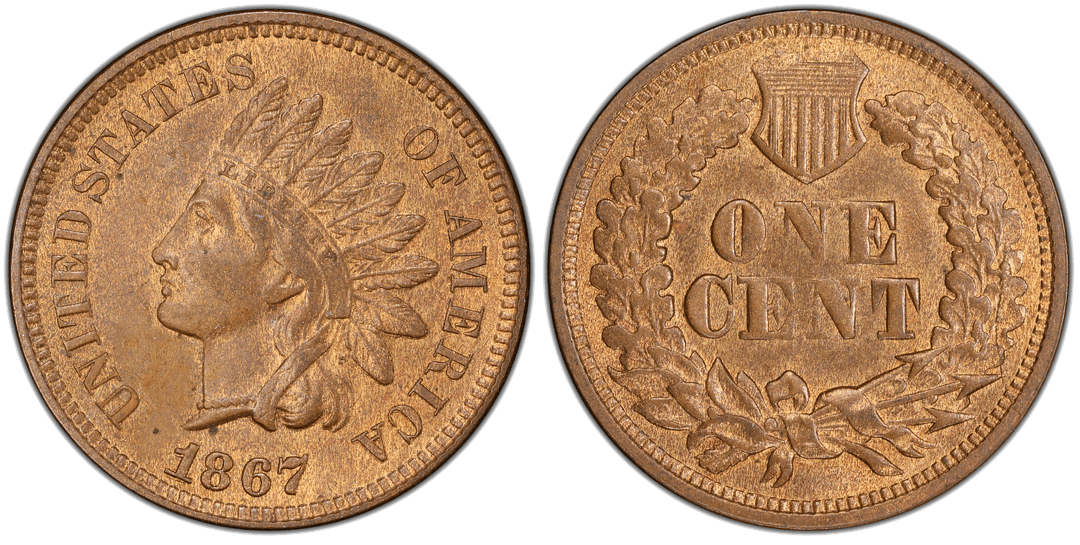
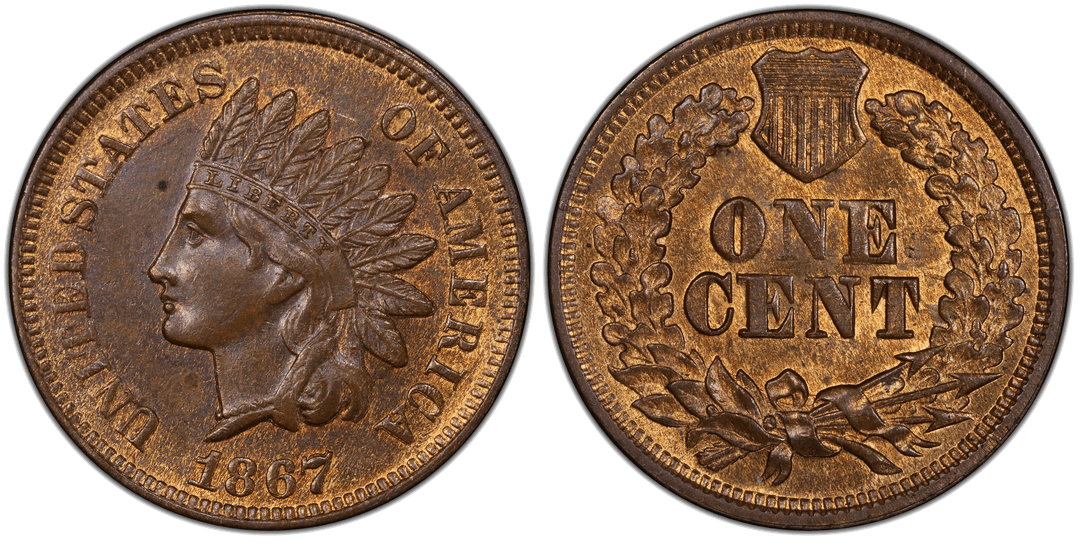
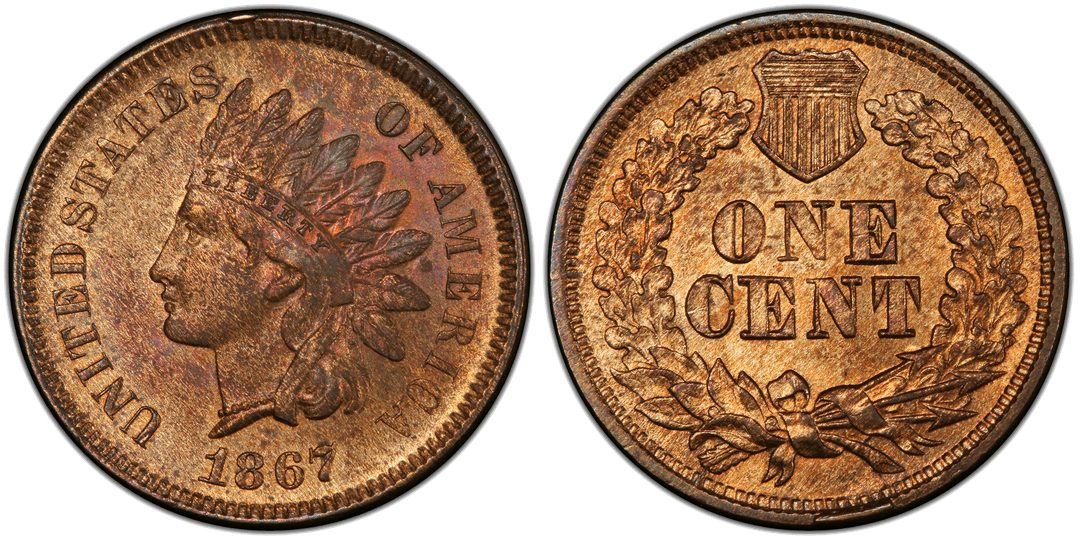
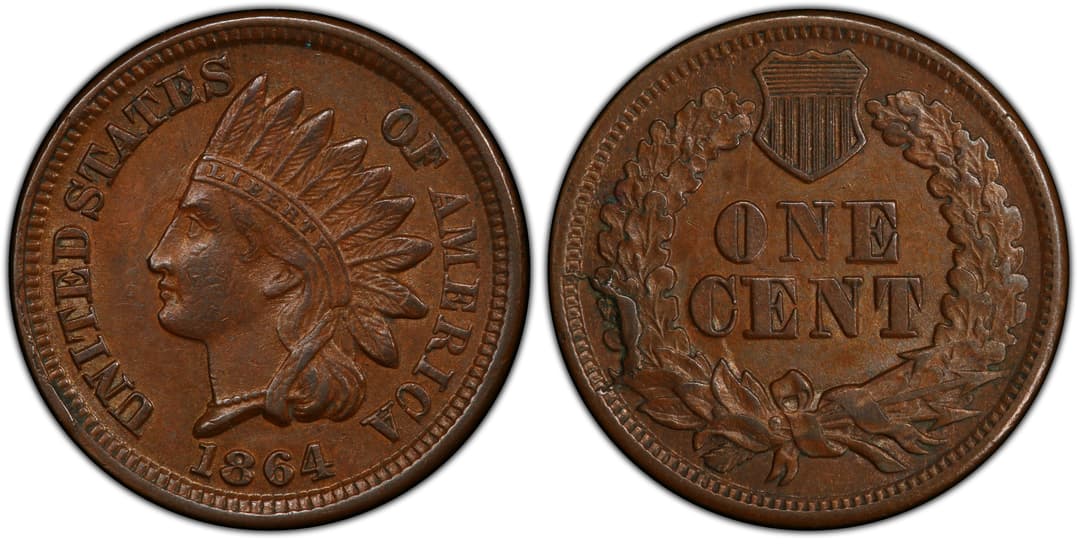
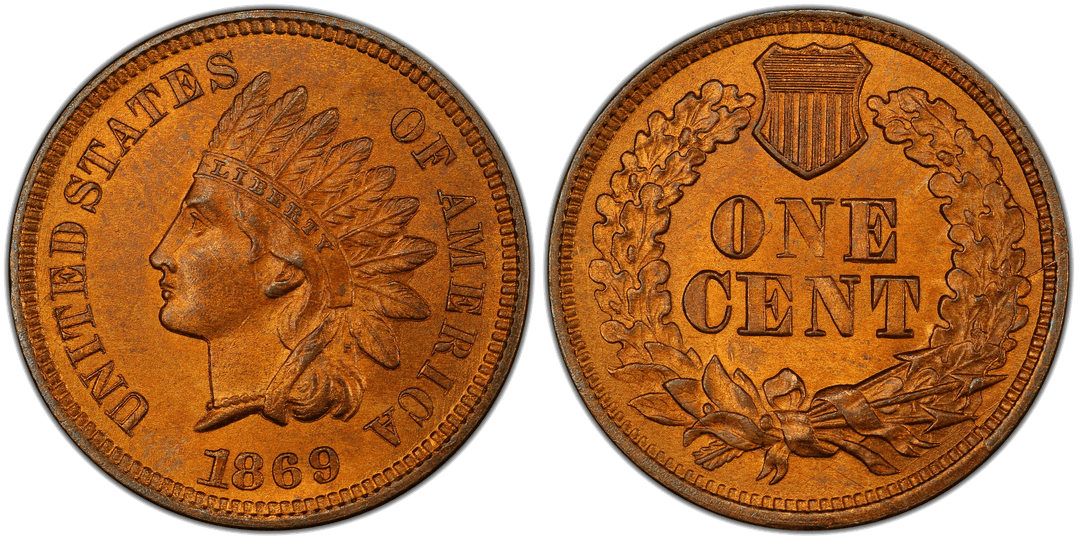
Produced during the early Reconstruction era two years after the Civil War's end, the 1867 Indian Head Cent RCD-1c-1867-01R records the first documented retained cud on a reverse working die for this date. By 1867 the Indian Head Cent had transitioned to bronze (95% copper, 5% tin and zinc), adopted in mid-1864 — a softer composition that generally improved die longevity compared to the earlier copper-nickel alloy. Nevertheless, die failures still occurred, and this retained cud captures a reverse die where a rim fragment cracked loose but remained in position, transferring a raised irregular impression onto coins. The reverse design by James B. Longacre features the oak wreath with a federal shield at the apex — a motif symbolizing national strength, particularly resonant during post-war rebuilding. The Philadelphia Mint struck 9,821,000 Indian Head Cents in 1867, a modest figure placing this among lower-mintage issues of the post-war decade. Cataloged by Cuds on Coins as RCD (retained cud), 1c (denomination), 1867 (year), 01 (first documented), R (reverse die). Collectors should inspect the reverse rim for the raised mass characteristic of a die fragment that fractured but did not separate from the die body.
Attribution History
- Discovered by Fred Weinberg
- Expert attribution by Cuds on Coins
External References
Community & Reference
Related Errors

More Retained Cud Errors
Collector Essentials
Tools for examining and preserving error coins and die varieties.
10x-20x Jeweler's Loupe
Essential for examining die varieties, doubled dies, and RPMs
Cherry Picker's Guide
The definitive reference for U.S. error coins and die varieties
2x2 Coin Flips & Holders
Protect and organize your finds with archival-quality holders
USB Digital Microscope
Capture detailed images for documentation and community submissions
As an Amazon Associate, NumisDex earns from qualifying purchases.