
RCD-2c-1865-05R Retained Cud
Error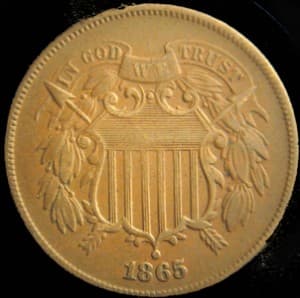
Description
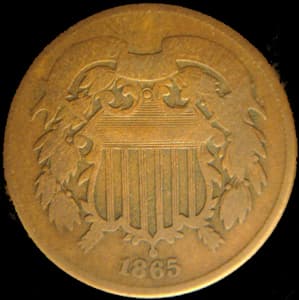
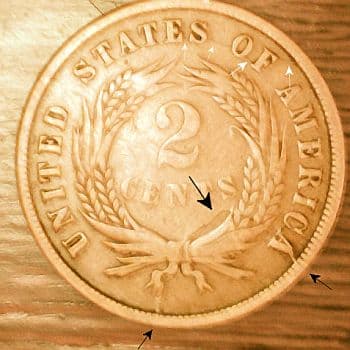
Fifth retained cud documented for the 1865 Two Cent Piece by Cuds on Coins, RCD-2c-1865-05R records a reverse die rim failure during the denomination's second year of production. The "R" suffix designates this as a reverse retained cud, locating the die fracture on the wreath-and-denomination side of James B. Longacre's design. Philadelphia struck approximately 13.64 million Two Cent Pieces in 1865, a high-volume year that reflected continued wartime demand as the Civil War drew toward its conclusion in April of that year — though the denomination's popularity would rapidly decline in subsequent years as the coins displaced by wartime hoarding gradually returned to circulation. The existence of at least five documented retained cud dies for the 1865 date indicates substantial die attrition during this high-production year, consistent with the stress that the striking process imposed on dies servicing a relatively thick bronze planchet. No cross-references from other attribution services have been documented for this variety. The Two Cent Piece's obverse features a shield with the motto IN GOD WE TRUST on a banner above — the first appearance of this motto on any U.S. coin — while the reverse displays the denomination "2 CENTS" within a wreath of wheat and laurel. Retained cuds on the reverse disrupt the wreath design area near the rim, where the die steel experiences the greatest outward pressure during striking. The retained condition means the fractured segment has not fully separated from the die body, producing a raised area that blends displacement with residual design detail. Collectors should examine the reverse rim under moderate magnification, looking for a section that appears elevated above the normal rim plane while still showing faint traces of the wreath or lettering that the intact die would have impressed.
Attribution History
- Discovered by Fred Weinberg
- Expert attribution by Cuds on Coins
External References
Community & Reference
Related Errors
More Retained Cud Errors
Collector Essentials
Tools for examining and preserving error coins and die varieties.
10x-20x Jeweler's Loupe
Essential for examining die varieties, doubled dies, and RPMs
Cherry Picker's Guide
The definitive reference for U.S. error coins and die varieties
2x2 Coin Flips & Holders
Protect and organize your finds with archival-quality holders
USB Digital Microscope
Capture detailed images for documentation and community submissions
As an Amazon Associate, NumisDex earns from qualifying purchases.