
1797 Draped Bust Large Cent (Reverse of 1797, Stems) Obverse Unusual Die Crack (Second Example)
Error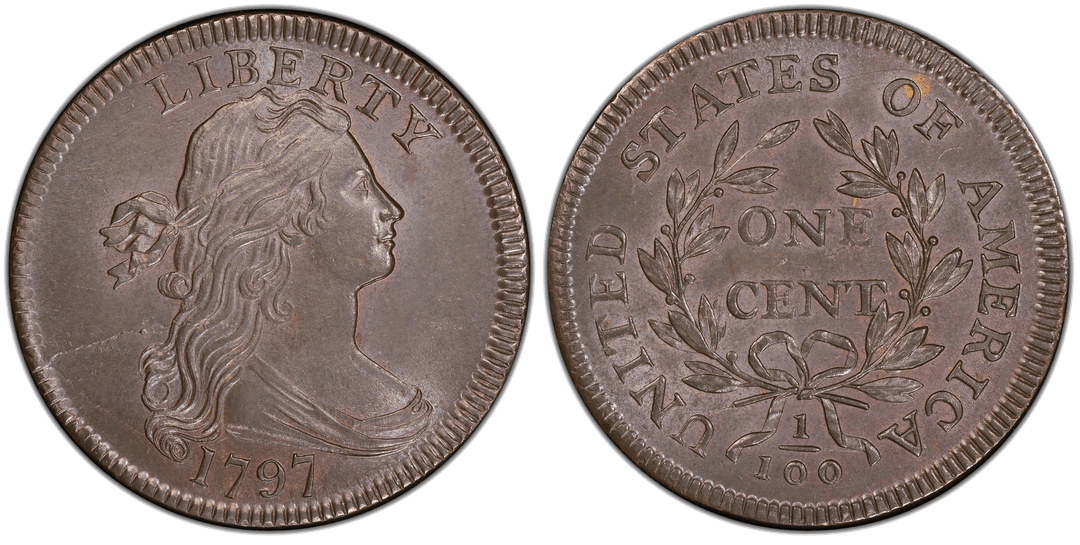
Community Voting
This listing needs 10.0 weighted votes to advance to community review.
Description
This 1797 Draped Bust Large Cent of the Reverse of 1797 with Stems variety displays an unusual die crack on the obverse, documented as a second example distinct from another 1797 die crack variety in the catalog. Unusual die cracks differ from standard rim-to-rim cracks in that they follow irregular paths, branch, or form distinctive patterns that deviate from the typical linear fracture trajectories seen on most cracked dies. On this specimen, two die cracks split from a single rim location around the 8 o'clock position, with one crack running above the bottom curls of Liberty's hair and the other running to the bottom of the bottom curls — a bifurcating fracture pattern where the stress energy divided at the rim entry point and propagated along two separate paths through the die steel. This branching behavior reveals the internal stress distribution within the die and the metallurgical grain structure that influenced fracture propagation direction. The Draped Bust Large Cent was designed by Robert Scot after a portrait attributed to Gilbert Stuart, struck in pure copper at the Philadelphia Mint — the sole operating mint during the early Republic period. Each large cent weighs approximately 10.89 grams with a diameter of 29 mm. The "Reverse of 1797 with Stems" designation refers to the specific reverse die type used, where olive branches include stems — a design detail that helps classify the various reverse hub types employed during this transitional period. The 1797 date falls during the earliest years of federal copper coinage when die production was entirely manual, each die hand-engraved, and die steel quality variable, creating conditions where unusual fracture patterns could develop under the stresses of striking operations at the early Philadelphia facility.
Attribution History
- Discovered by NumisDexDealer
Community & Reference
Related Errors
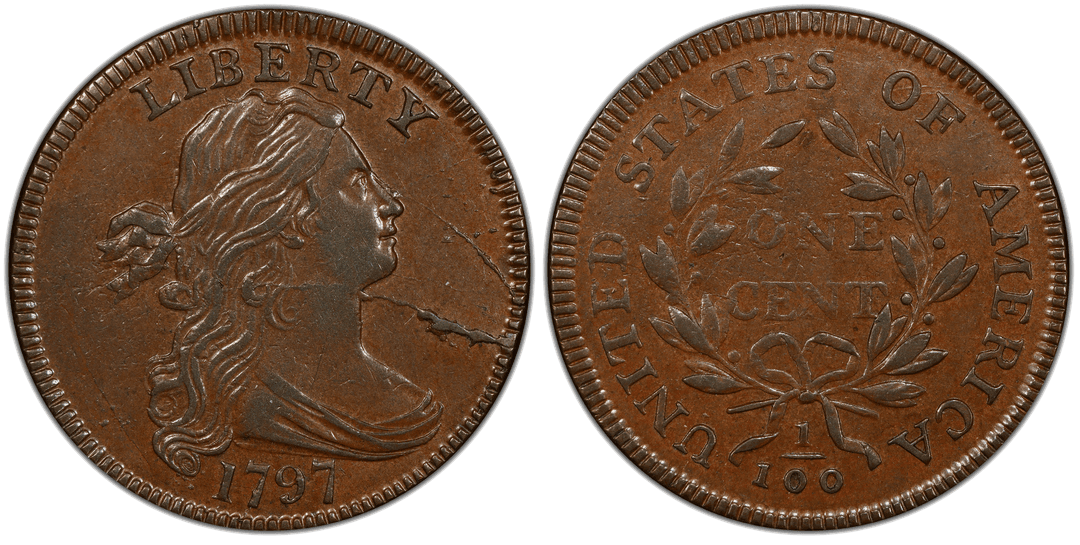
More Unusual Die Crack Errors
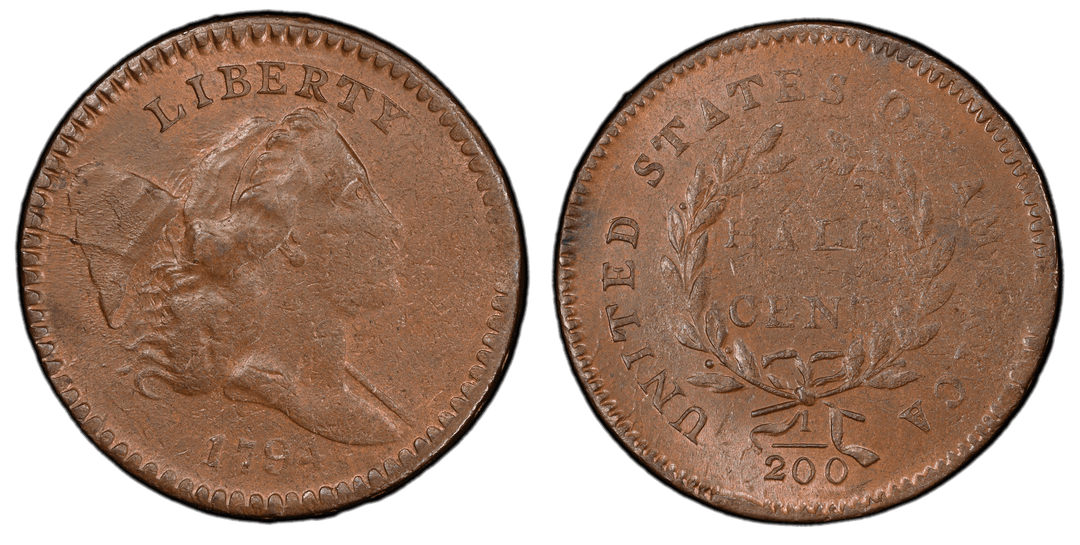
1794 Liberty Cap Right Half Cent Unusual Die Crack and Tapered Planchet
Unusual Die Crack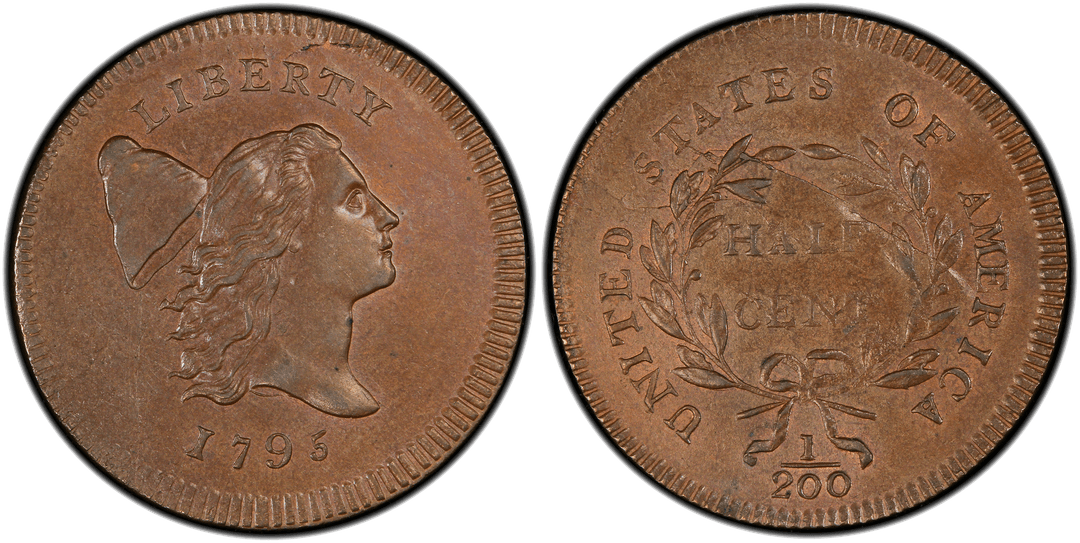
1795 Liberty Cap Right Half Cent (Plain Edge, No Pole) Unusual Die Crack
Unusual Die Crack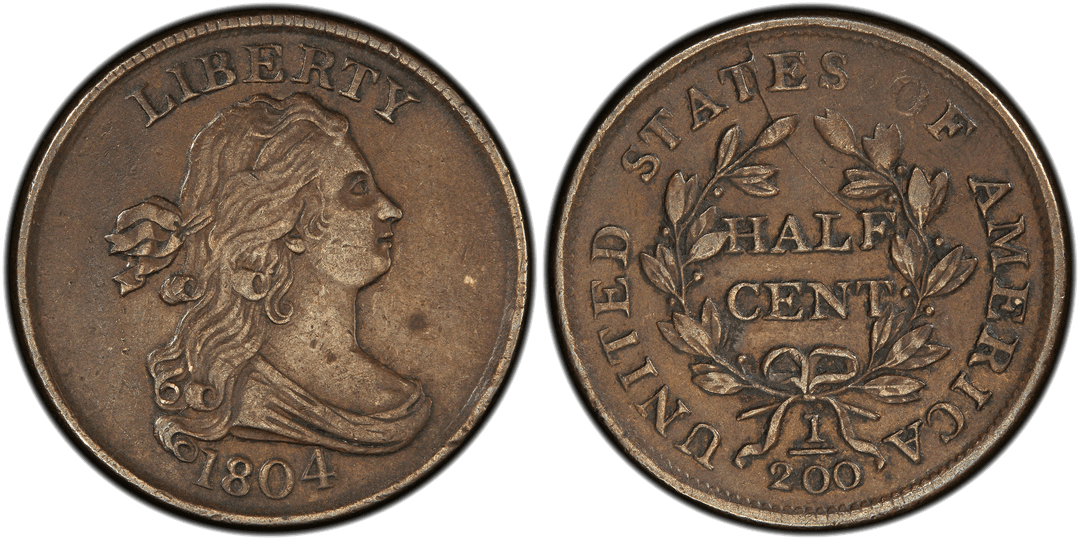
1804 Draped Bust Half Cent (Crosslet 4, Stems) Unusual Die Crack
Unusual Die Crack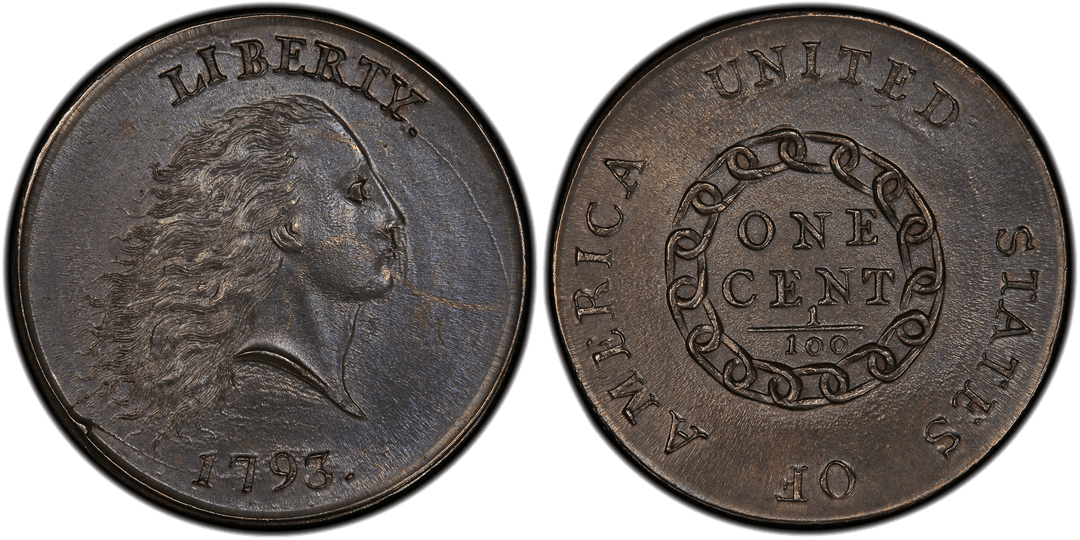
1793 Wreath Cent (Periods Variety) Obverse Unusual Die Crack
Unusual Die Crack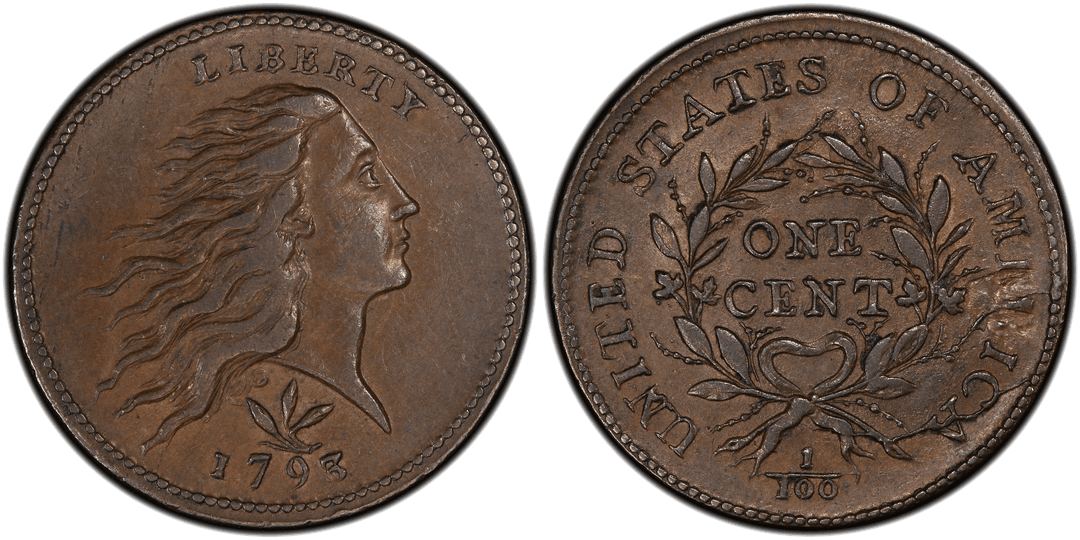
1793 Wreath Cent (Vine and Bars) Reverse Unusual Die Crack
Unusual Die CrackCollector Essentials
Tools for examining and preserving error coins and die varieties.
10x-20x Jeweler's Loupe
Essential for examining die varieties, doubled dies, and RPMs
Cherry Picker's Guide
The definitive reference for U.S. error coins and die varieties
2x2 Coin Flips & Holders
Protect and organize your finds with archival-quality holders
USB Digital Microscope
Capture detailed images for documentation and community submissions
As an Amazon Associate, NumisDex earns from qualifying purchases.