
1982 Lincoln Cents: How to Tell Copper from Zinc (and Find the Rare One)
1982: The Year Lincoln Cents Changed Composition
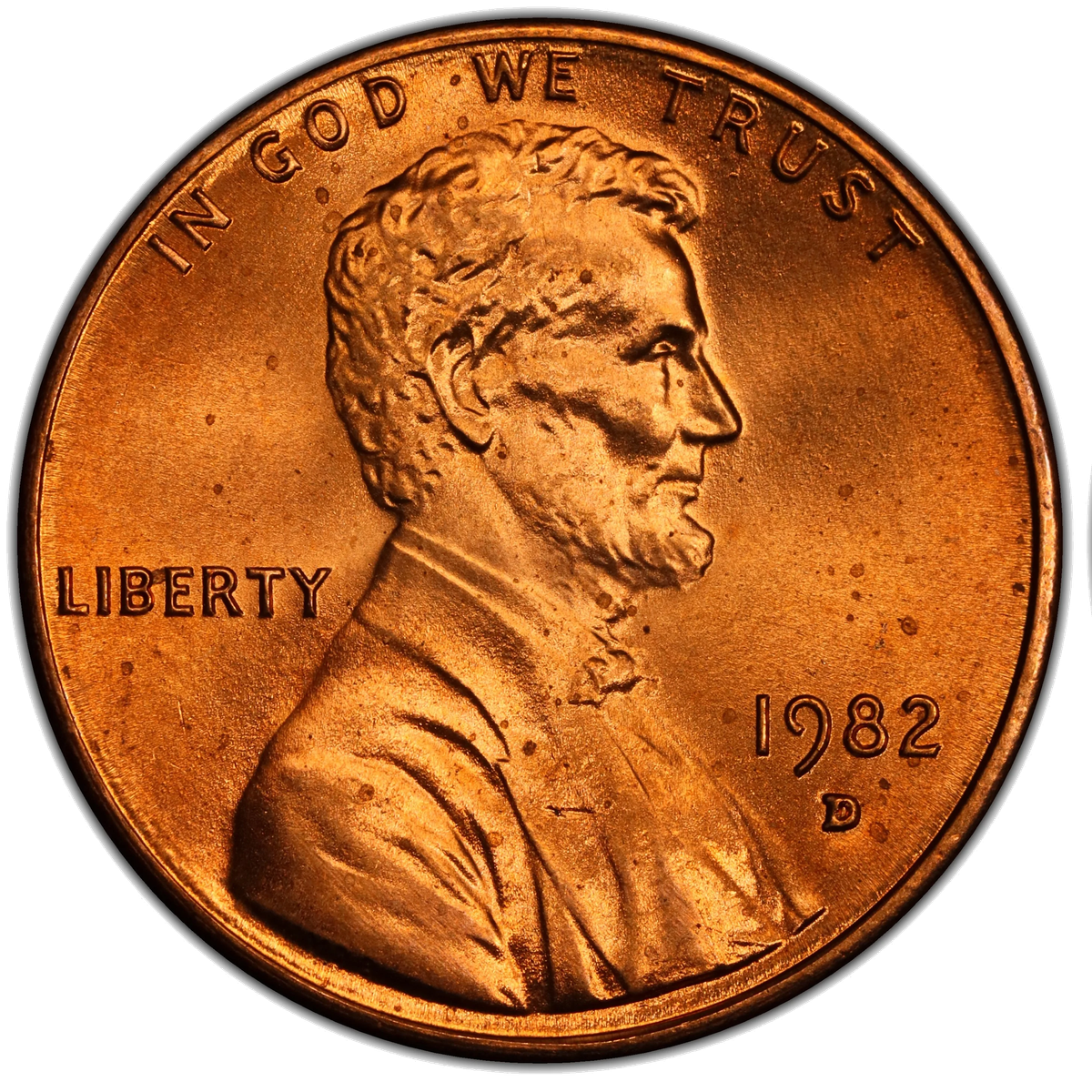
In 1982, the U.S. Mint transitioned Lincoln cents from a 95% copper composition (used since 1962) to copper-plated zinc. Both compositions were produced throughout 1982, making it the only year where both types exist — and they look identical.
Why You Can't Tell by Looking
The copper-plated zinc cents were specifically designed to look the same as the solid copper cents. Both have the same copper-colored surface, the same design, and the same diameter (19mm). Visual examination — including looking at the edge — will not reliably distinguish them. You need to test the coin.
How to Identify Composition
1. Weight (Most Reliable)
This is the definitive test. The two compositions have significantly different weights:
- Copper (95% Cu, 5% Zn) — 3.1 grams
- Zinc (97.5% Zn, 2.5% Cu plating) — 2.5 grams
A digital scale accurate to 0.1g easily distinguishes them. The difference (0.6g) is large enough that even a basic kitchen scale can detect it.
2. Drop/Ping Test
Drop the coin onto a hard surface from about 6 inches and listen to the sound:
- Copper — A clear, high-pitched ring that sustains
- Zinc — A dull, flat thud with no sustaining ring
With practice, you can identify composition by sound alone — which is useful for coin roll hunting when you're sorting through hundreds of coins.
The 1982 Varieties
There are nine distinct strike types for 1982 Lincoln cents — eight that were intentionally produced and one that wasn't supposed to exist. The seven regular-issue varieties are:
- 1982 Large Date Copper (Philadelphia)
- 1982 Large Date Zinc (Philadelphia)
- 1982 Small Date Copper (Philadelphia)
- 1982 Small Date Zinc (Philadelphia)
- 1982-D Large Date Copper (Denver)
- 1982-D Large Date Zinc (Denver)
- 1982-D Small Date Zinc (Denver)
Additionally, the San Francisco Mint produced a 1982-S Proof cent in copper, bringing the total of intended strike types to eight.
The Ninth Variety: 1982-D Small Date Copper
Notice that there is no "1982-D Small Date Copper" on the regular-issue list above. This combination was never supposed to be made — the Denver Mint was only producing small date cents in zinc. However, an example was discovered, and it is extremely rare and extremely valuable.
This is the variety that makes checking every 1982-D Small Date cent worthwhile. The process is simple:
- Find a 1982-D cent
- Check if it's a small date (see our large date vs. small date post)
- If it's a small date, weigh it — if it weighs 3.1g instead of 2.5g, you may have the rare copper version
The odds are extraordinarily long, but the potential payoff is enormous. And unlike many rare coin searches, this one requires nothing more than a scale and some patience.
Explore in the NumisDex Catalog
Related varieties and errors from the NumisDex database:
0 Replies
Related Threads
- Top 10 Lincoln Cent Varieties You Can Still Find in Change0 replies · 3mo ago
- 1982-D Small Date Copper Cent: The Modern Rarity Nobody Knew Existed Until 20160 replies · 3mo ago
- Wheat vs. Memorial vs. Shield Reverse: Dating Lincoln Cents at a Glance0 replies · 3mo ago
- Large Date vs. Small Date Cents: How to Tell (1960, 1970-S, 1982)0 replies · 3mo ago
- Close AM vs. Wide AM Cents: How to Tell Which One You Have0 replies · 3mo ago