
40% vs. 90% Silver Kennedy Half Dollars: The Complete Composition Guide
Kennedy Half Dollar Composition Through the Years
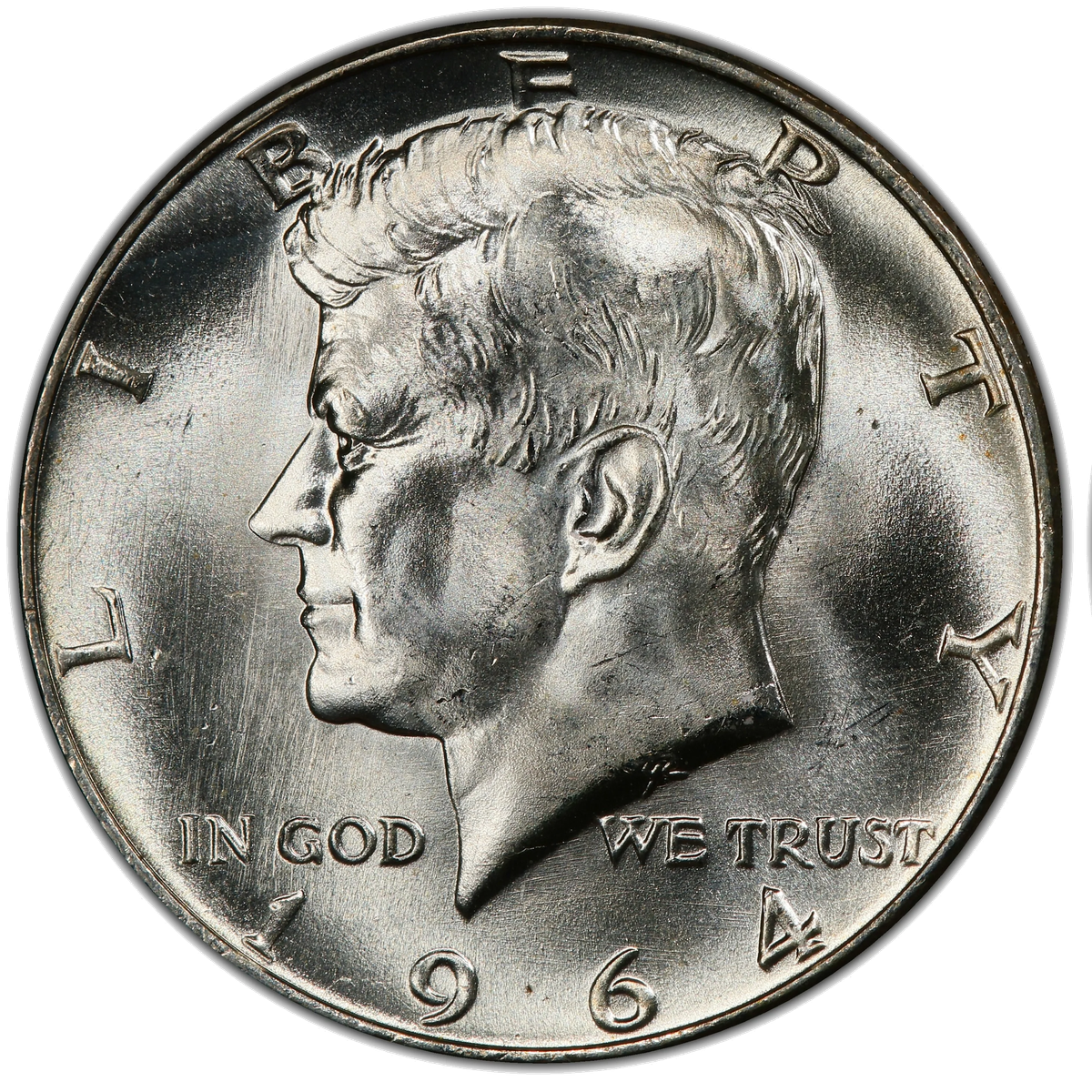
The Kennedy half dollar, first issued in 1964 as a tribute to President John F. Kennedy, has gone through more composition changes than any other modern U.S. denomination. Understanding these changes is essential for collectors, silver stackers, and anyone evaluating Kennedy halves.
The Composition Timeline
1964: 90% Silver
The first-year Kennedy halves were struck in the same 90% silver composition used for half dollars since the 1830s. They weigh 12.50 grams and contain approximately 0.36 troy ounces of pure silver. Both Philadelphia and Denver mints produced massive quantities — over 429 million coins — due to enormous public demand for the new design honoring the recently assassinated president. Despite the high mintage, 1964 Kennedy halves were heavily hoarded and many never circulated.
1965-1970: 40% Silver
As silver prices rose and the Coinage Act of 1965 eliminated silver from dimes and quarters, Kennedy halves were reduced to 40% silver. These coins have a silver-clad construction: outer layers of 80% silver / 20% copper bonded to an inner core of 21% silver / 79% copper. Total weight is 11.50 grams, containing approximately 0.148 troy ounces of pure silver. Mint marks were removed from all coins in 1965-1967, then reintroduced in 1968 (D for Denver, S for San Francisco proofs).
1971-Present: Copper-Nickel Clad
Starting in 1971, circulating Kennedy halves switched to the same copper-nickel clad composition used by dimes and quarters — outer layers of 75% copper / 25% nickel bonded to a pure copper core. Weight dropped to 11.34 grams with no silver content. Since 2002, Kennedy halves have been produced only for collectors (not for general circulation), though they remain legal tender.
Special Silver Issues
The Mint has periodically produced silver Kennedy halves for collectors:
- 1976-S Silver (Bicentennial) — 40% silver clad, special reverse design
- 1992-S to present Silver Proofs — 90% silver proofs produced for Silver Proof Sets
- 2014-W 50th Anniversary — Special gold and silver issues
Quick Identification by Date
- 1964 → 90% silver (12.50g)
- 1965-1970 → 40% silver (11.50g)
- 1971+ → Clad (11.34g) — unless it's a special collector issue
- S-mint proofs 1992+ → May be 90% silver (check if from a Silver Proof Set)
Weight is the most practical way to distinguish 40% silver from clad, since the visual difference between them is subtle. A digital scale accurate to 0.1g will easily distinguish 11.50g (40% silver) from 11.34g (clad). For the difference between 90% silver and clad, see our post on silver vs. clad coinage.
Explore in the NumisDex Catalog
Related varieties and errors from the NumisDex database:
0 Replies
Related Threads
- The Half Dollar: From America’s Workhorse Coin to Its Rarest Pocket Change0 replies · 1mo ago
- 2027 Paralympic Half Dollar: CCAC Selects Wheelchair Basketball as First Design0 replies · 3mo ago
- 2027 Paralympic Half Dollar Designs Under Review by CCAC0 replies · 3mo ago
- The Enduring Liberty Half Dollar: Breaking Down the 2026 Semiquincentennial Half Dollar Design0 replies · 3mo ago
- Walking Liberty: The Most Beautiful American Coin?0 replies · 4mo ago