
Lamination Error vs. Environmental Damage: How to Tell
LAMPeeling Metal: Lamination Error or Environmental Damage?
When you find a coin with metal that appears to be peeling, flaking, or separating into layers, you're looking at one of two things: a genuine lamination error (a mint-made planchet defect) or environmental damage (post-mint corrosion or chemical attack). The distinction matters — lamination errors carry a premium, while environmental damage does not.
Lamination Errors
A lamination error occurs when the metal strip used to make planchets has an internal flaw — typically a contaminant, void, or improperly bonded layer introduced during the rolling process. When the planchet is struck, the stress of striking can cause the flawed layer to separate.
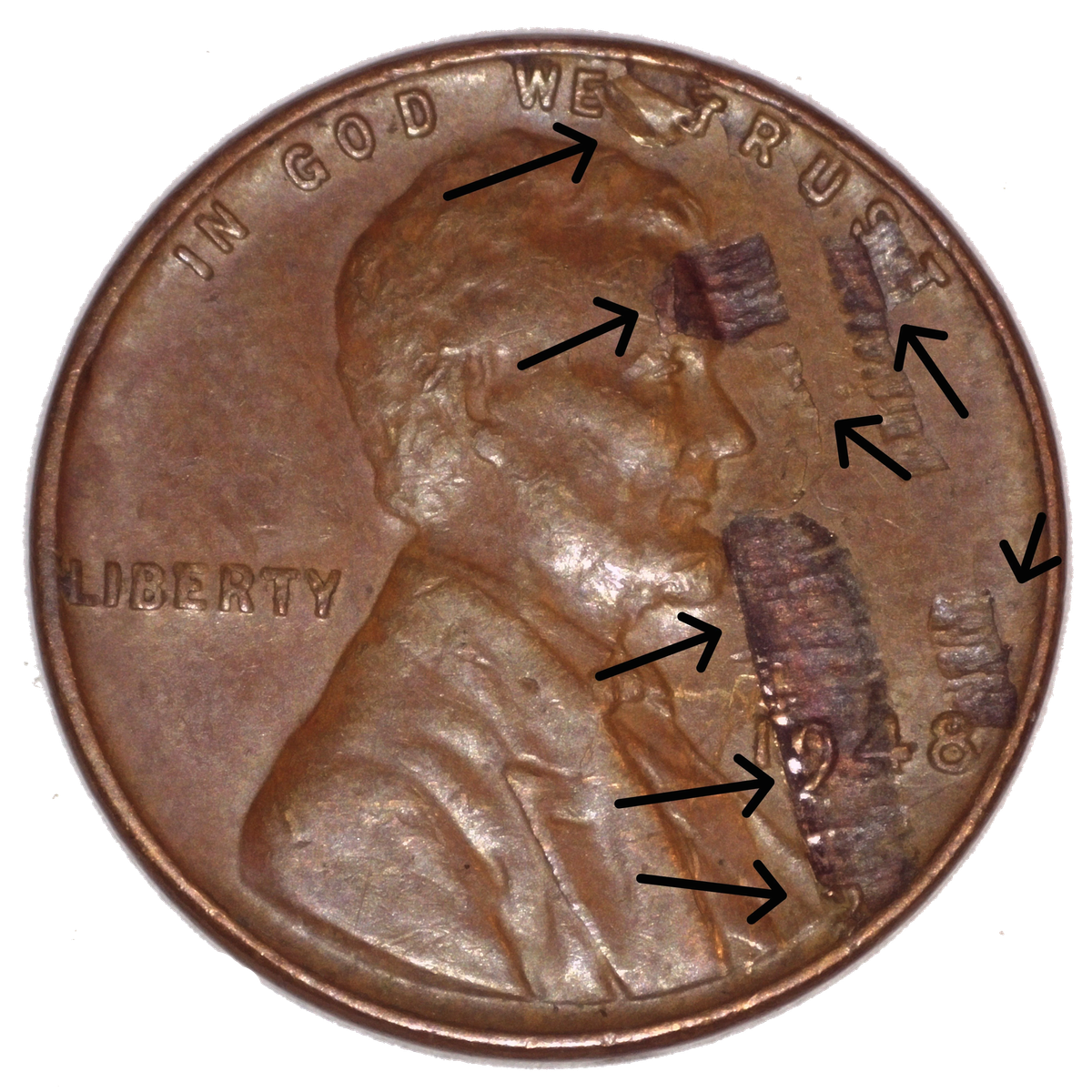
Key characteristics:
- Metal appears to peel or flake in layers — like pages of a book
- The separation follows the plane of the metal, creating thin sheets
- The coin's design may be visible on both the lifted layer and the surface beneath
- Edges of the lamination are typically smooth and natural-looking
- When a flap is still attached, it's called a "retained lamination"
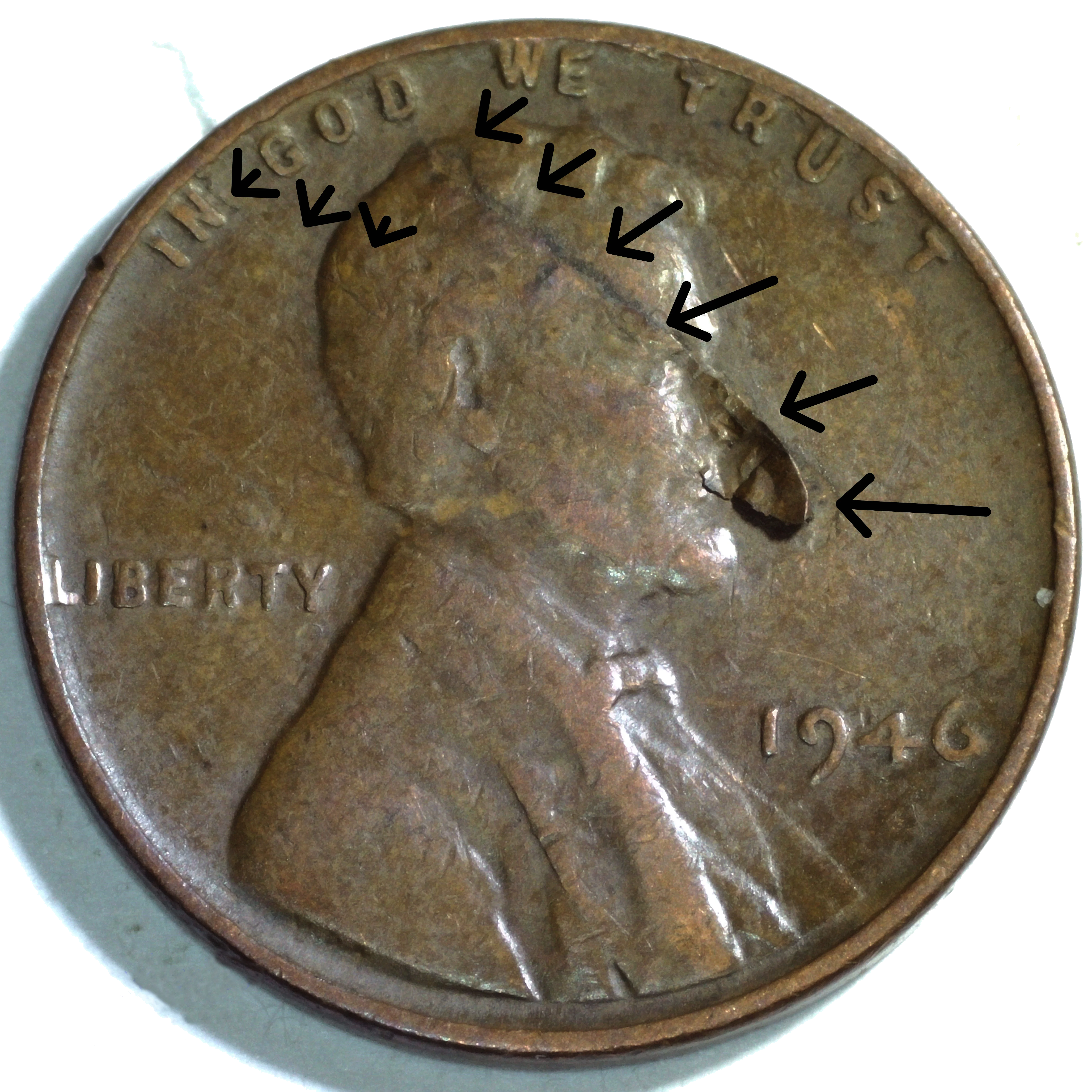
Environmental Damage
Environmental damage results from exposure to chemicals, moisture, soil, or other corrosive agents after the coin left the Mint. The results can sometimes mimic lamination errors, but the cause and appearance are different.
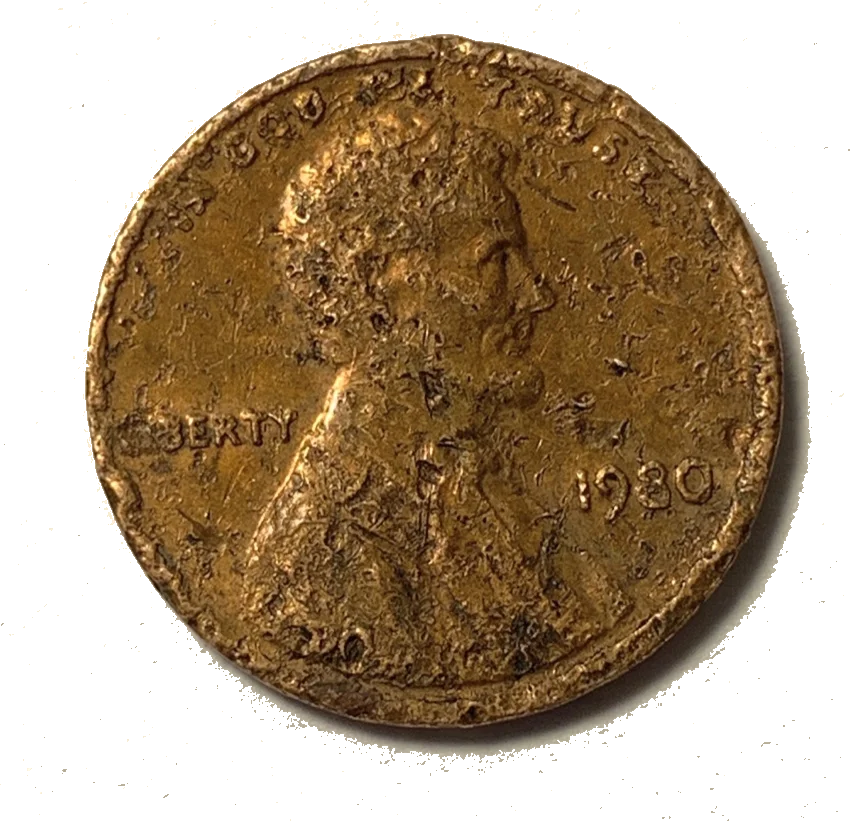
Key characteristics:
- Surface appears pitted, bubbly, or corroded rather than layered
- Damage often affects localized areas with irregular borders
- Color changes are common — green (verdigris on copper), white (zinc rot), dark spots
- The surface beneath shows chemical attack, not a clean separation plane
- Often accompanied by other signs of environmental exposure (discoloration, roughness)
The Key Differences
- Lamination: Clean separation into layers, smooth edges, design visible on both surfaces
- Environmental: Pitting, corrosion, irregular damage, color changes, no clean layer separation
Explore lamination errors across all denominations in the NumisDex lamination catalog.
3 Replies
 DaveKStLNOVICE26 days ago
Newbie here. In spite of searching all over, I haven't been able to find anything like this. Any suggestion, is this a lamination error? Or what else could it be? and any suggestion where to find an example of it? Thanks!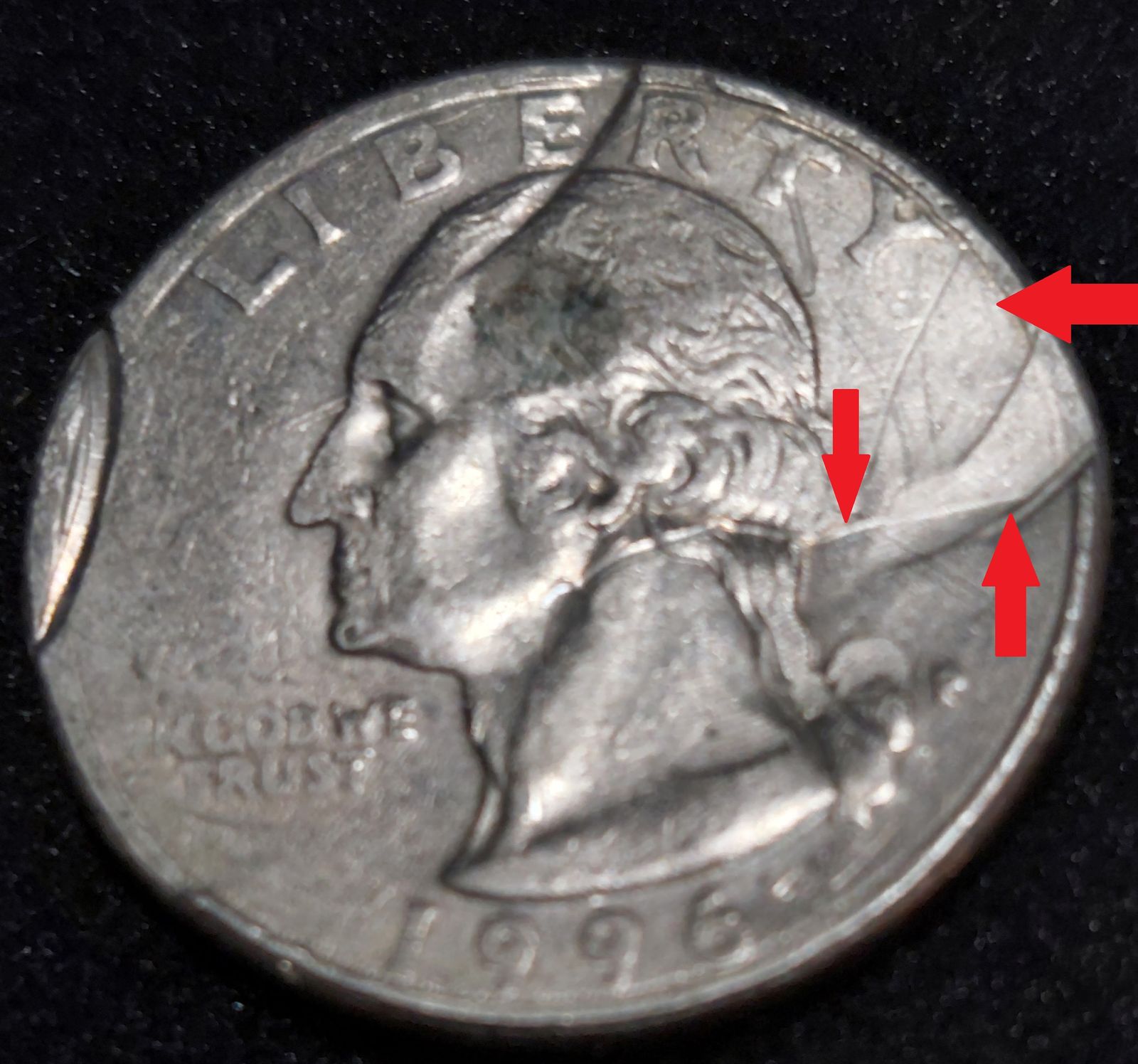
 NumisdexDealerVALIDATOR25 days agoedited 25 days ago
Happy to have you here. What you have appears to be a vice job. It appears to be played with, with some heavy tools. There are some really neat vice jobs that are valuable like hobo nickels, but unfortunately this one can just be spent. When I started in the hobby, I kept a bin of things I didn’t understand yet and would go back through once a month or so until it was finally empty. Some were things like these that I threw back, but many were legitimate errors I didn’t yet understand. Happy hunting. I hope you are finding the site helpful. Check out the learn section and feel free to ask as many questions as you like. You can also list your errors as you think you have identified one.
DaveKStLNOVICE25 days agoThanks for the reply and clarification. Yes, I am finding the site extremely helpful! And don't worry, you'll be seeing me around here more.
Related Threads
- Wrong Planchet Errors: When a Coin Gets Struck on the Wrong Metal0 replies · 1mo ago
- Wrong Planchet Errors: How to Tell If Your Coin Is Struck on the Wrong Blank0 replies · 3mo ago
- Split Planchets: When a Coin Breaks in Half (And Why the Other Half Might Be Out There)0 replies · 3mo ago
- Wrong Planchet Errors: When a Coin Gets the Wrong Body0 replies · 4mo ago