
(ca. 1670) Token New Yorke in America Pewter
Strike Type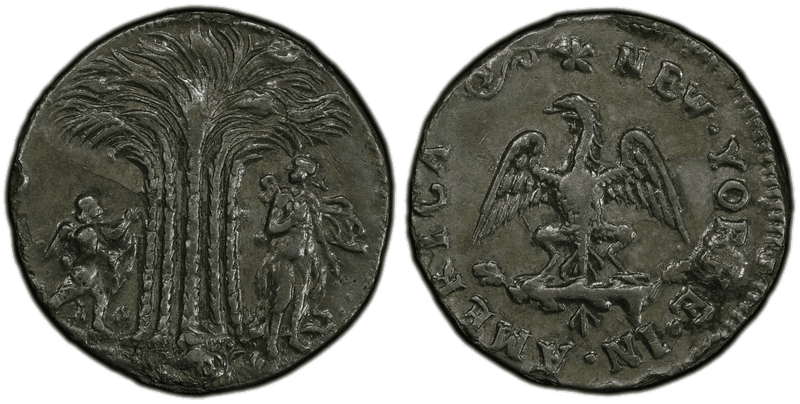
Coin Details
Auction Record
$6,200 AU Details 02-20-2023 eBay
Description
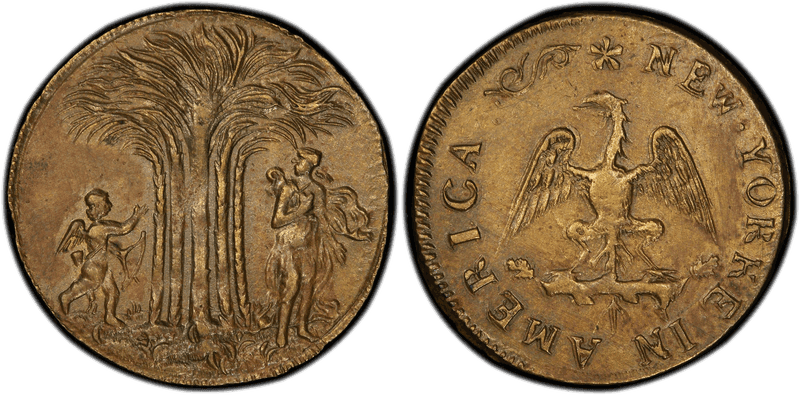
This circa 1670 "NEW YORKE IN AMERICA" token in pewter is the second known metal for this extremely rare early colonial token type. The obverse features an eagle with outspread wings, while the reverse shows a cupid-like winged figure. The legend NEW YORKE IN AMERICA uses the seventeenth-century spelling of the colony's name. Pewter, an alloy of tin and lead, was a common material for tokens and unofficial coinages in the colonial period, being inexpensive to produce and easy to cast or strike. The pewter composition gives this token a dull, silvery-gray appearance that contrasts with the golden brass version. Like its brass counterpart, this token dates from the earliest years of English control over New York, following the 1664 seizure of New Amsterdam from the Dutch. The colony was named for the Duke of York, the brother of King Charles II and future King James II, and these tokens are among the earliest English-language numismatic items from the colony. Pewter tokens of this era are particularly fragile and prone to deterioration — the lead content makes them susceptible to corrosion, and the soft metal is easily damaged. This means that surviving examples in any collectible condition are extraordinarily rare. The New Yorke tokens, in both brass and pewter, occupy a special place in American numismatics as tangible artifacts from the very beginning of English colonial New York, predating most other identified colonial token series by decades.
Rarity Notes
Extremely rare. Pewter examples may be even scarcer than brass due to the fragility of the metal. A high-condition example would be a landmark auction event.
Cross References
PCGS #229; NGC #108106; Breen 211; cf. PCGS #226 (Brass version); New York colony established 1664
External References
Error Varieties
No listings found
This category doesn't have any child listings yet.
Other Strike Types in This Series
Collector Essentials
Tools and references for building and protecting your coin collection.
10x-20x Jeweler's Loupe
A must-have for examining coin details, mint marks, and surface quality
Red Book — Guide to U.S. Coins
The essential annual reference for U.S. coin values, history, and mintages
Coin Albums & Storage
Archival-quality albums and holders to protect and display your collection
USB Digital Microscope
Capture detailed images for documentation and community submissions
As an Amazon Associate, NumisDex earns from qualifying purchases.