
CU-10c-1966-02 Cud
Error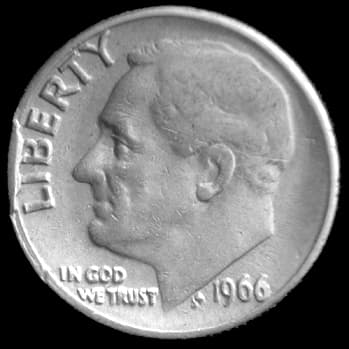
Description
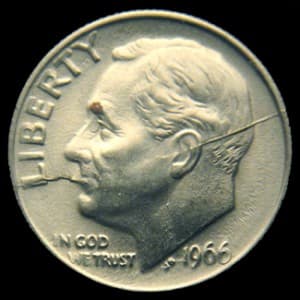
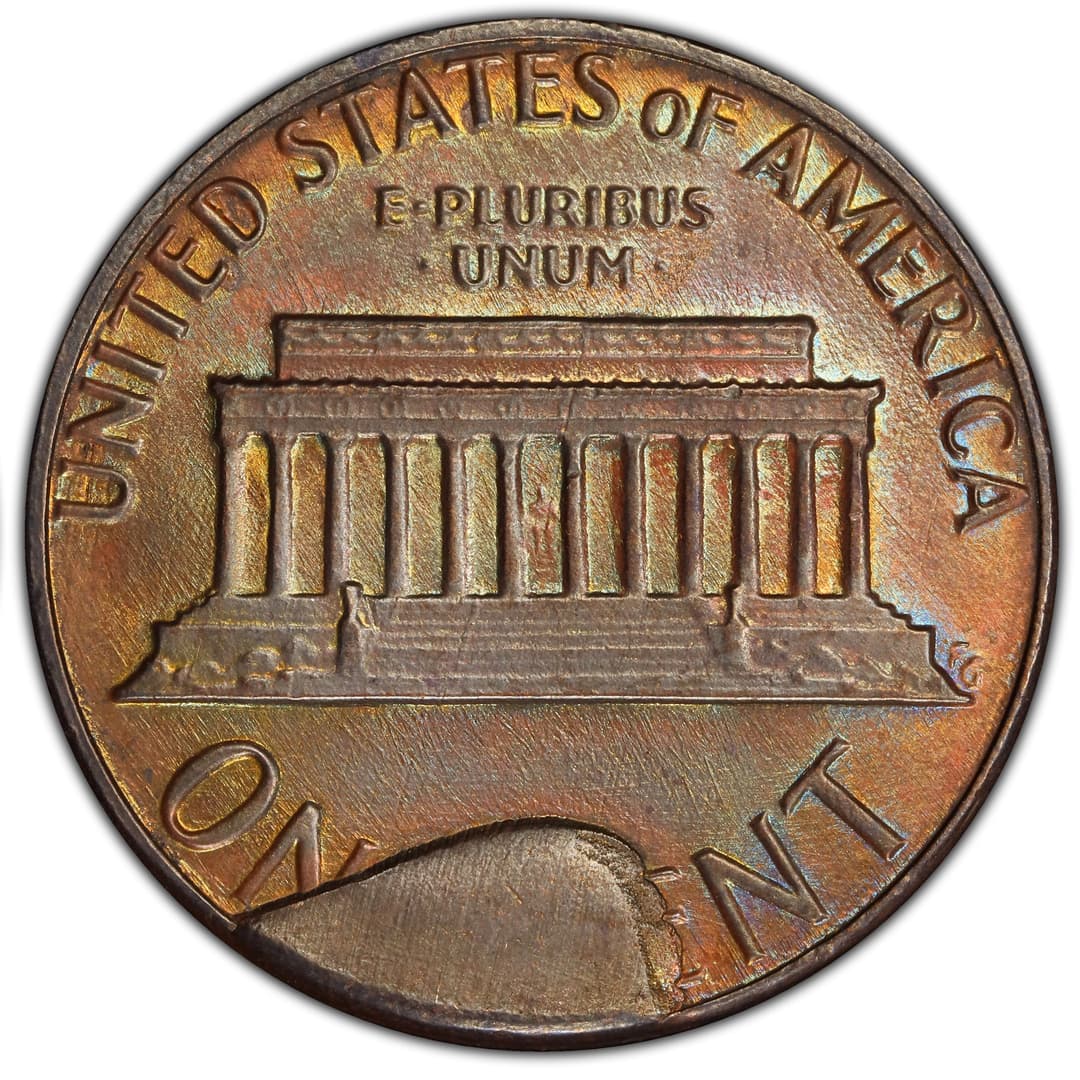
Cataloged as the second cud on the 1966 Roosevelt Dime, CU-10c-1966-02 records a retained die break where a section of the die rim fractured and remained partially attached, producing a raised mass of unstruck metal on the coin's edge. Cuds form when a piece of the die breaks away — typically along the rim where stress concentrations are highest — and the resulting void fills with metal during striking, creating an amorphous raised lump. The 1966 Roosevelt Dime occupies a unique position in U.S. coinage: struck during the 1965-1967 period when Congress mandated the removal of all mint marks from circulating coins as part of the response to a severe coin shortage driven by silver hoarding. Without mint marks, 1966 dimes cannot be attributed to Philadelphia, Denver, or San Francisco by examination alone, though all three facilities produced coins. The composition had transitioned to copper-nickel clad following the Coinage Act of 1965, making 1966 dimes among the earliest clad Roosevelt issues. Cuds on clad coinage behave differently than on silver coins due to the layered planchet structure, where the copper core can sometimes be visible at the break boundary.
Attribution History
- Discovered by Lee Eubanks
- Expert attribution by Cuds on Coins
External References
Community & Reference
Related Errors
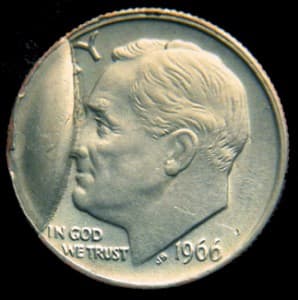
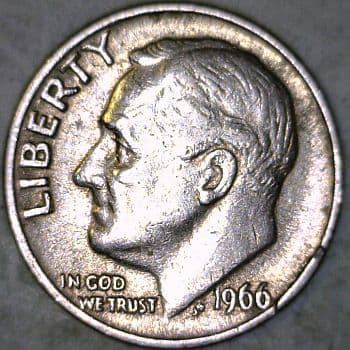
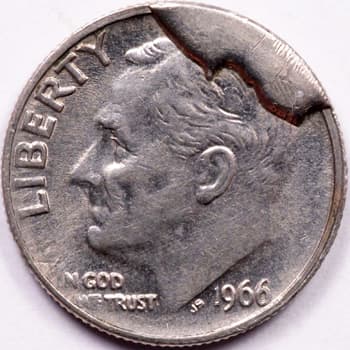
More Cud Errors
Collector Essentials
Tools for examining and preserving error coins and die varieties.
10x-20x Jeweler's Loupe
Essential for examining die varieties, doubled dies, and RPMs
Cherry Picker's Guide
The definitive reference for U.S. error coins and die varieties
2x2 Coin Flips & Holders
Protect and organize your finds with archival-quality holders
USB Digital Microscope
Capture detailed images for documentation and community submissions
As an Amazon Associate, NumisDex earns from qualifying purchases.