
1942 Cent Pattern - J-2066, Red Fiber
Strike TypeCoin Details
Description
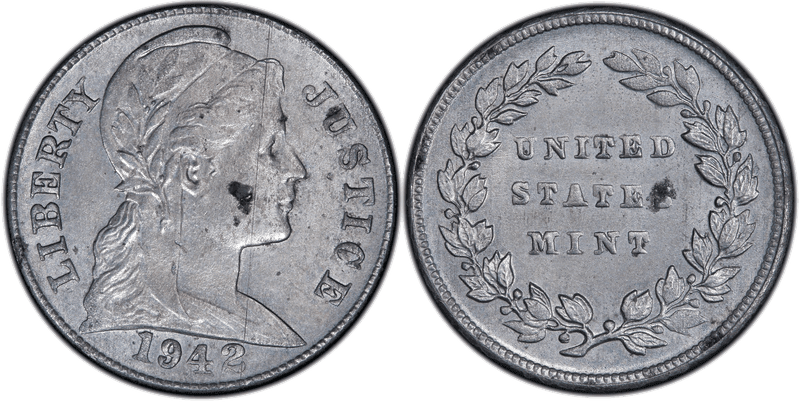
Judd-2066, Pollock-2256, is a red fiber cent pattern from the 1942 wartime testing program. Fiber — compressed paper, cotton, or other cellulose-based material — represented yet another category of non-metallic alternatives explored during the wartime emergency. Red fiber had industrial applications as an insulating and structural material, and it could be die-stamped into coin-shaped blanks with recognizable design elements. The red coloring offered a visual connection to copper, though the material's light weight and papery texture immediately distinguished it from metal. Fiber cents would have been vulnerable to moisture, which could cause swelling, warping, and eventual disintegration — a fatal flaw for any coin expected to survive years of circulation in pockets, jars, and cash registers. The fiber experiment sits alongside the plastic series as evidence of just how far the Mint was willing to push the boundaries of coinage materials when wartime necessity demanded it.
Rarity Notes
R-7 to R-8. Extremely rare. Fiber patterns are inherently fragile, and survival rates may be lower than other non-metallic experiments.
Cross References
Judd J-2066, Pollock P-2256; 1942 wartime cent composition testing program; red fiber (compressed cellulose)
External References
Error Varieties
No listings found
This category doesn't have any child listings yet.
Other Strike Types in This Series
Collector Essentials
Tools and references for building and protecting your coin collection.
10x-20x Jeweler's Loupe
A must-have for examining coin details, mint marks, and surface quality
Red Book — Guide to U.S. Coins
The essential annual reference for U.S. coin values, history, and mintages
Coin Albums & Storage
Archival-quality albums and holders to protect and display your collection
USB Digital Microscope
Capture detailed images for documentation and community submissions
As an Amazon Associate, NumisDex earns from qualifying purchases.