
1850 Proof Double Eagle Pattern - J-126
Strike Type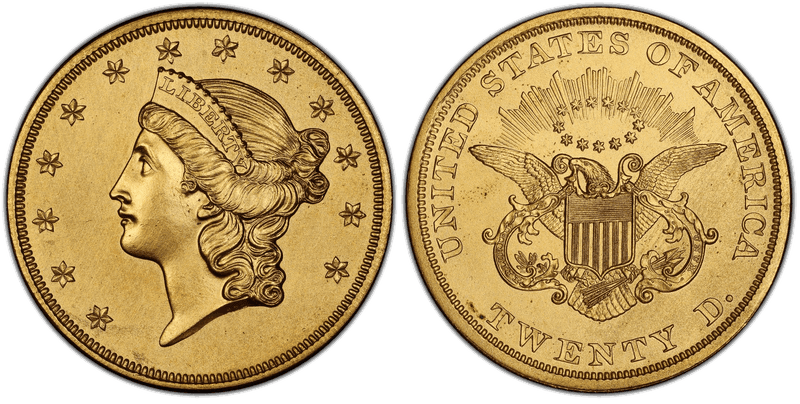
Coin Details
Auction Record
$57,500 PR62 01-01-2009 Heritage Auctions
Description
Judd-126 (Pollock-148, R.8) is one of the most historically significant U.S. pattern coins, representing the birth of the twenty-dollar gold denomination. The obverse and reverse carry the Liberty Head double eagle design that would enter regular production in 1850, though notably, this pattern die bears no date. This particular specimen is struck in silver with a reeded edge rather than the intended gold. The double eagle denomination emerged directly from the California Gold Rush. By 1849, massive gold discoveries were flooding Eastern markets, disrupting the traditional balance between gold and silver values. Silver became relatively more valuable, leading to widespread hoarding and melting of silver coins, which promptly vanished from commerce. The solution was a large gold coin suitable for major transactions and international trade, yet practical enough to actually circulate, unlike the unwieldy fifty-dollar California octagonal pieces produced in 1851 and 1852. A unique 1849 double eagle struck in gold resides in the Smithsonian Institution as a national treasure. Of the 1850-dated patterns, only three are known: two in silver and one copper-gilt piece in the Harry Bass Jr. Research Foundation Collection. The exact date of production remains undocumented, though 1850 is the most probable estimate.
External References
Error Varieties
No listings found
This category doesn't have any child listings yet.