
1849 Three Cent Die Trial - J-A1849-2
Strike Type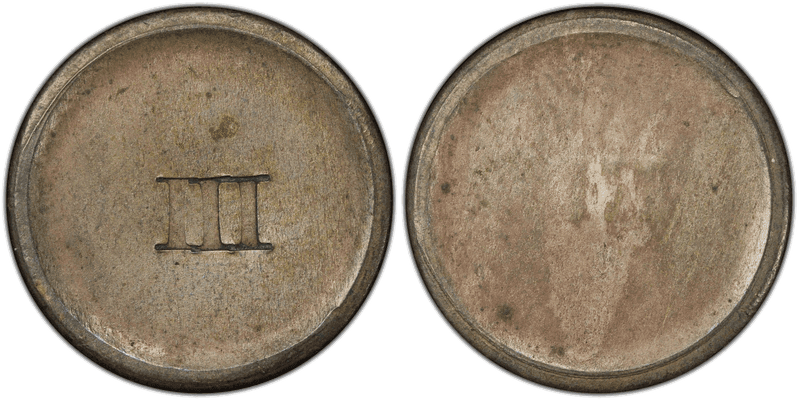
Coin Details
Description
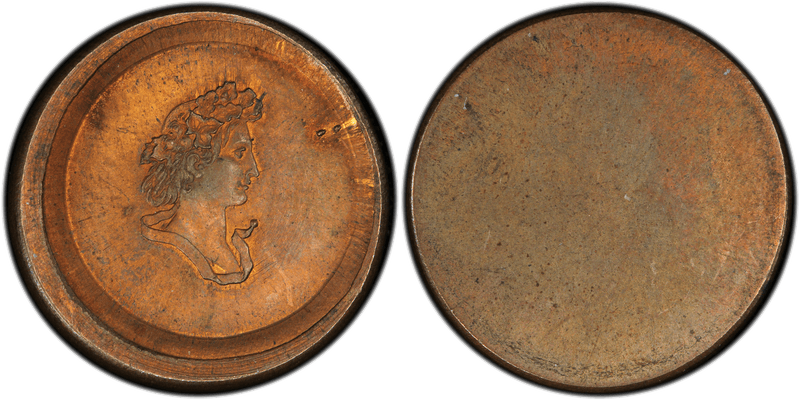
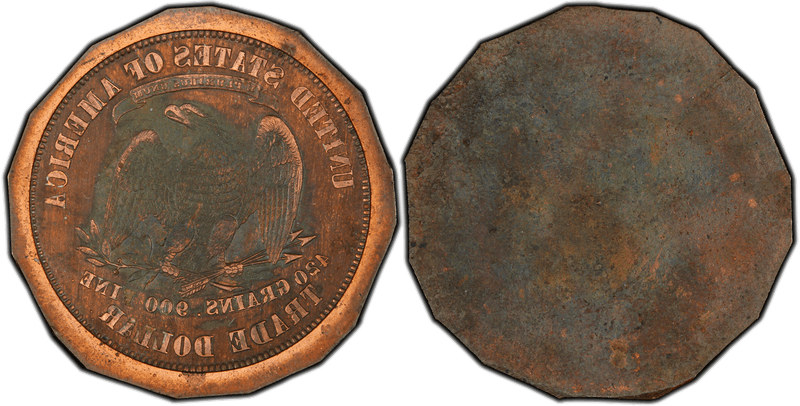
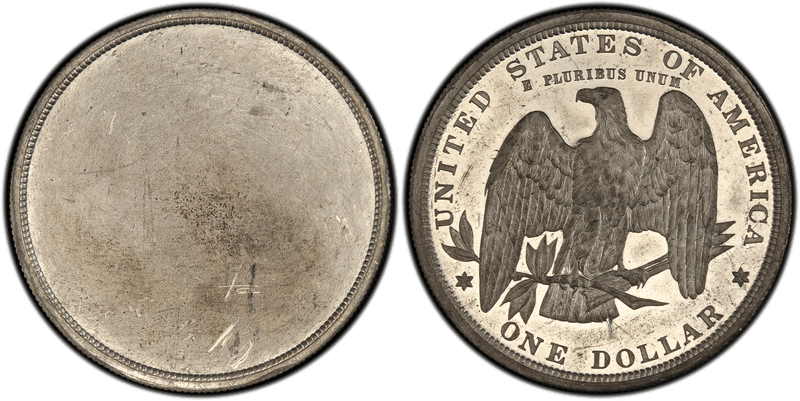
This die trial anticipates the three-cent piece denomination that would be authorized by the Act of March 3, 1851, and introduced into circulation later that year. The existence of an 1849-dated die trial indicates that the United States Mint was already experimenting with the three-cent denomination two years before its official adoption — a natural consequence of the monetary disruption caused by the California Gold Rush. The massive influx of gold from California after 1848 drove down the relative value of gold against silver, causing silver coins to be hoarded and exported for their metal value. The result was a severe shortage of small change in everyday commerce, and the three-cent piece was proposed as a solution: a tiny silver coin with a reduced silver content (75% silver, 25% copper) that would be worth less as bullion than its face value, discouraging hoarding. The obverse features a six-pointed star with a shield at the center and the date 1849 below, while the reverse displays a large Roman numeral "III" within a capital letter C. James Barton Longacre designed these dies as part of the Mint's preparatory work for the new denomination. The Judd-A1849-2 designation places this among the pre-production die trials that preceded the regular silver three-cent series. This piece documents the Mint's forward planning during one of the most turbulent periods in American monetary history, when Congress and the Mint scrambled to adapt the coinage system to the sudden abundance of California gold.
Rarity Notes
Very rare. Pre-production die trials for the three-cent denomination are extremely scarce, with most varieties known in only one to three specimens.
Cross References
Judd-A1849-2
External References
Error Varieties
No listings found
This category doesn't have any child listings yet.
Related Strike Types in This Denomination
Collector Essentials
Tools and references for building and protecting your coin collection.
10x-20x Jeweler's Loupe
A must-have for examining coin details, mint marks, and surface quality
Red Book — Guide to U.S. Coins
The essential annual reference for U.S. coin values, history, and mintages
Coin Albums & Storage
Archival-quality albums and holders to protect and display your collection
USB Digital Microscope
Capture detailed images for documentation and community submissions
As an Amazon Associate, NumisDex earns from qualifying purchases.