
1849 Proof Three Cent Pattern - J-111a
Strike TypeCoin Details
Description
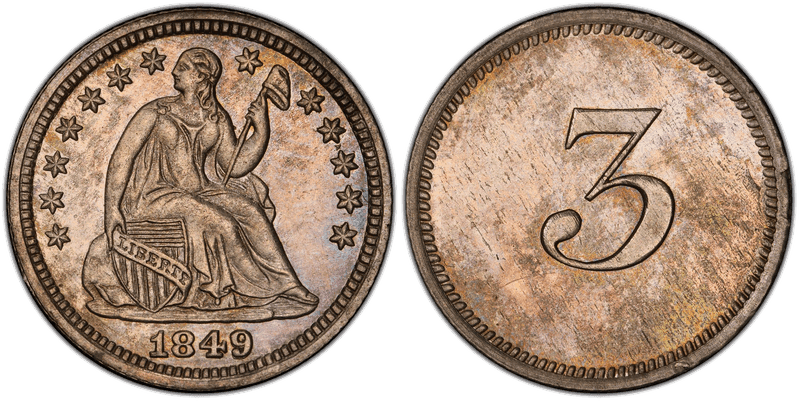
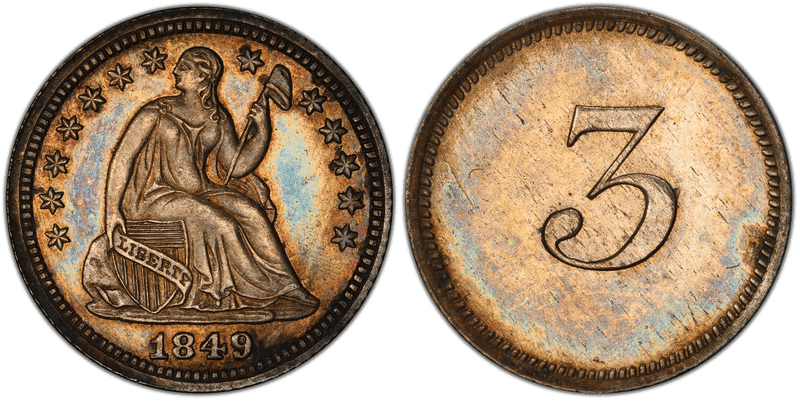
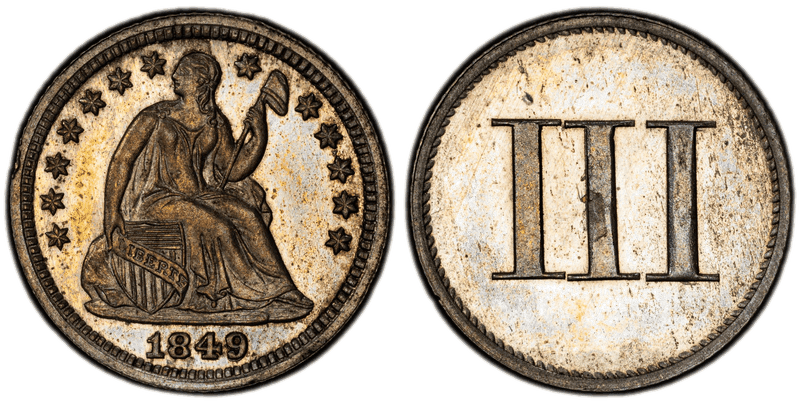
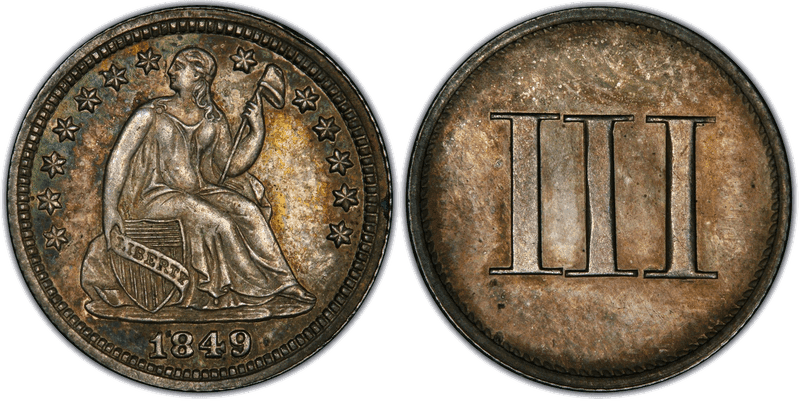
Judd-111a is the coin silver version of the earliest three-cent pattern, one of a series of experimental pieces produced in 1849 as Congress debated authorizing a three-cent denomination to facilitate purchase of the new three-cent postage stamps introduced that year. The obverse borrows the Seated Liberty design from the regular-issue half dime, featuring Liberty seated on a rock with her right hand resting on a shield. The reverse is strikingly plain, displaying only the large numeral "3" in the center with no additional ornamentation, wreath, or legend. While J-111 was struck in billon (an alloy of approximately 50% silver and 50% copper), J-111a uses standard coin silver (90% silver, 10% copper), representing a higher-purity alternative being tested for the proposed denomination. These hastily assembled muled patterns were created by pairing an existing half dime obverse die with a simple reverse die, reflecting the urgency of the postage reform debate rather than a polished design proposal.
Rarity Notes
R.7. Very rare; approximately 4-7 examples known.
Cross References
Pollock-125a
External References
Error Varieties
No listings found
This category doesn't have any child listings yet.
Other Strike Types in This Series

Collector Essentials
Tools and references for building and protecting your coin collection.
10x-20x Jeweler's Loupe
A must-have for examining coin details, mint marks, and surface quality
Red Book — Guide to U.S. Coins
The essential annual reference for U.S. coin values, history, and mintages
Coin Albums & Storage
Archival-quality albums and holders to protect and display your collection
USB Digital Microscope
Capture detailed images for documentation and community submissions
As an Amazon Associate, NumisDex earns from qualifying purchases.