
1652 Sixpence Willow Tree
Strike Type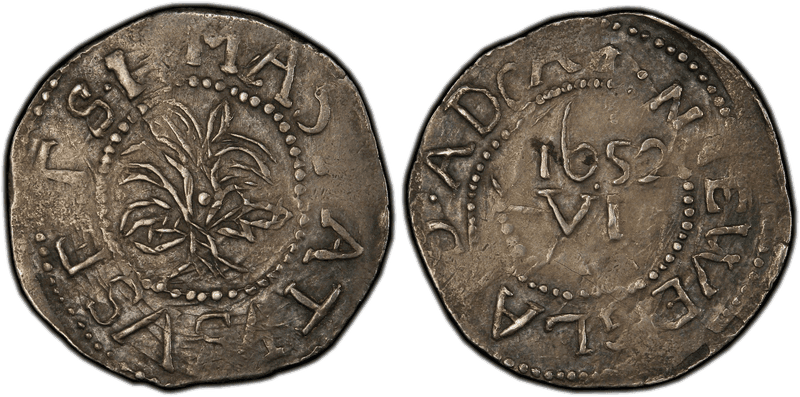
Coin Details
Description
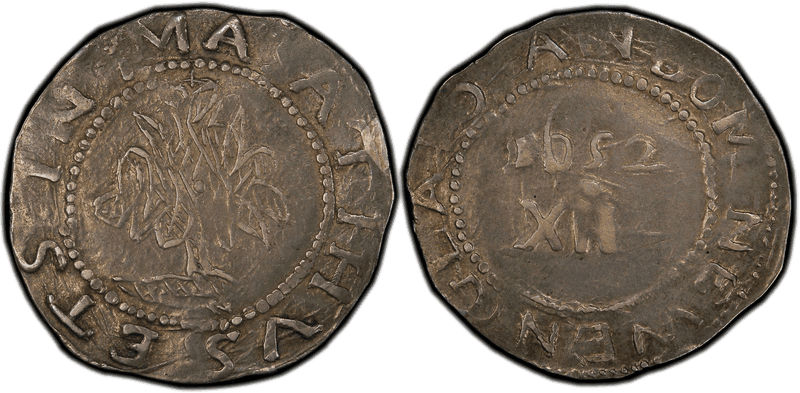
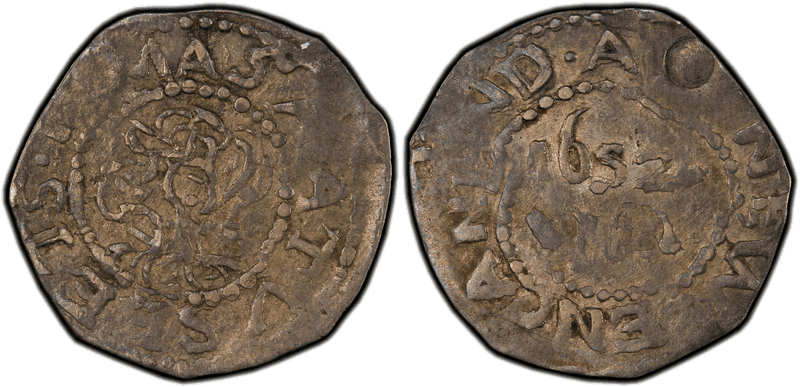
The Willow Tree sixpence is among the most elusive coins in all of American numismatics, struck circa 1653 to 1660 at the Hull Mint in Boston under the direction of mintmaster John Hull and his partner Robert Sanderson. Like all Massachusetts Bay Colony silver, this coin carries the permanent date 1652, the year of the General Court's coinage authorization, regardless of its actual date of production. The obverse bears a small, roughly engraved tree identified by tradition as a willow, encircled by the inscription MASATHVSETS IN. The reverse shows the denomination VI (six pence) within an inner circle, surrounded by NEW ENGLAND AN DOM 1652. The entire design was hand-cut into the die without standardized letter punches, producing lettering that varies considerably from one die pair to the next. Each surviving coin is essentially a unique piece of miniature art produced under extremely primitive workshop conditions. Willow Tree sixpences are extraordinarily rare, with fewer than a dozen genuine examples recorded. The small size of the sixpence planchet, combined with the crude striking methods, means surviving pieces often display incomplete legends and weakly impressed details. The target weight was 36 grains (2.33 grams) of sterling silver, though actual weights vary due to irregular planchet preparation. Silver sheet was hammered to approximate thickness, then individual planchets were cut and trimmed by hand before striking between two iron dies using a hammer. The survival rate for Willow Tree sixpences is dramatically lower than for shillings, because smaller denominations were subjected to heavier circulation wear and were more easily lost. When genuine examples appear at auction, they command prices well into six figures regardless of condition.
Rarity Notes
Extremely rare. Fewer than a dozen genuine examples are recorded. Among the rarest of all colonial American coins. Virtually all known specimens show significant wear.
Cross References
Noe 1; Salmon; Whitman 155-165; Crosby
External References
Error Varieties
No listings found
This category doesn't have any child listings yet.
Other Strike Types in This Series
Collector Essentials
Tools and references for building and protecting your coin collection.
10x-20x Jeweler's Loupe
A must-have for examining coin details, mint marks, and surface quality
Red Book — Guide to U.S. Coins
The essential annual reference for U.S. coin values, history, and mintages
Coin Albums & Storage
Archival-quality albums and holders to protect and display your collection
USB Digital Microscope
Capture detailed images for documentation and community submissions
As an Amazon Associate, NumisDex earns from qualifying purchases.