
1652 Sixpence Pine Tree
Strike Type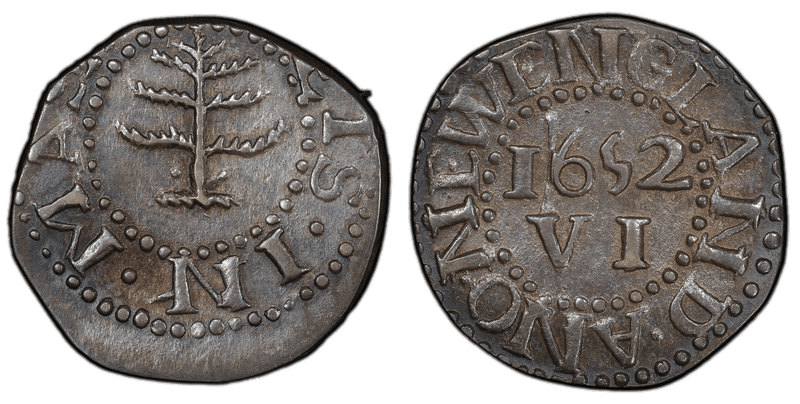
Coin Details
Description
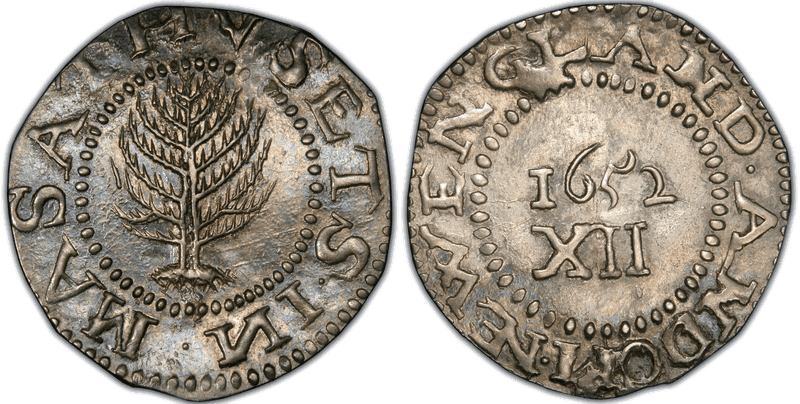
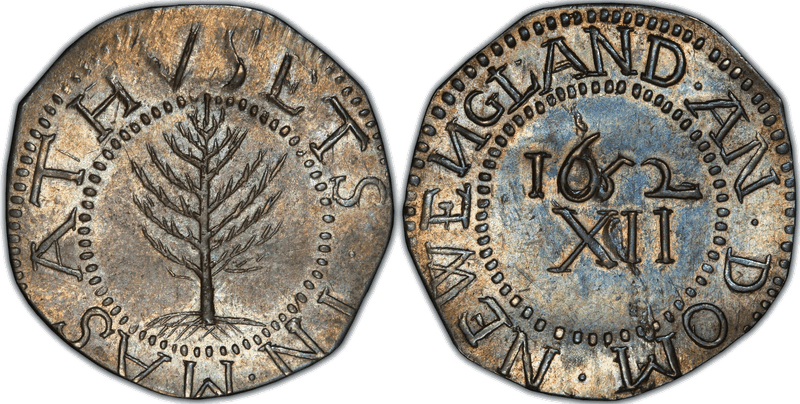
The Pine Tree sixpence was struck circa 1667 to 1682 at the Hull Mint in Boston, representing the half-shilling denomination in the Pine Tree series. As the third and final tree design in the Massachusetts Bay Colony coinage, the Pine Tree type was produced over a longer period than either the Willow or Oak Tree designs, resulting in a somewhat larger surviving population — though the sixpence remains considerably scarcer than the shilling. The obverse features the pine tree within MASATHVSETS IN, adapted to the sixpence planchet of approximately 20-22 millimeters. The reverse displays VI (six pence) at center within a beaded circle, encircled by NEW ENGLAND AN DOM 1652. The pine tree on the sixpence is necessarily smaller than on the shilling, and the compressed format sometimes produces specimens with incomplete legends or weakly defined tree branches. The sixpence served a critical commercial function in the colonial economy, representing a denomination more practical for everyday transactions than the shilling. At 36 grains (2.33 grams) of sterling silver, it provided purchasing power roughly equivalent to a modest meal or several pounds of common provisions. Its intermediate size and value made it a workhorse of colonial New England commerce. Pine Tree sixpences exist in multiple die varieties cataloged by Noe and Salmon, though the total number of varieties is smaller than for the prolific shilling. The series includes both early (larger planchet) and later (smaller planchet) specimens, mirroring the planchet reduction observed in the shilling series, though the distinction is less dramatic on the already-small sixpence format.
Rarity Notes
Very rare. Considerably scarcer than Pine Tree shillings. Estimated surviving population across all varieties is under 200 pieces.
Cross References
Noe 1-8; Salmon; Whitman 485-510; Crosby
External References
Error Varieties
No listings found
This category doesn't have any child listings yet.
Other Strike Types in This Series
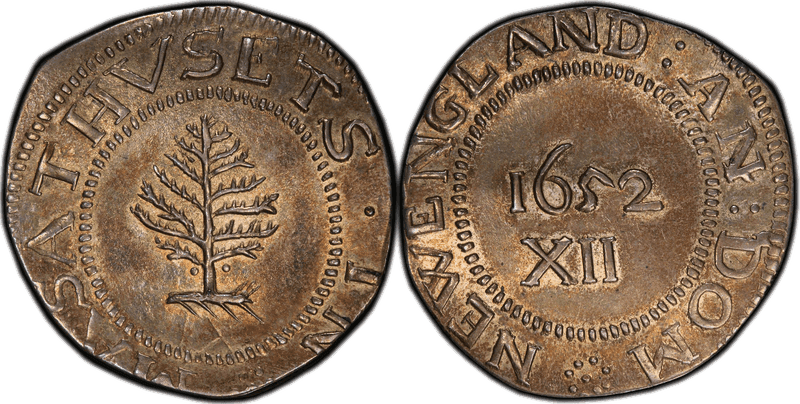

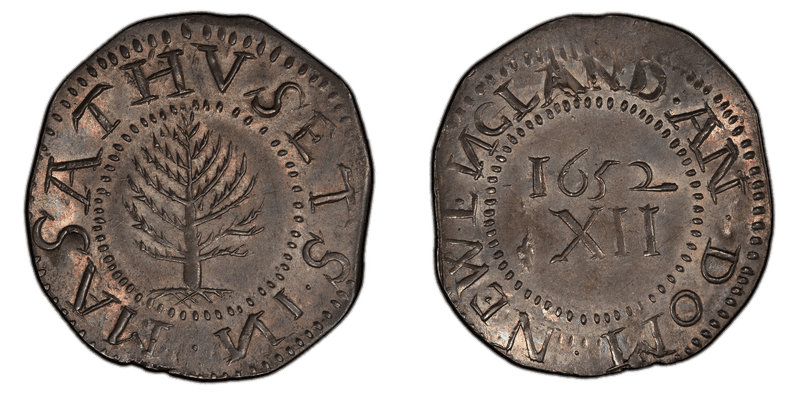
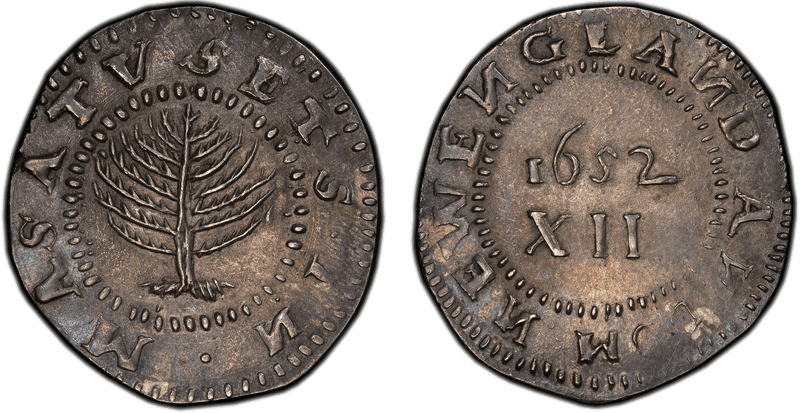
Collector Essentials
Tools and references for building and protecting your coin collection.
10x-20x Jeweler's Loupe
A must-have for examining coin details, mint marks, and surface quality
Red Book — Guide to U.S. Coins
The essential annual reference for U.S. coin values, history, and mintages
Coin Albums & Storage
Archival-quality albums and holders to protect and display your collection
USB Digital Microscope
Capture detailed images for documentation and community submissions
As an Amazon Associate, NumisDex earns from qualifying purchases.