
1652 Shilling Willow Tree
Strike Type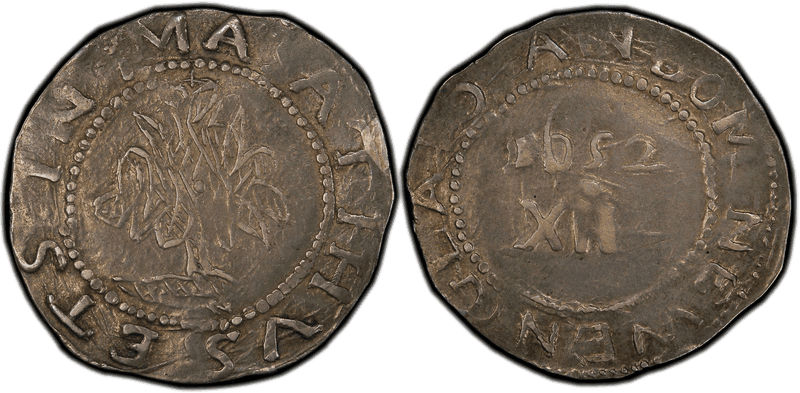
Coin Details
Description
The Willow Tree shilling represents the second design type in the Massachusetts Bay Colony silver coinage series, struck approximately 1653 to 1660 by mintmaster John Hull and his partner Robert Sanderson at the Hull Mint in Boston. Although all Massachusetts colonial silver bears the fixed date 1652 — the year the General Court authorized coinage — numismatic research establishes that Willow Tree pieces followed the initial NE (New England) coinage and preceded the Oak Tree design. The obverse features a crude, hand-engraved tree that early collectors identified as a willow, though the rough execution makes precise botanical identification difficult. The tree is encircled by the legend MASATHVSETS IN, with spelling variations across die pairs. The reverse displays the denomination XII (twelve pence, equal to one shilling) surrounded by NEW ENGLAND AN DOM and the date 1652. The dies were cut by hand without the benefit of punches, giving each variety a distinctive character unlike any other colonial American coinage. Willow Tree shillings are the rarest of the three tree-design shilling types. Fewer than 25 genuine examples exist across all die varieties cataloged by Noe and later Salmon. Survivors typically show heavy wear, weak strikes, and irregular planchets characteristic of the primitive minting technology available in mid-seventeenth-century Boston. The planchets were cut from hammered silver sheet and trimmed to approximate the standard weight of 72 grains (4.67 grams) of sterling silver. The Massachusetts silver coinage was struck in defiance of English royal prerogative, which reserved coinage rights to the Crown. The colony justified its actions by citing the chronic shortage of circulating currency. This unauthorized mint operated for over thirty years until its closure around 1682 under pressure from the restored Stuart monarchy.
Rarity Notes
Extremely rare. Fewer than 25 genuine examples survive across all die varieties. The rarest of the three tree-type shilling designs. Typically encountered in heavily worn condition.
Cross References
Noe 1-4; Salmon; Whitman 170-185; Crosby
External References
Error Varieties
No listings found
This category doesn't have any child listings yet.
Other Strike Types in This Series
Collector Essentials
Tools and references for building and protecting your coin collection.
10x-20x Jeweler's Loupe
A must-have for examining coin details, mint marks, and surface quality
Red Book — Guide to U.S. Coins
The essential annual reference for U.S. coin values, history, and mintages
Coin Albums & Storage
Archival-quality albums and holders to protect and display your collection
USB Digital Microscope
Capture detailed images for documentation and community submissions
As an Amazon Associate, NumisDex earns from qualifying purchases.