
Standing Liberty Quarter: How to Tell 1916 from 1917 Type 1, and Type 1 from Type 2
The Standing Liberty Quarter Visual Guide
The Standing Liberty Quarter (1916-1930), designed by Hermon Atlee MacNeil, is one of the most artistically admired U.S. coin designs — and one of the most confusing for collectors to sort out. There are two major design types, and within Type 1, the differences between the 1916 and 1917 versions are subtle enough to trip up experienced collectors. This guide covers both distinctions with visual comparisons.
Part 1: Type 1 vs. Type 2 — The Major Design Change
The most obvious distinction in the Standing Liberty Quarter series is between the two major design types:
Type 1 (1916-1917)
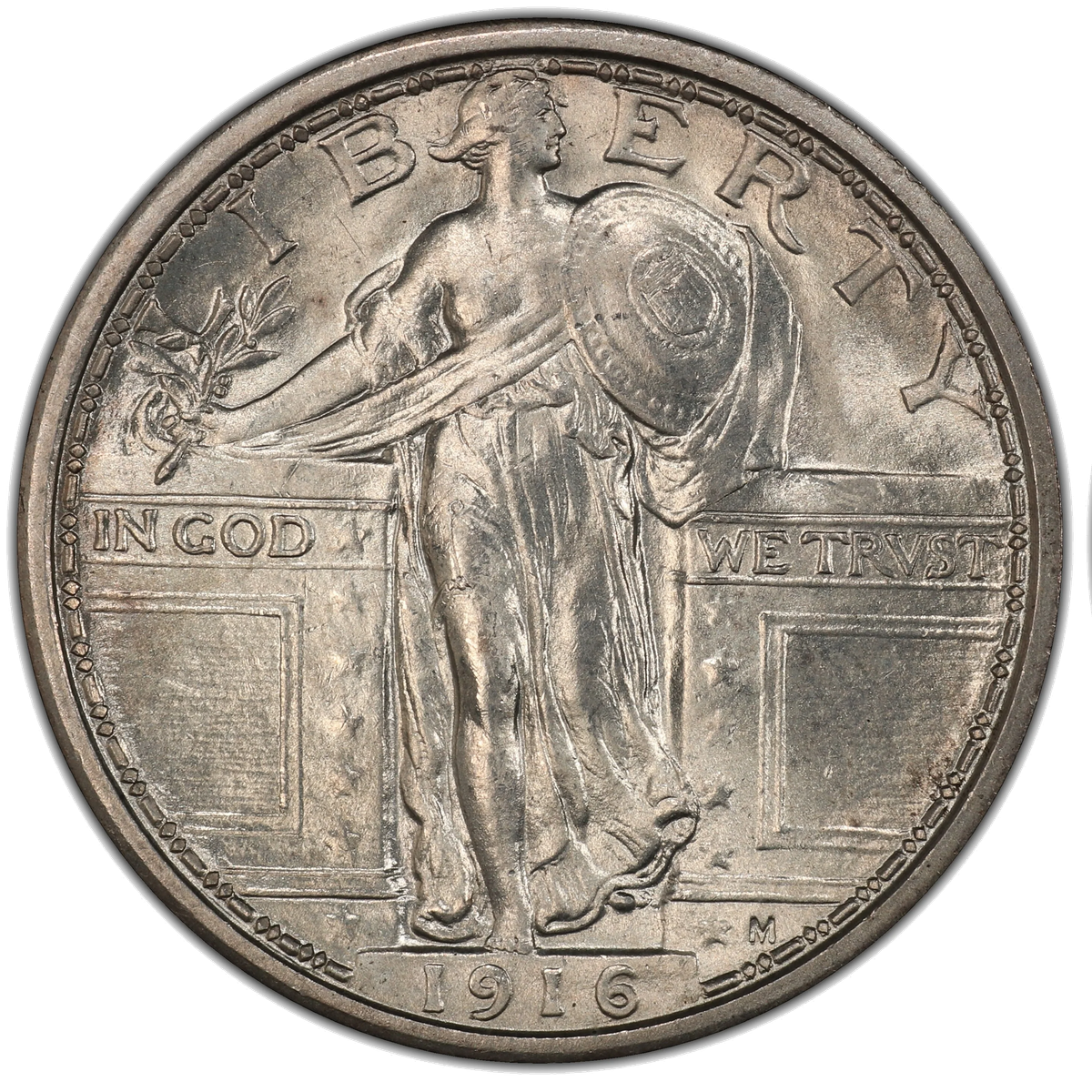
The original MacNeil design features Liberty standing in a gateway, holding a shield in her left hand and an olive branch in her right. The most notable feature of the Type 1 design is Liberty's exposed right breast, which was part of MacNeil's artistic vision of Liberty as strong and unashamed.
Type 2 (1917-1930)
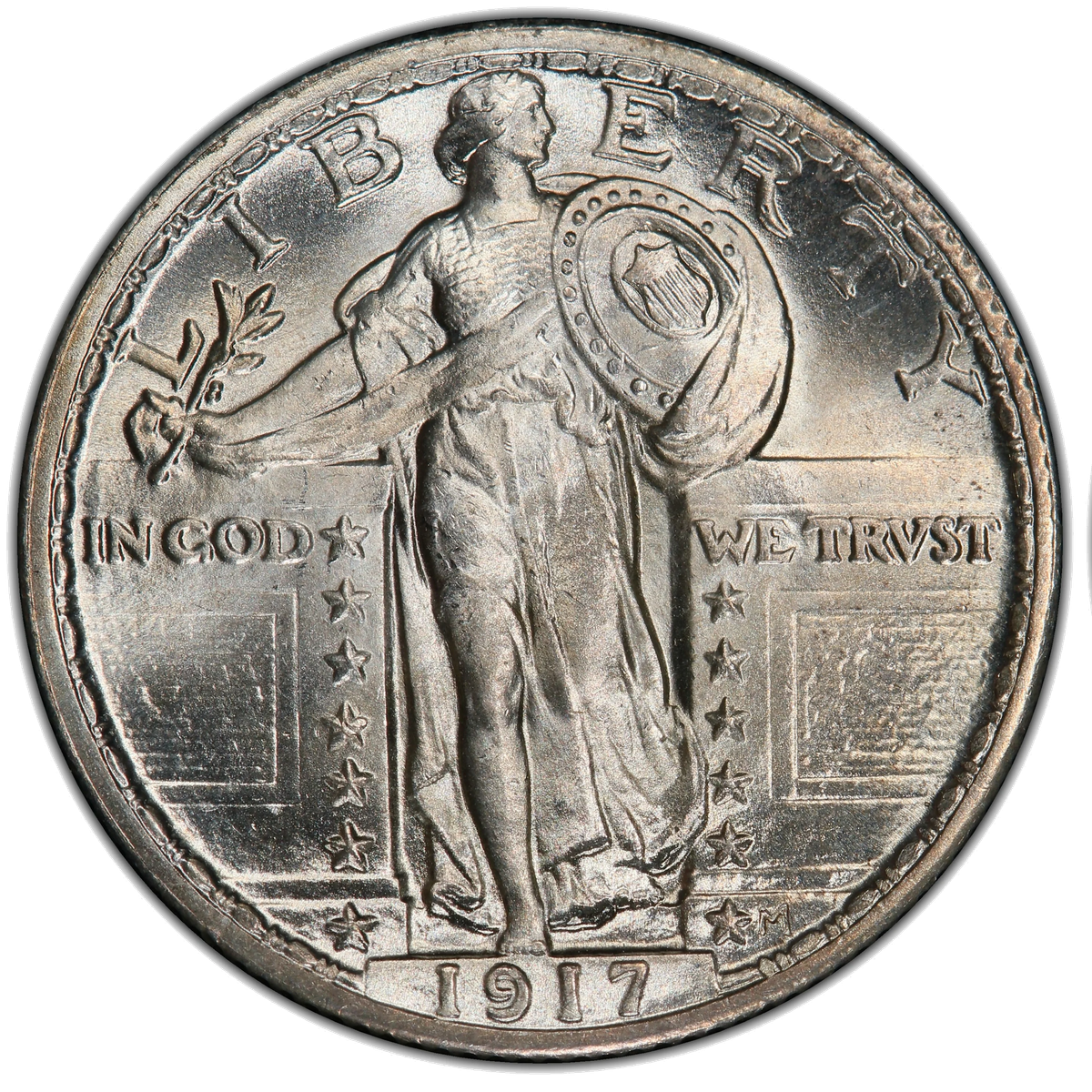
Public reaction to the exposed breast led to a mid-1917 redesign. In the Type 2 design, Liberty's torso is covered with a chain mail shirt. The overall composition is similar, but the covered design is the version most people are familiar with since it was used for 14 years.
At a glance, Type 1 vs. Type 2 is easy:
- Exposed breast → Type 1 (1916 or early 1917)
- Chain mail shirt → Type 2 (late 1917-1930)
Reverse Differences
The reverse also changed between types. Both feature an eagle in flight, but the arrangement of the stars differs:
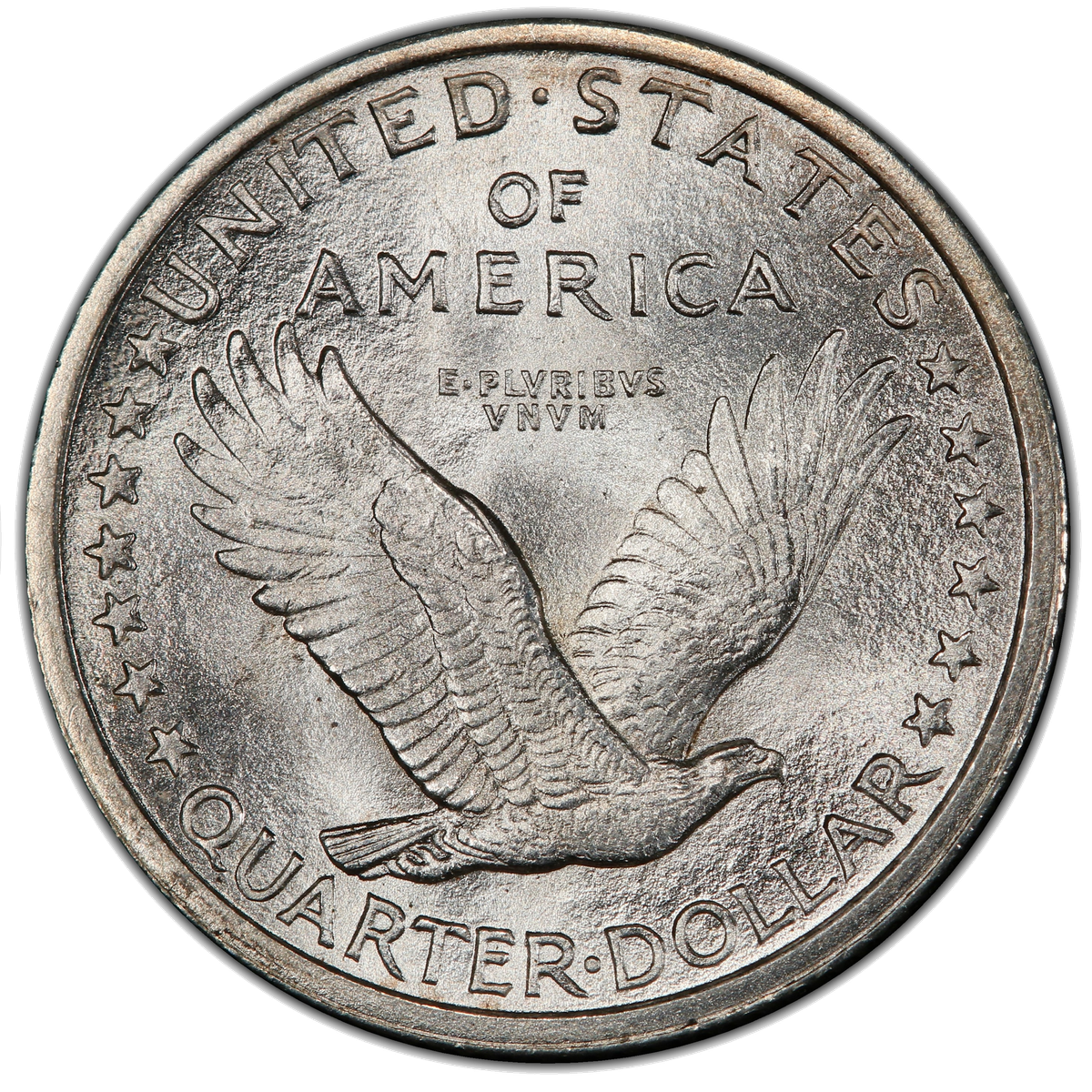
Type 1 reverse — all 13 stars arranged in a flat row below the eagle
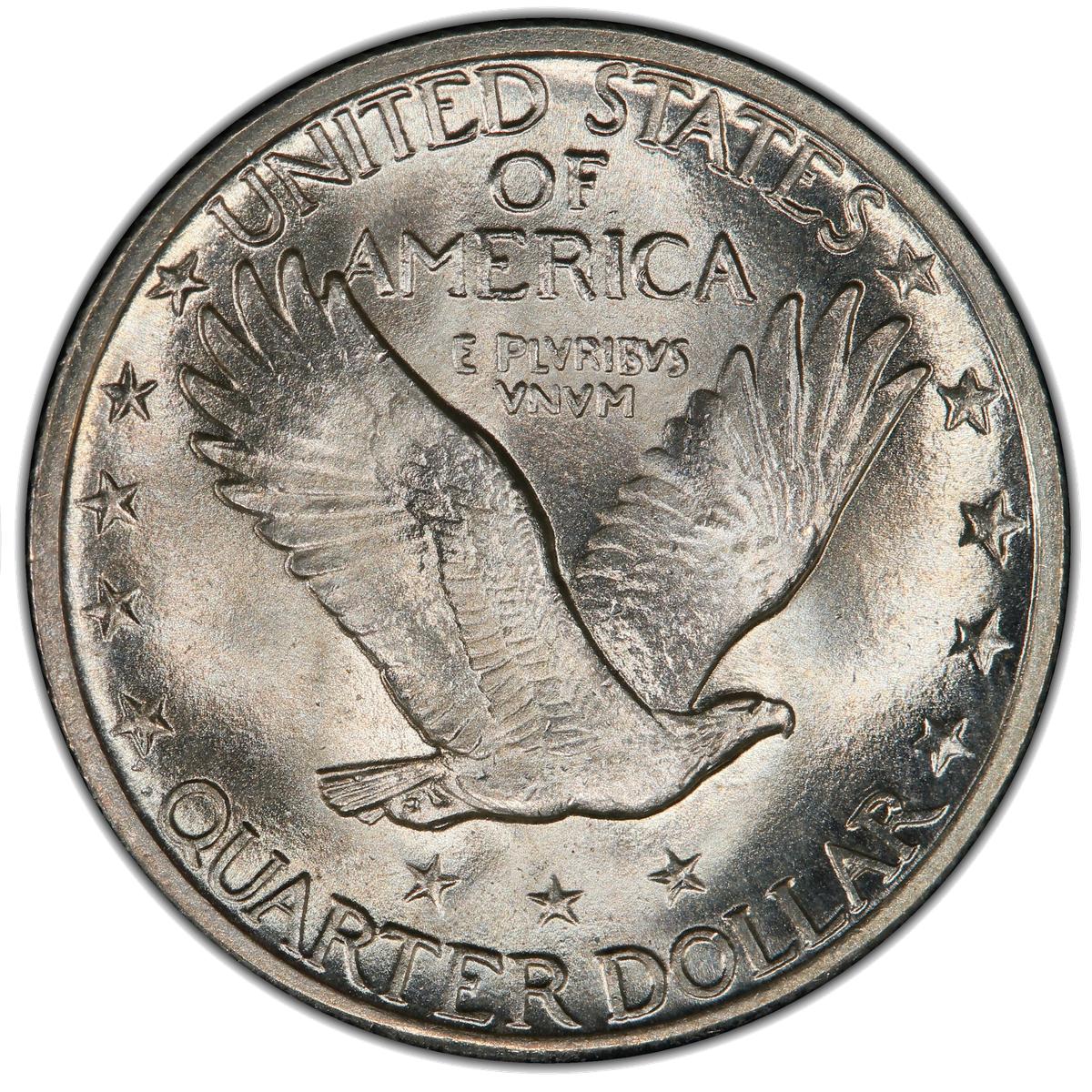
Type 2 reverse — three stars repositioned above the eagle
- Type 1 — All 13 stars are arranged in a flat configuration below the eagle
- Type 2 — Three stars have been repositioned above the eagle, with the remaining stars rearranged below
Part 2: 1916 vs. 1917 Type 1 — The Subtle Within-Type Differences
Both the 1916 and the 1917 Type 1 use the exposed-breast design, making them easy to confuse — especially when the date is worn. This distinction matters enormously because the 1916 (mintage: 52,000) is worth thousands of dollars while the 1917 Type 1 (mintage: over 8.7 million across three mints) is far more common.
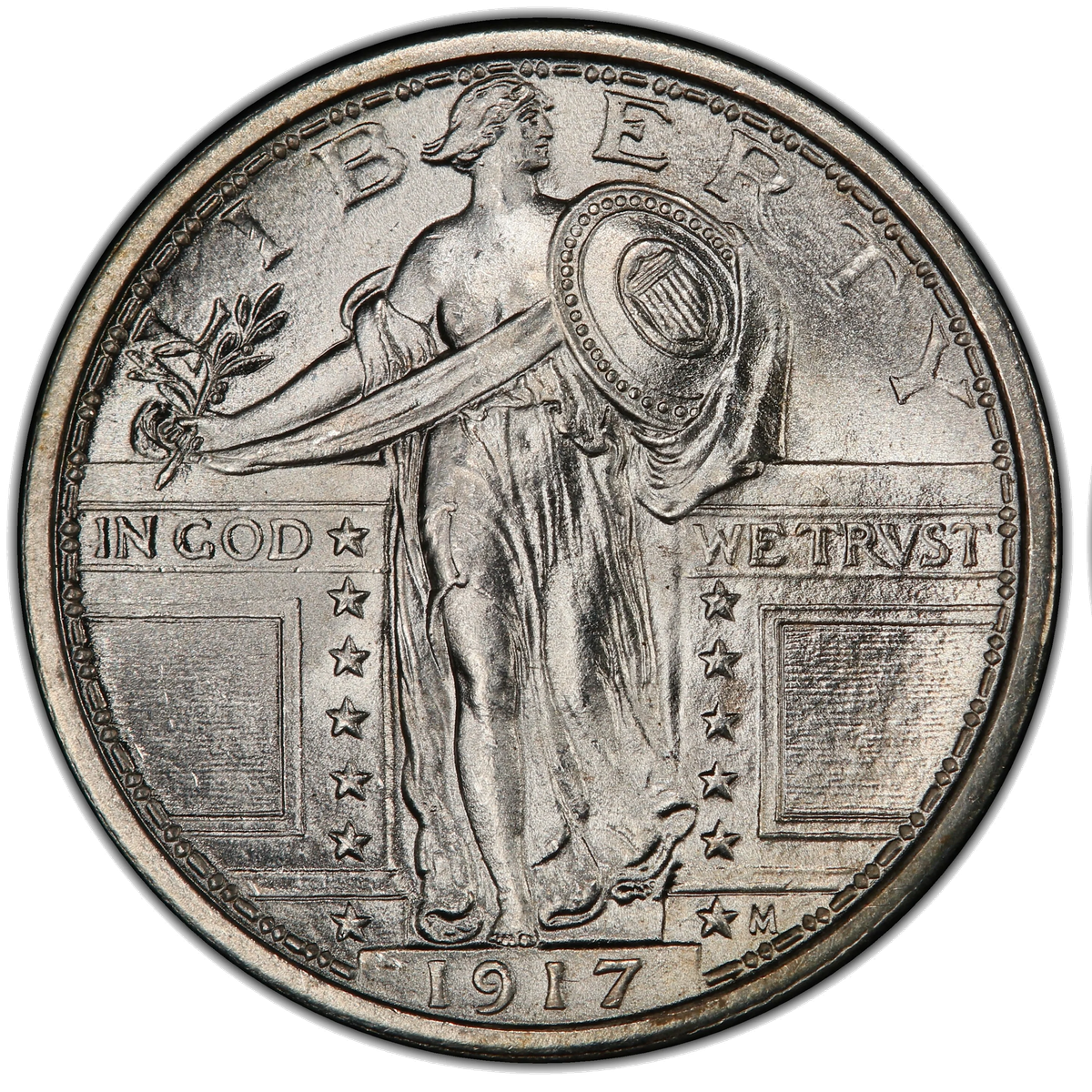
Key differences to look for:
1. Hairlines and Head Detail
The 1916 was struck from different dies than the 1917 Type 1, and there are subtle differences in the hair detail and the arrangement of lines in Liberty's cap. Under magnification, the die characteristics of the 1916 are distinct from those of the 1917.
2. Gown and Foot Position
The position and detail of Liberty's gown and feet show minor differences between the two years. The 1916 dies produced slightly different draping and positioning than the 1917 Type 1 dies.
3. Border and Rim Details
The 1916 has a slightly different border treatment than the 1917 Type 1. The rim width and the positioning of design elements relative to the rim can differ.
4. Date Area (When Visible)
When the date is at least partially visible, the font and positioning of the numerals can help confirm which year you're looking at. On heavily worn coins where the date has been lost, the die characteristics described above become critical.
Authentication Is Essential
Given the enormous value difference between a 1916 SLQ and a 1917 Type 1, professional authentication through PCGS or NGC is essential for any coin you believe might be a 1916. The grading services have extensive die records and expertise in distinguishing these two years.
Browse Standing Liberty Quarter varieties in the NumisDex catalog.
0 Replies
Related Threads
- The Quarter: America’s Most Collected Coin0 replies · 1mo ago
- What W Mint Mark Quarters Are and Why They're Worth Saving (2019-2021)0 replies · 3mo ago
- Top 10 State and ATB Quarter Errors Worth Looking For0 replies · 3mo ago
- CCAC Recommends Five Designs for 2027 Youth Sports Quarters: Golf, Baseball, Soccer, Softball, and Snowboarding0 replies · 3mo ago
- 2027-2030 American Youth Sports Quarters: What We Know About the Next Quarter Program0 replies · 3mo ago