
How to Tell Real Errors From Post-Mint Damage
The #1 Skill Every Error Collector Needs
The single most important skill in error coin collecting is distinguishing genuine Mint errors from post-mint damage (PMD). A coin that was dropped, scratched, or tumbled in a dryer can superficially resemble an error — but the difference in value is enormous.
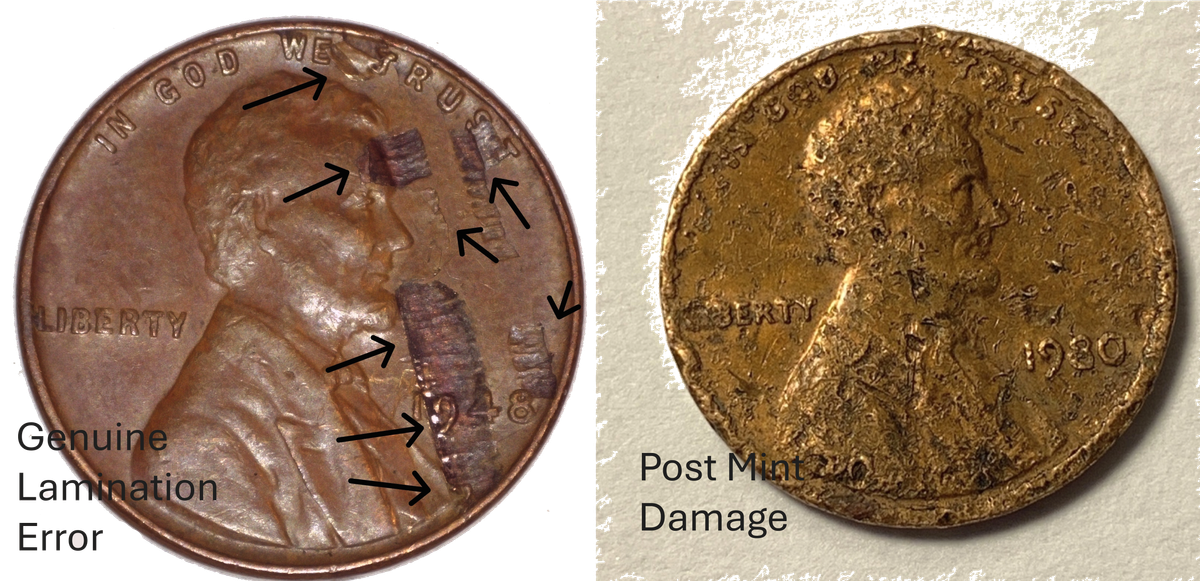
Genuine lamination error (left) with intact flow lines around the anomaly vs. post-mint damage (right) showing disturbed metal and no flow line continuity
Here are the key principles that apply across almost every error type:
Flow Lines Tell the Story
When a coin is struck at the Mint, the metal flows under tremendous pressure (35-150 tons). This creates flow lines — microscopic patterns in the metal that radiate outward from the center of the strike. A genuine error will have flow lines that incorporate the error feature. Post-mint damage disrupts existing flow lines.
Consistency vs. Uniqueness
Die errors (doubled dies, cuds, trail dies, die clashes) appear identically on every coin struck from that die. If you can find a second example showing the same feature in the same location, it's a die variety. Post-mint damage is unique to each coin.
The Magnification Test
A 10x loupe is the error collector's most important tool. Under magnification, genuine errors show clean, pressure-formed features. PMD shows scratches, tool marks, irregular tearing, or surface disruption that's inconsistent with the minting process.
Common Misidentifications
- Machine doubling vs. doubled die — Machine doubling is flat and shelf-like with no serifs; true doubled dies show two fully formed, rounded impressions
- Dryer coins vs. broadstrikes — Dryer coins show post-strike scratches and dings; genuine broadstrikes have expanded diameter with smooth original surfaces
- Die deterioration vs. errors — Late die state coins look "mushy" from normal die wear, not from an error event
- Plating bubbles vs. die chips — Zinc cent plating issues are extremely common and not errors
Share Your Finds
- What was the first error you identified correctly on your own?
- Have you ever been fooled by PMD that looked like a real error?
- What tools do you use for error examination — loupe, USB microscope, stereo microscope?
- Post your questionable finds here and the community can help identify them!
Explore in the NumisDex Catalog
Related varieties and errors from the NumisDex database:
0 Replies
Related Threads
- 50c-1976-D-reverse RIDB?0 replies · 1w ago
- Vending Machine, Counting Machine, and Crimper Damage on Coins2 replies · 3w ago
- PMD Vocabulary: Scratches, Gouges, and Damage Every Collector Should Recognize0 replies · 3mo ago
- My Coin Looks Melted or Blobby — Die Error or Acid Damage?0 replies · 3mo ago
- Tall Rim or Thick Edge on Your Coin: Mint Error or Post-Mint Damage?0 replies · 3mo ago