
Die Crack vs. Die Chip vs. Cud: How to Tell Them Apart
DCKUnderstanding Die Damage: Cracks, Chips, and Cuds
As U.S. Mint dies wear down from striking thousands of coins, they develop damage that transfers to every coin they strike. Three of the most common types of die damage are die cracks, die chips, and cuds. While they're all caused by deteriorating dies, they look different, have different causes, and carry different levels of collector interest.
Die Cracks
A die crack is a fracture in the die surface that appears as a raised line on the coin. Because the crack is recessed into the die, metal flows into it during striking, creating a raised ridge on the finished coin.
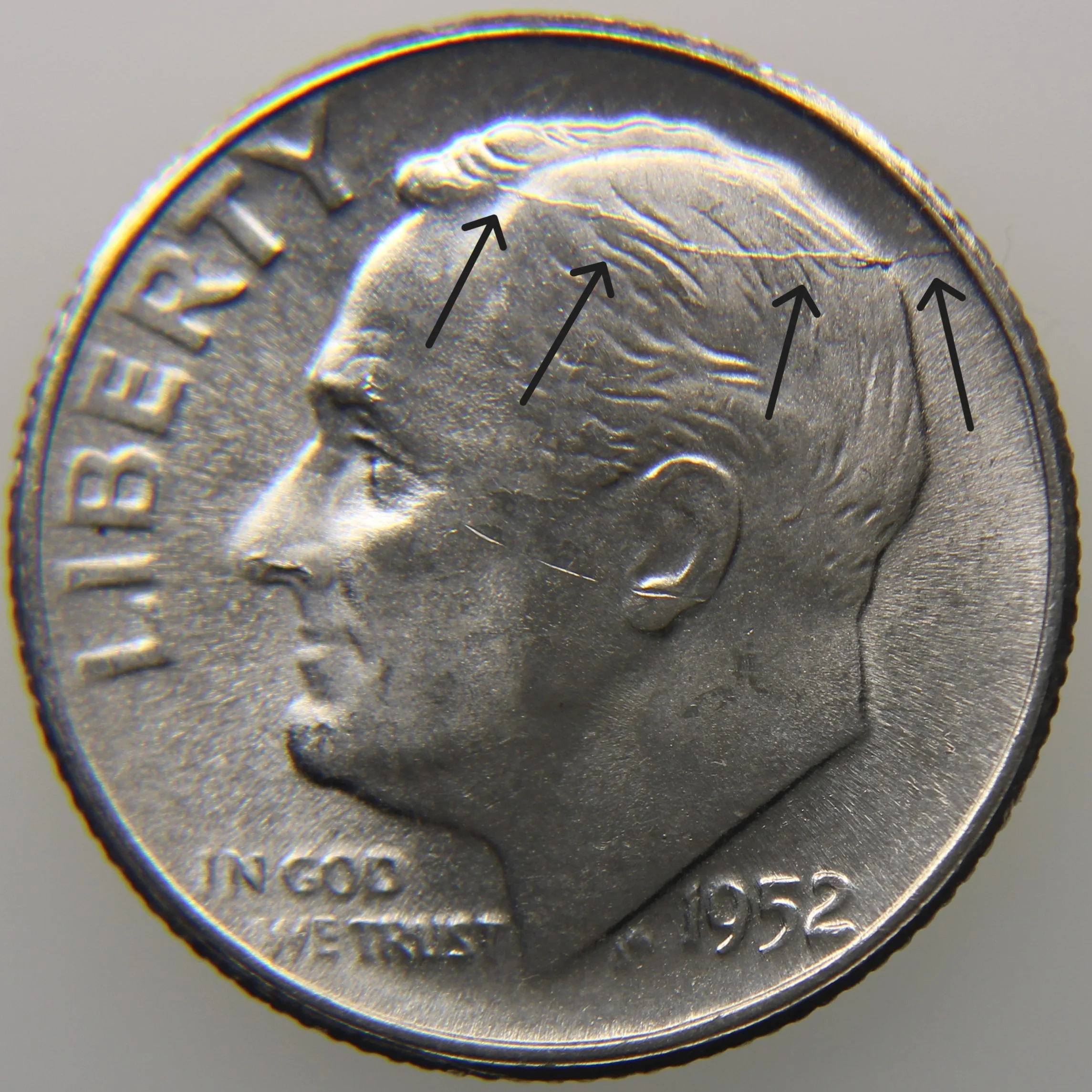
- Appear as thin, raised lines running across the coin's surface
- Can extend from rim to rim or appear anywhere on the design
- May be straight, curved, or branching
- Common on heavily used dies — most die cracks add minimal premium
- Dramatic or unusually placed cracks can command modest premiums
Die Chips
A die chip occurs when a small piece of the die surface breaks away, leaving a void that fills with metal during striking. The result is a small raised blob or bump on the coin.

- Appear as small, raised lumps or blobs on the coin's surface
- Usually round or irregular in shape
- Most common inside or near letters, numbers, and design elements
- The famous BIE error on Lincoln cents is a specific type of die chip between the B and E of LIBERTY
- Most die chips add minimal premium unless large or in prominent locations
Cuds
A cud (technically a "major die break") occurs when a piece of the die breaks away at the rim. Because the break extends to the edge of the die, the affected area on the coin shows a featureless, raised blob extending from the rim inward.
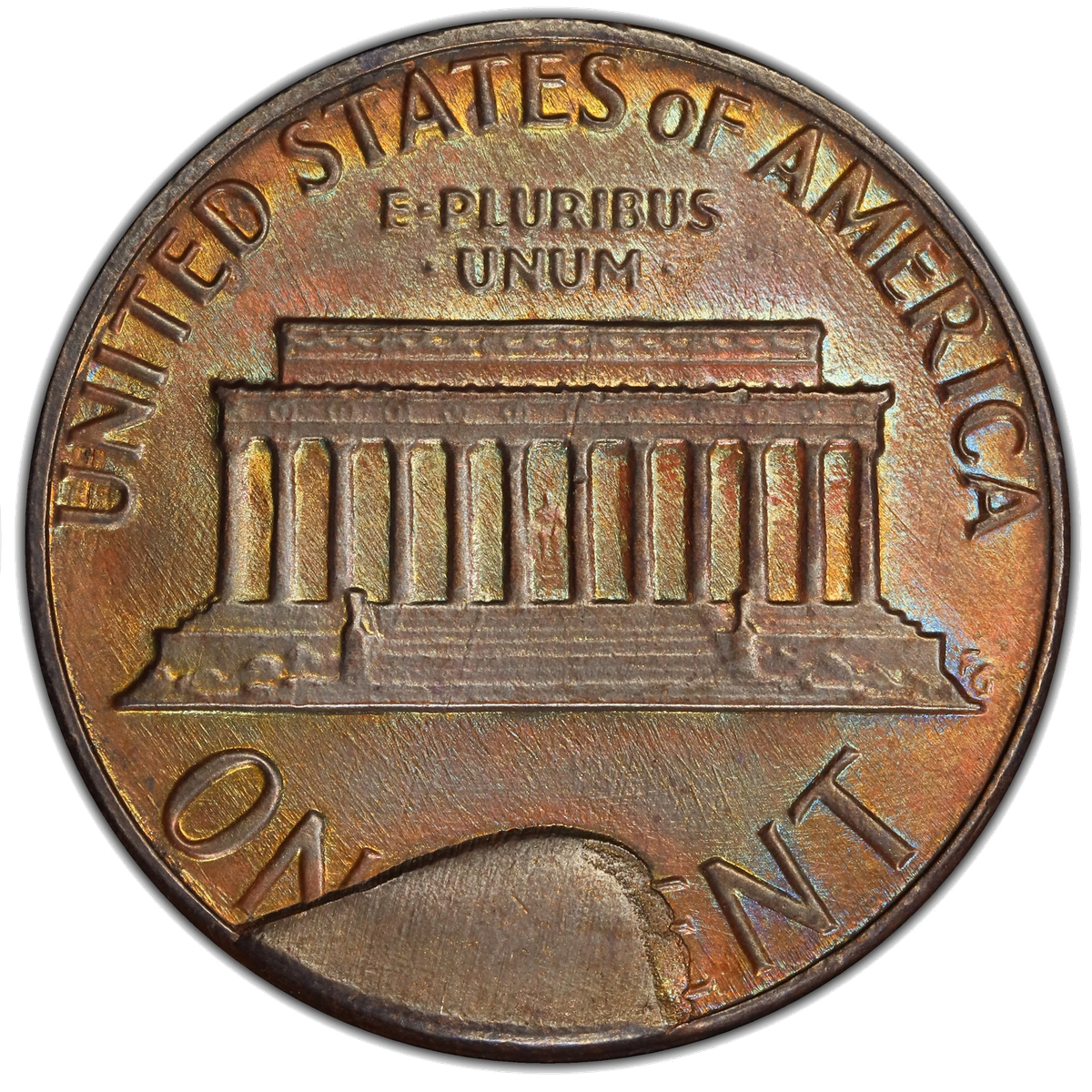
- Always connected to the rim — this is what distinguishes a cud from an interior die break
- The affected area is raised and featureless (no design detail)
- Can range from small rim cuds to massive breaks covering a quarter of the coin
- Larger and more dramatic cuds command higher premiums
- Well-documented — NumisDex catalogs cuds from many die pairs
How They're Related
Die cracks, chips, and cuds are all stages of die deterioration. A die crack can progress over time as the die continues to be used — what starts as a thin crack may eventually lead to a piece of the die breaking away entirely, creating a die chip (interior) or a cud (at the rim). Finding coins from the same die pair at different stages of deterioration is one of the appeals of collecting die damage varieties.
Quick Reference
- Die crack = raised line (fracture in die surface)
- Die chip = raised blob (piece broke out of die interior)
- Cud = raised featureless area at rim (piece broke off die edge)
Explore die damage varieties across all denominations in the NumisDex die crack, die chip, and cud listings.
0 Replies
Related Threads
- Spiked Heads: When the Portrait Grows a Horn0 replies · yesterday
- 50c-2026-D-DBK or DIC0 replies · 1w ago
- Split Dies: When the Die Comes Apart0 replies · 2w ago
- What Is a BIE Error on a Lincoln Cent, and Is It Worth Anything?0 replies · 3mo ago
- When a Die Dies: How Cuds Form and Why Every Stage of Failure Is Collectible0 replies · 3mo ago