
The Global Coin Collecting Market Exceeded $20 Billion in 2024 — What's Driving the Boom?
From Niche Hobby to Billion-Dollar Industry
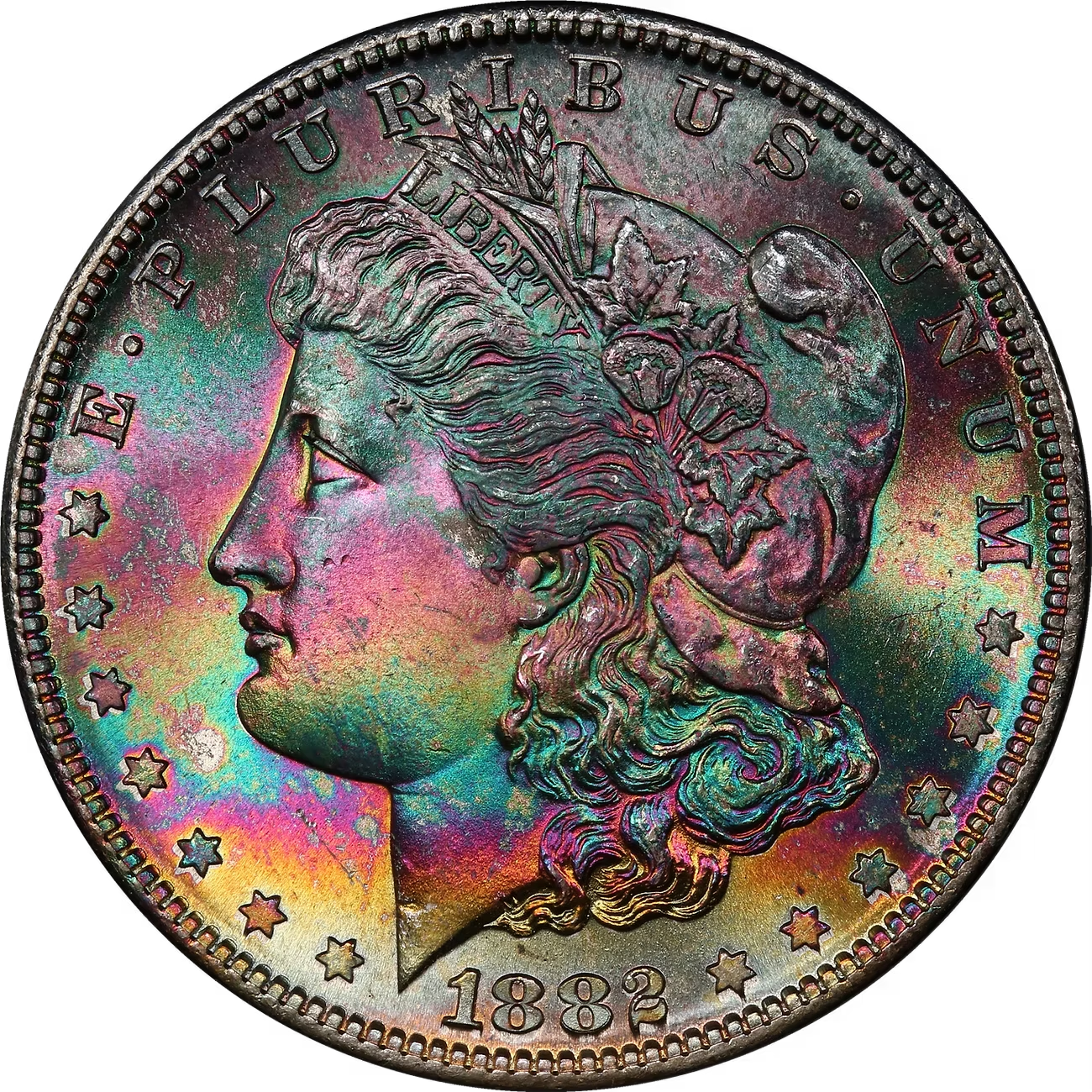
The global coin collection market was valued at approximately $20.9 billion in 2024, according to market research from Transparency Market Research — and it's projected to reach $47.5 billion by 2035, growing at a compound annual rate of 8.6%. For a hobby often stereotyped as genteel and slow-paced, these are remarkable numbers.
What's Included in That Figure
The $20.9 billion encompasses the full spectrum of coin-related transactions worldwide:
- Auction sales: Heritage Auctions alone transacted $1.867 billion in 2024. Stack's Bowers added $275 million. Smaller houses, regional auctions, and international firms contribute billions more.
- Dealer-to-dealer and dealer-to-collector sales: The vast majority of coin transactions happen outside the auction room — at shops, shows, and through dealer networks.
- Online platforms: eBay, GreatCollections, and other digital marketplaces have dramatically expanded access.
- Bullion: Gold and silver bullion coins (American Eagles, Canadian Maples, etc.) represent a significant segment driven by both collectors and investors.
- Government mint sales: Direct purchases from the U.S. Mint, Royal Mint, Perth Mint, and others.
Growth Drivers
Several factors are converging to fuel the market's expansion:
1. Precious Metal Prices
Gold and silver have surged to multi-decade (in silver's case, all-time) highs. This lifts the value floor under every coin containing precious metal and draws new participants interested in tangible assets.
2. Generational Wealth Transfer
As Baby Boomers pass collections to heirs, a massive volume of numismatic material is entering the market. Some heirs sell (increasing supply and auction volume); others become interested and begin collecting themselves (increasing demand).
3. Digital Access and Education
Online resources — from auction archives and price guides to YouTube channels and communities like NumisDex — have lowered the barrier to entry. A new collector in 2026 has access to more information than a seasoned dealer had in 2006.
4. Investment Diversification
Rare coins have historically shown low correlation with stock and bond markets. In periods of economic uncertainty, tangible assets attract capital from traditional investment pools.
5. International Expansion
Coin collecting is growing rapidly in China, India, and Southeast Asia. Chinese numismatics in particular has seen explosive growth in both domestic and international markets.
Is It Sustainable?
Market research firms project continued growth through 2035. However, the hobby's future depends on its ability to attract younger collectors. The current boom is partly driven by elevated metal prices, which could correct. The structural growth — digital access, global participation, and renewed institutional interest — appears more durable.
Explore the NumisDex catalog — over 72,000 listings across every area of U.S. numismatics.
Explore in the NumisDex Catalog
Related varieties and errors from the NumisDex database:
0 Replies
Related Threads
- Rosa Parks Commemorative Coins: HR 916 Would Honor a Civil Rights Icon0 replies · 2mo ago
- Olympic Coins for LA 2028 and Salt Lake City 2034: S. 2265 Explained0 replies · 2mo ago
- The End of the Penny: What HR 4459 (MINT Act) Means for Collectors0 replies · 2mo ago
- The $2.50 Coin Is Coming Back: What Collectors Need to Know About HR 56160 replies · 2mo ago
- U.S. Mint Releasing 250,000 Special "July 4th" Privy Mark Declaration of Independence Quarters0 replies · 2mo ago