
Silver vs. Clad Coinage: How to Tell Pre-1965 from Later
Silver or Clad? The Edge Tells the Story
In 1965, the U.S. Mint transitioned dimes, quarters, and half dollars from 90% silver to a copper-nickel clad composition. Knowing how to tell silver coins from clad is a fundamental skill — whether you're coin roll hunting, evaluating an inherited collection, or checking pocket change.
The Quick Date Rule
The fastest way to check is by date:
- 1964 and earlier — Dimes, quarters, and half dollars are 90% silver
- 1965-1970 — Half dollars are 40% silver; dimes and quarters are clad
- 1971 and later — All circulating coins are clad (with exceptions for special collector issues)
The Edge Test
When you can't read the date (worn coins, coins in rolls), the edge is your best diagnostic:
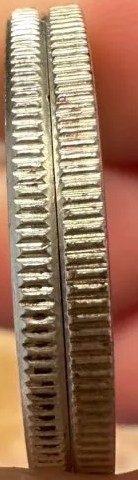
Silver (90%) — solid, uniform silver-white edge with no layering
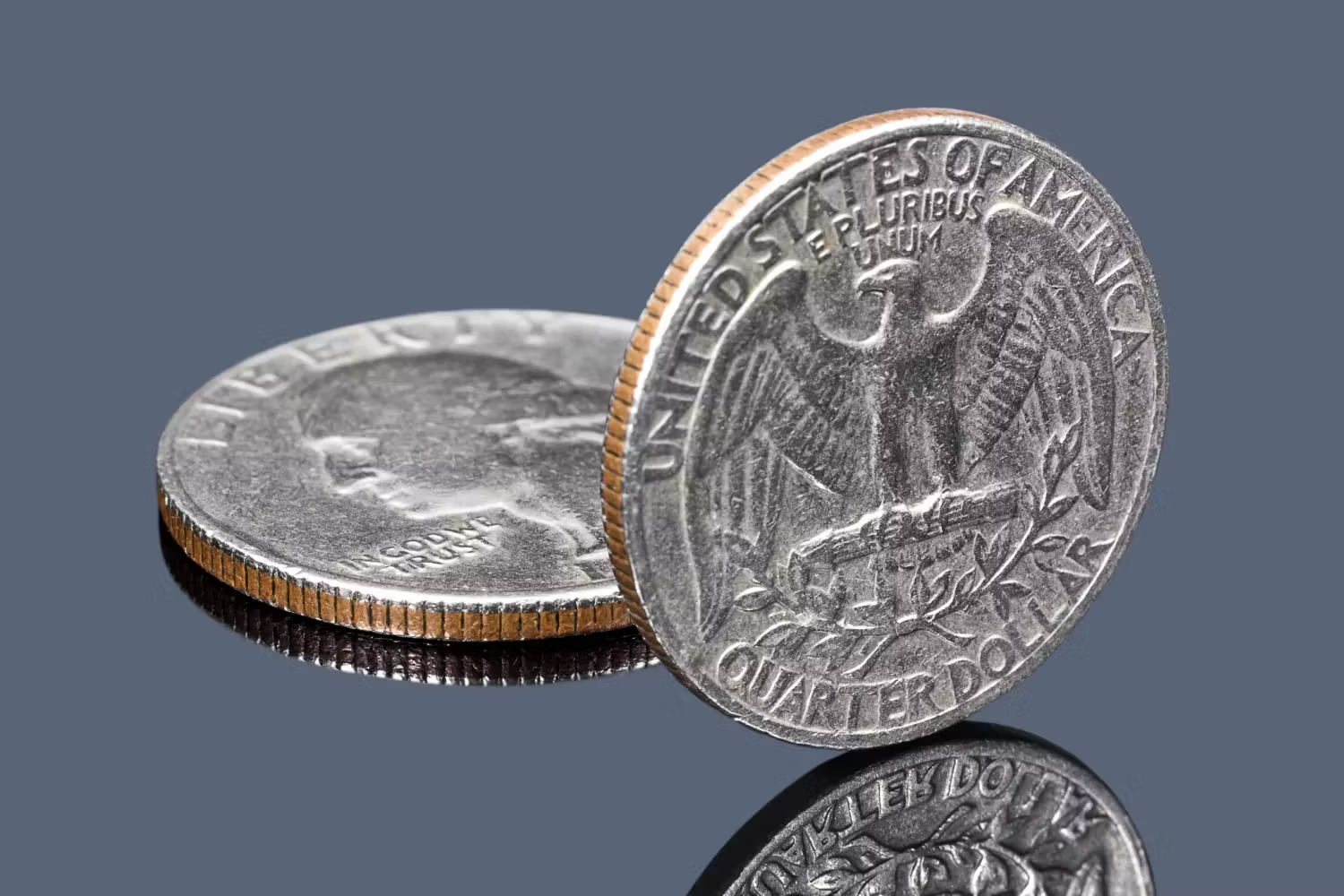
Clad — copper core clearly visible as a line sandwiched between outer layers
- Silver (90%) — The edge appears as a solid, uniform silver-white color. No layering is visible because the coin is the same material throughout.
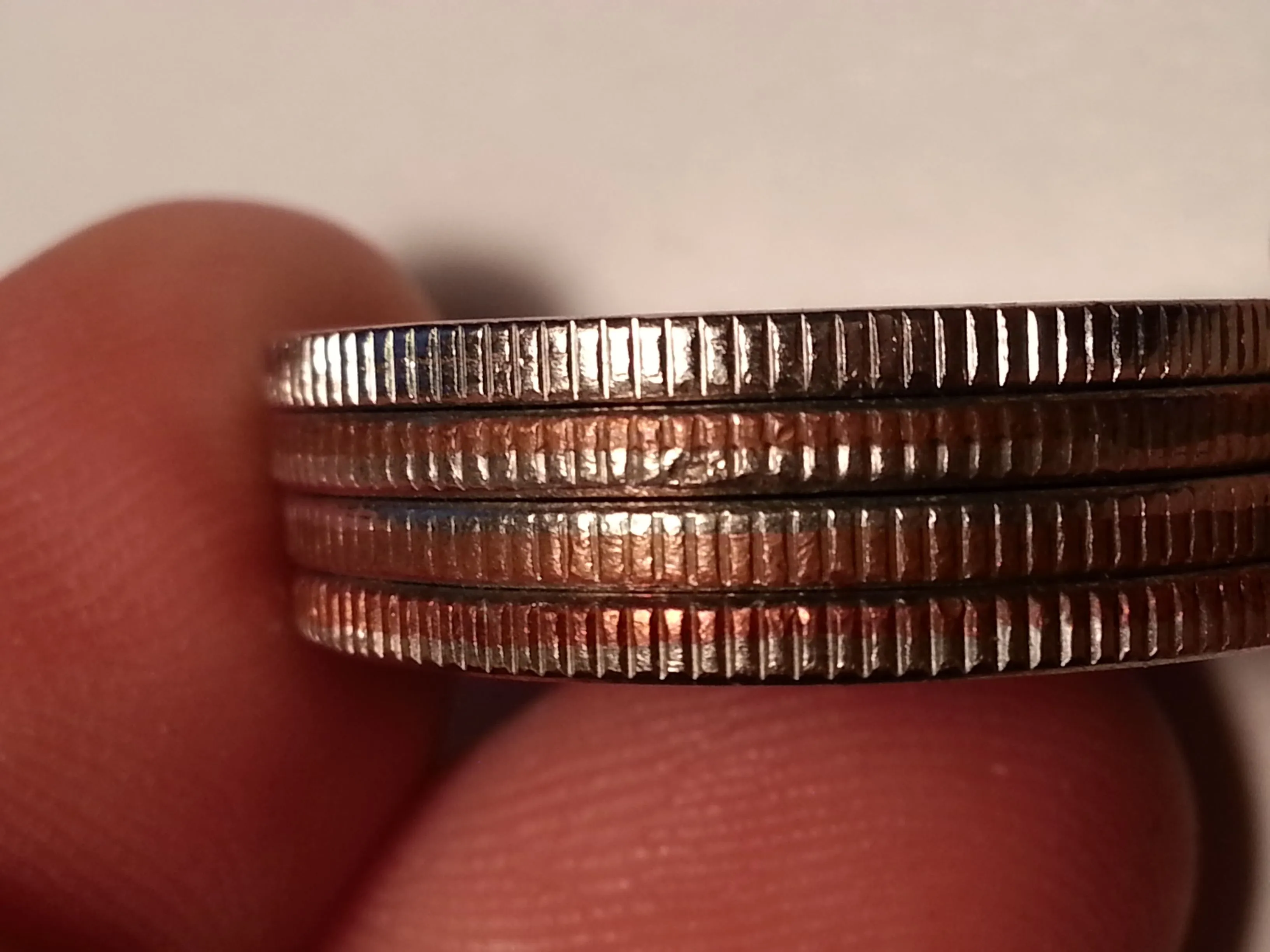
- Clad — The edge clearly shows a copper core sandwiched between two nickel-silver outer layers. This copper line is the most obvious and reliable indicator of a clad coin.
The Ring Test
Silver and clad coins produce distinctly different sounds:
- Silver — A clear, high-pitched ring that sustains for several seconds
- Clad — A dull, flat thud with no sustaining ring
Balance the coin on your fingertip and tap it gently with another coin. With practice, you can sort coins by sound alone — a useful technique for scanning through rolls quickly.
Weight
Silver coins are heavier than their clad equivalents:
- Dime — Silver: 2.50g / Clad: 2.27g
- Quarter — Silver: 6.25g / Clad: 5.67g
- Half Dollar — 90% Silver: 12.50g / 40% Silver: 11.50g / Clad: 11.34g
War Nickels (1942-1945)
A special case: Jefferson nickels from mid-1942 through 1945 contain 35% silver, identifiable by the large mint mark above Monticello on the reverse (P, D, or S). Regular nickels have no silver and show the mint mark on the obverse to the right of the building. War nickels have a distinctive greenish-silver color compared to normal copper-nickel nickels.
Explore in the NumisDex Catalog
Related varieties and errors from the NumisDex database:
0 Replies
Related Threads
- Rosa Parks Commemorative Coins: HR 916 Would Honor a Civil Rights Icon0 replies · 2mo ago
- Olympic Coins for LA 2028 and Salt Lake City 2034: S. 2265 Explained0 replies · 2mo ago
- The End of the Penny: What HR 4459 (MINT Act) Means for Collectors0 replies · 2mo ago
- The $2.50 Coin Is Coming Back: What Collectors Need to Know About HR 56160 replies · 2mo ago
- U.S. Mint Releasing 250,000 Special "July 4th" Privy Mark Declaration of Independence Quarters0 replies · 2mo ago