
How to Grade Coins at Home
How to Grade Coins at Home
Coin grading is the process of evaluating a coin's condition on the Sheldon scale (1-70). While professional grading services like PCGS and NGC provide authoritative grades, learning to grade coins yourself is an essential skill for any collector. It helps you make informed buying decisions, evaluate your collection, and identify coins worth submitting for professional certification.
Essential Equipment
You don't need expensive equipment to start grading at home:
- A good loupe — A 5x-10x magnification loupe is the single most important tool. Invest in a quality triplet lens loupe (three-element design) for sharp, distortion-free magnification.
- Proper lighting — Use a single, focused light source at an angle. A desk lamp with a daylight-balanced LED bulb works well. Avoid fluorescent overhead lighting, which flattens details.
- A soft surface — Always examine coins over a padded surface (velvet pad, folded towel) to prevent damage if you drop a coin.
- Grading references — The ANA Grading Standards book (photograde guides) and online reference images for your specific series.
The Grading Process
Follow these steps to evaluate a coin's grade:
Step 1: Determine Circulated vs. Uncirculated
The first and most important distinction is whether a coin has been circulated (worn) or is in Mint State (uncirculated). Look for wear on the highest points of the design:
- Lincoln Cent — Check the cheekbone, jaw line, and hair above the ear
- Washington Quarter — Check the hair curls above the ear and the eagle's breast feathers
- Morgan Dollar — Check Liberty's cheek, the hair above the ear, and the eagle's breast
If there is ANY flattening or loss of detail on these high points, the coin is circulated. Mint State coins retain full, original detail and luster across all high points.
Step 2: Evaluate Wear (Circulated Coins)
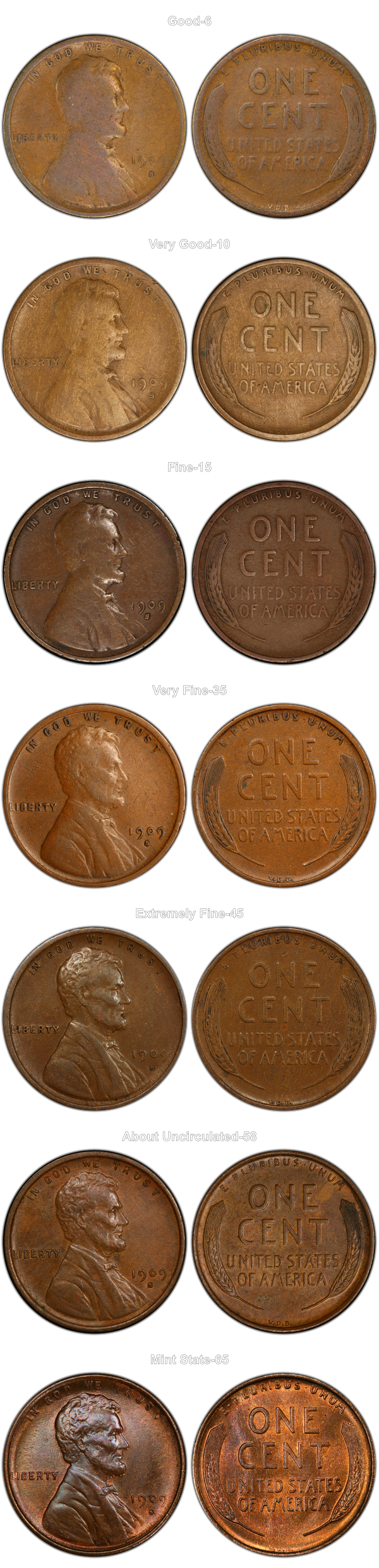
1909-S VDB Lincoln Cent grading progression — study how wear progresses from G-6 through MS-65, focusing on the cheekbone, jaw, and hair detail
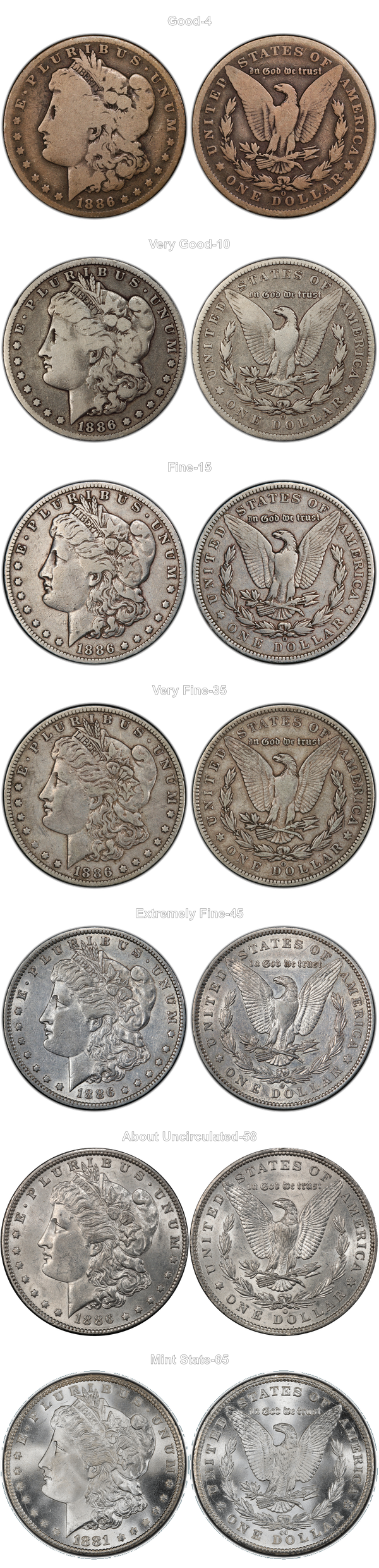
Morgan Dollar grading progression — compare the cheek, hair above the ear, and eagle breast detail across grades from G-4 to MS-65
For circulated coins, assess the degree of wear using these benchmarks:
- About Good (AG-3) — Very heavy wear, outline of design visible, date may be partially worn
- Good (G-4 to G-6) — Major design elements visible but flat, legend readable
- Very Good (VG-8 to VG-10) — Design elements clear, some detail in recessed areas
- Fine (F-12 to F-15) — Moderate wear on high points, all major details visible
- Very Fine (VF-20 to VF-35) — Light wear on high points, most fine details visible
- Extremely Fine (EF-40 to EF-45) — Slight wear on highest points only, nearly full detail
- About Uncirculated (AU-50 to AU-58) — Trace wear on the very highest points, most mint luster remains
Step 3: Evaluate Quality (Uncirculated Coins)
For Mint State coins (MS-60 to MS-70), grading shifts from wear assessment to quality assessment:
- MS-60 to MS-62 — No wear, but many contact marks, possible weak strike, reduced luster
- MS-63 — Fewer marks, average strike and luster
- MS-64 — Few marks, above-average strike and luster
- MS-65 (Gem) — Minimal marks visible to the naked eye, strong strike and luster, good eye appeal
- MS-66 to MS-67 — Near-perfect, only minor imperfections under magnification
- MS-68 to MS-70 — Virtually perfect to perfect, essentially flawless
Step 4: Check for Problems
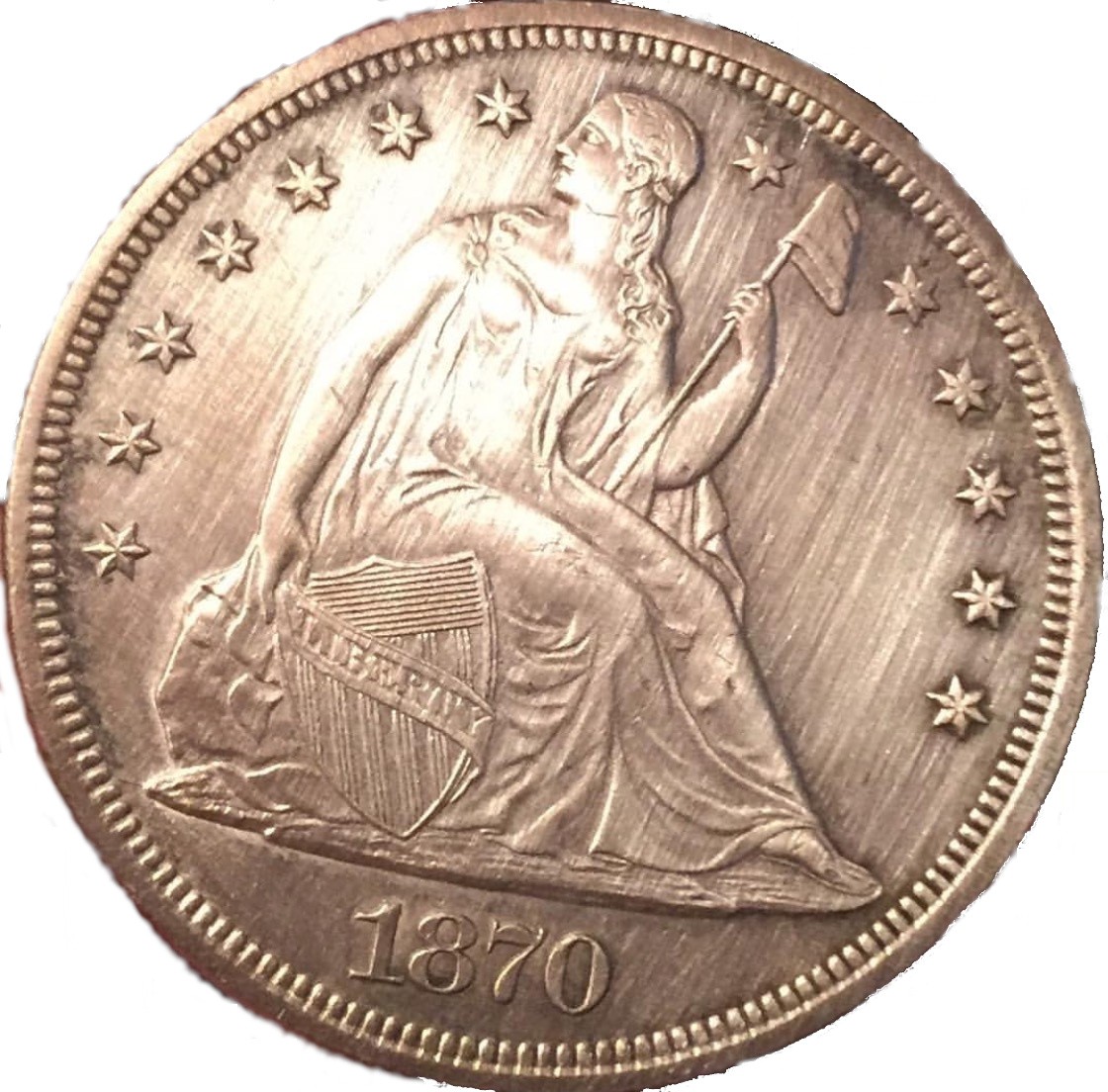
Hairline scratches from improper cleaning — these fine parallel lines are a telltale sign that a coin has been cleaned, which significantly reduces its value and gradeability
Before assigning a final grade, examine the coin for problems that would reduce its grade or make it ungradable:
- Cleaning — Hairline scratches from abrasive cleaning, unnatural luster, chemical residue
- Environmental damage — Corrosion, pitting, heavy spotting
- Tooling or alteration — Added mint marks, re-engraved dates, artificial toning
- Damage — Rim dings, scratches, gouges, holes
Practice Makes Better
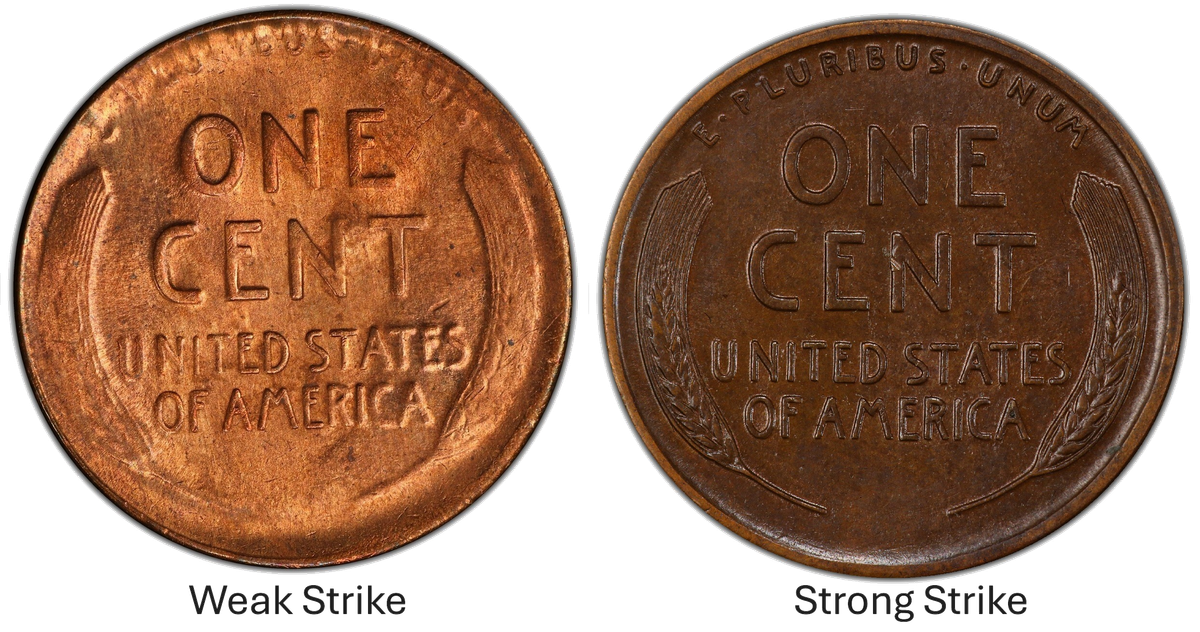
Strike quality comparison — a weakly-struck coin (left) has soft, incomplete features even without wear, while a well-struck example (right) shows full, sharp design detail
Grading is a skill that improves with practice. Buy coins in third-party holders (PCGS or NGC) and try to grade them yourself before looking at the label. Over time, you'll develop a calibrated eye for what each grade looks like across different series.
Use the NumisDex catalog to study reference images of coins across different grades and varieties. Understanding how design elements wear at different grade levels is the foundation of accurate grading.
0 Replies
Related Threads
- Rosa Parks Commemorative Coins: HR 916 Would Honor a Civil Rights Icon0 replies · 2mo ago
- Olympic Coins for LA 2028 and Salt Lake City 2034: S. 2265 Explained0 replies · 2mo ago
- The End of the Penny: What HR 4459 (MINT Act) Means for Collectors0 replies · 2mo ago
- The $2.50 Coin Is Coming Back: What Collectors Need to Know About HR 56160 replies · 2mo ago
- U.S. Mint Releasing 250,000 Special "July 4th" Privy Mark Declaration of Independence Quarters0 replies · 2mo ago