
Sommer Is Shilling W-15420 White Metal Dickeson Copy
Strike Type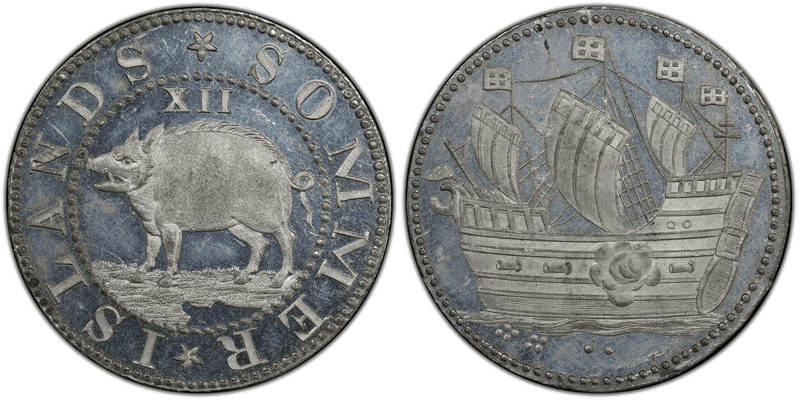
Coin Details
Description
A white metal copy of the Sommer Islands (Bermuda) Shilling cataloged as W-15420 in the Whitman reference, made by Dr. Montroville Wilson Dickeson of Philadelphia during the 1850s-1860s. White metal, a tin-based alloy sometimes called Britannia metal, was a common medium for 19th-century numismatic reproductions due to its low melting point and ability to capture fine die details. The original Sommer Islands coins from circa 1616 are keystones of early American colonial numismatics. Dickeson's copies reproduce the celebrated wild hog obverse and sailing ship reverse that characterize this series, often called "Hogge Money" by collectors. The denomination "XII" (one shilling) appears on the reverse. While the white metal composition differs markedly from the copper originals in both color and weight, the designs are rendered with competent workmanship. White metal was a practical choice for Dickeson's reproductions because it could be cast or struck at relatively low pressures, making it economical for producing small quantities. The soft nature of the alloy means that surviving examples often show more wear and surface degradation than copies in harder metals like brass or copper-nickel, which adds to the scarcity of well-preserved specimens. Dickeson's white metal copies occupy an interesting niche in collecting, valued both as colonial reproduction artifacts and as examples of 19th-century American numismatic craftsmanship. The W-15420 Whitman catalog number provides a standard reference for identifying this specific type.
Rarity Notes
Scarce. White metal examples often show surface degradation due to the softness of the alloy, making well-preserved pieces particularly desirable.
Cross References
W-15420; Dickeson Copy series; Original: Sommer Islands Shilling, circa 1616
External References
Error Varieties
No listings found
This category doesn't have any child listings yet.
Other Strike Types in This Series
(1860s) Sommer Islands Shilling - Dickeson Copy
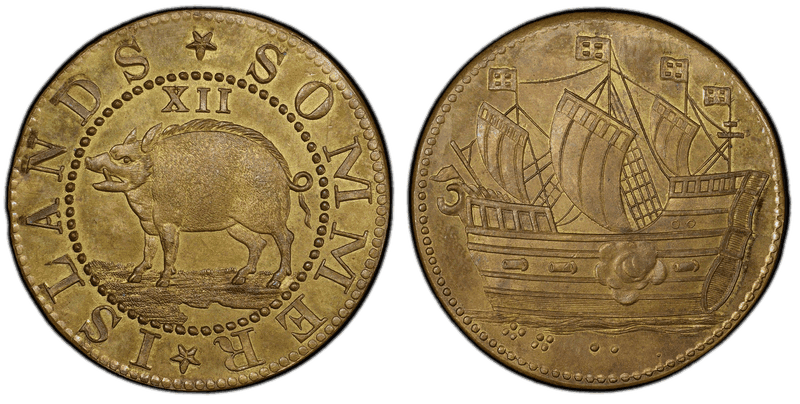
Sommer Is Shilling Brass Dickeson Copy
Sommer Is Shilling W-15430 Copper-Nickel Dickeson Copy
Sommer Is Shilling W-15440 Nickel Dickeson Copy
Sommer Is Shilling W-15445 Mule Dickeson Copy-Wuesthoff Fantasy
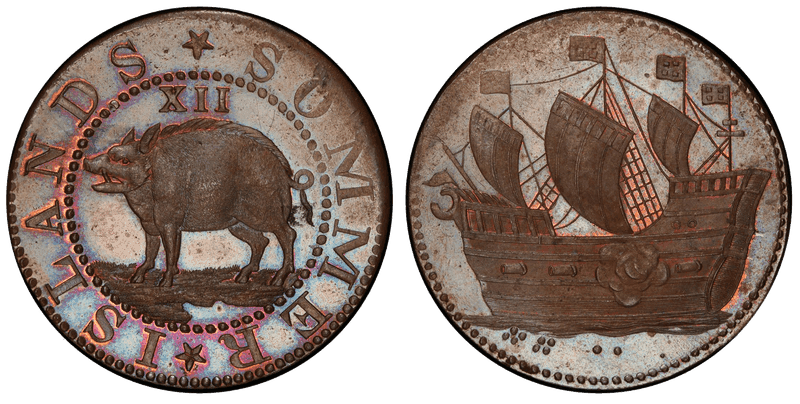
Sommer Is Shilling W-15480 Copper Mule Kenney-1 Dickeson Copy
Collector Essentials
Tools and references for building and protecting your coin collection.
10x-20x Jeweler's Loupe
A must-have for examining coin details, mint marks, and surface quality
Red Book — Guide to U.S. Coins
The essential annual reference for U.S. coin values, history, and mintages
Coin Albums & Storage
Archival-quality albums and holders to protect and display your collection
USB Digital Microscope
Capture detailed images for documentation and community submissions
As an Amazon Associate, NumisDex earns from qualifying purchases.