
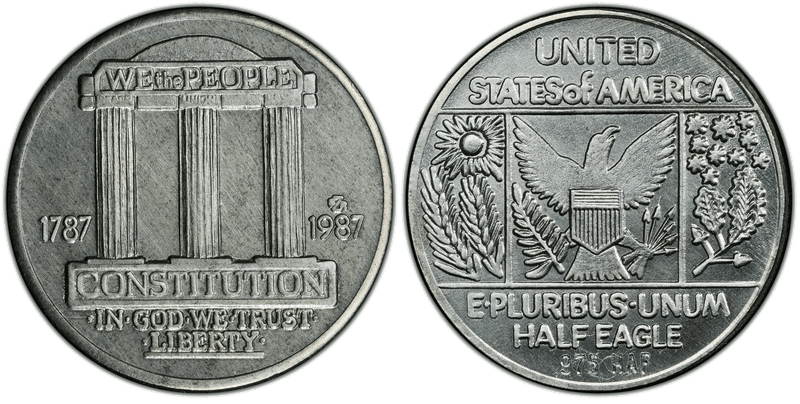
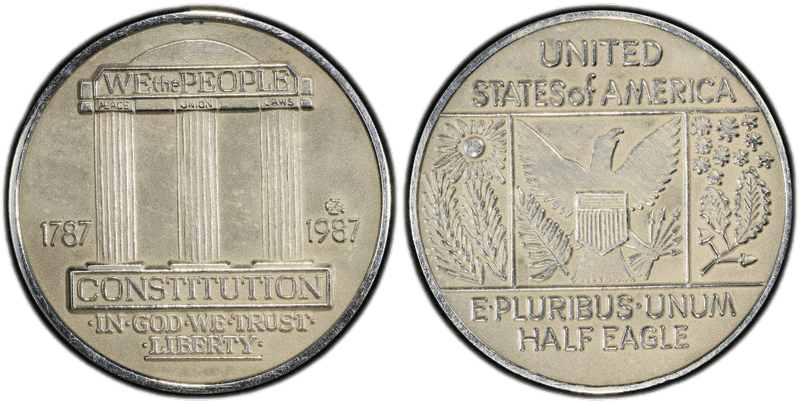
1987 Half Eagle Pattern - P-5465, Tungsten
Strike TypeCoin Details
Description
An experimental half eagle pattern struck in tungsten, one of the hardest and densest metals available for coinage experimentation. Tungsten (element 74) has the highest melting point of all metals (3,422 degrees Celsius), exceptional hardness, and a density of 19.25 g/cm3 — remarkably close to gold's 19.32 g/cm3 — which makes it the most challenging metal to distinguish from gold by weight alone. This similarity in density has made tungsten a persistent concern in gold bullion authentication, as tungsten-core counterfeits can pass simple weight-and-dimension tests. The Mint's decision to strike a half eagle pattern in tungsten was motivated by research into counterfeit detection — understanding how tungsten behaves under a coining press and how a tungsten coin differs from a gold one in electromagnetic and acoustic properties would help develop better authentication protocols for gold bullion products. Alternatively, tungsten was tested as a potential coinage metal in its own right, though its extreme hardness would cause rapid die wear and make mass production impractical. Either way, this pattern stands as one of the most exotic compositions ever used for an American coin.
Rarity Notes
R-8+ (Extremely Rare to Unique). Tungsten half eagle patterns are among the most unusual modern U.S. experimental coins, with minimal surviving specimens.
Cross References
Pollock P-5465. Part of the 1987 experimental half eagle composition series.
External References
Error Varieties
No listings found
This category doesn't have any child listings yet.
Other Strike Types in This Series
Collector Essentials
Tools and references for building and protecting your coin collection.
10x-20x Jeweler's Loupe
A must-have for examining coin details, mint marks, and surface quality
Red Book — Guide to U.S. Coins
The essential annual reference for U.S. coin values, history, and mintages
Coin Albums & Storage
Archival-quality albums and holders to protect and display your collection
USB Digital Microscope
Capture detailed images for documentation and community submissions
As an Amazon Associate, NumisDex earns from qualifying purchases.