
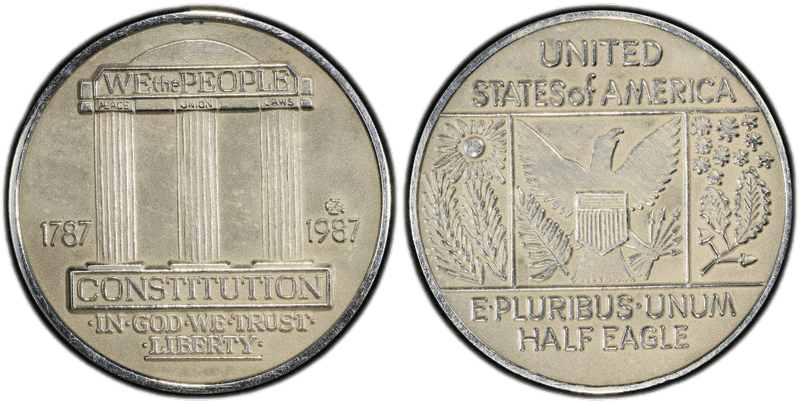
1987 Half Eagle Pattern - P-5455, Hafnium
Strike Type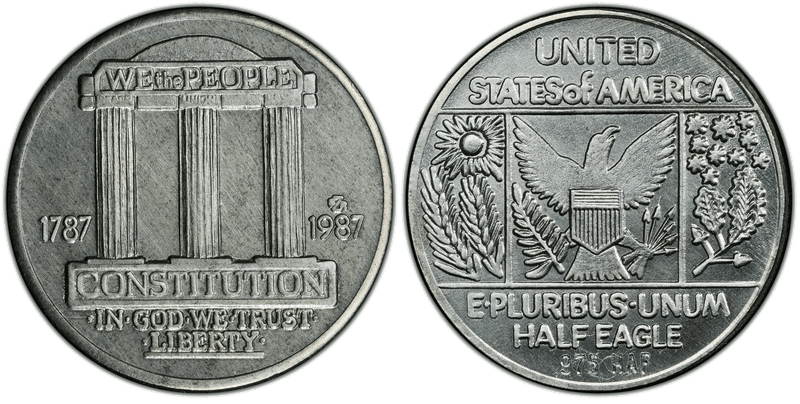
Coin Details
Description
An extraordinary experimental half eagle pattern struck in hafnium, a rare transition metal not normally associated with coinage. Hafnium (element 72) is a lustrous, silvery metal with exceptional corrosion resistance, a very high melting point (2,233 degrees Celsius), and a density similar to that of nickel. This pattern was produced in 1987 during the early years of the American Eagle bullion coin program, which had begun in 1986 with gold and silver eagles. The Mint explored whether alternative metals might serve as substrates for bullion or commemorative coinage, and hafnium's unique physical properties — including its resistance to corrosion and its use in nuclear reactor control rods — made it an intriguing if exotic candidate. The half eagle ($5) format was chosen because it represented the smallest gold denomination in the American Eagle program, making it a natural platform for experimental compositions. Striking a coin in hafnium would have been technically challenging due to the metal's hardness, but the resulting piece demonstrates the Mint's willingness to explore far beyond conventional coinage metals during the innovation-oriented 1980s.
Rarity Notes
R-8+ (Extremely Rare to Unique). Hafnium half eagle patterns are among the most unusual modern U.S. experimental coins, with very few specimens exist.
Cross References
Pollock P-5455. Part of the 1987 experimental half eagle composition series.
External References
Error Varieties
No listings found
This category doesn't have any child listings yet.
Other Strike Types in This Series
Collector Essentials
Tools and references for building and protecting your coin collection.
10x-20x Jeweler's Loupe
A must-have for examining coin details, mint marks, and surface quality
Red Book — Guide to U.S. Coins
The essential annual reference for U.S. coin values, history, and mintages
Coin Albums & Storage
Archival-quality albums and holders to protect and display your collection
USB Digital Microscope
Capture detailed images for documentation and community submissions
As an Amazon Associate, NumisDex earns from qualifying purchases.