
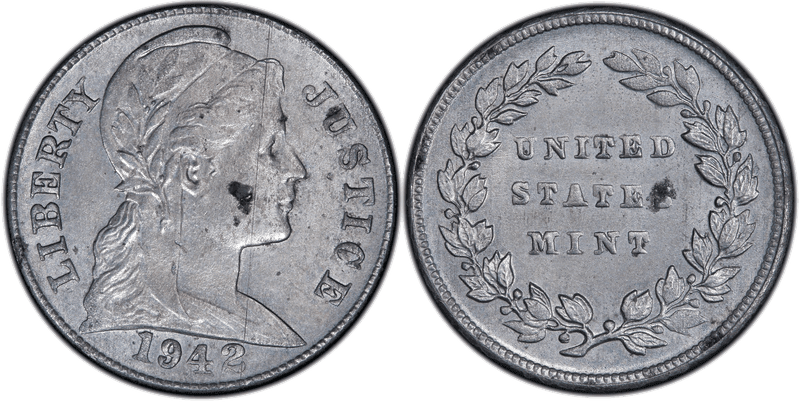
1942 Cent Pattern - J-2067, Bakelite
Strike TypeCoin Details
Auction Record
$4,617 MS63 06-21-2006 American Numismatic Rarities
Description
Judd-2067, Pollock-2257, is a Bakelite cent pattern from the 1942 wartime testing program. Bakelite, invented by Leo Baekeland in 1907, was the world's first fully synthetic plastic — a thermosetting phenol formaldehyde resin that, once cured, could not be melted or reformed. This property gave Bakelite significant advantages over thermoplastics for coinage: it was heat-resistant, electrically non-conductive, and considerably harder than most other plastics available in 1942. Bakelite was already widely used in consumer products from radios to telephones to jewelry, so the public was familiar with the material. However, Bakelite's inherent brittleness made it prone to chipping and cracking under the stresses of coin handling — being dropped on hard surfaces, jostled in pockets, and fed through mechanical coin-handling equipment. A Bakelite cent that chipped or cracked in circulation would be unsightly and potentially unacceptable to merchants, undermining the denomination's utility.
Rarity Notes
R-7 to R-8. Extremely rare. Bakelite patterns are particularly fragile and survivors in good condition are exceptionally scarce.
Cross References
Judd J-2067, Pollock P-2257; 1942 wartime cent composition testing program; Bakelite (phenol formaldehyde resin); Leo Baekeland (inventor, 1907)
External References
Error Varieties
No listings found
This category doesn't have any child listings yet.
Other Strike Types in This Series
Collector Essentials
Tools and references for building and protecting your coin collection.
10x-20x Jeweler's Loupe
A must-have for examining coin details, mint marks, and surface quality
Red Book — Guide to U.S. Coins
The essential annual reference for U.S. coin values, history, and mintages
Coin Albums & Storage
Archival-quality albums and holders to protect and display your collection
USB Digital Microscope
Capture detailed images for documentation and community submissions
As an Amazon Associate, NumisDex earns from qualifying purchases.