
1930 St. Gaudens Double Eagle
Base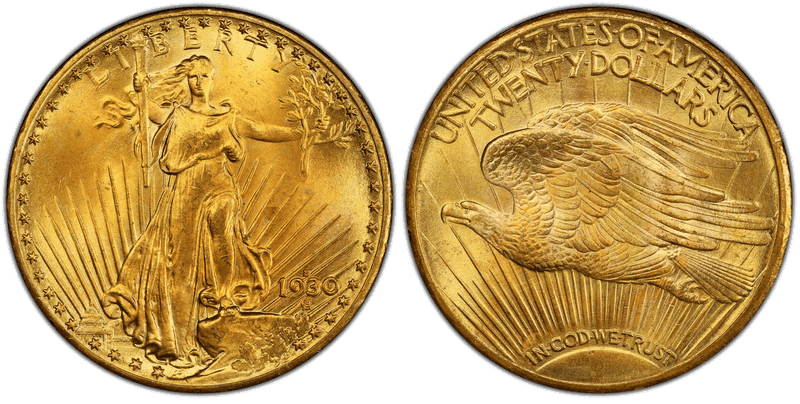
About This Coin
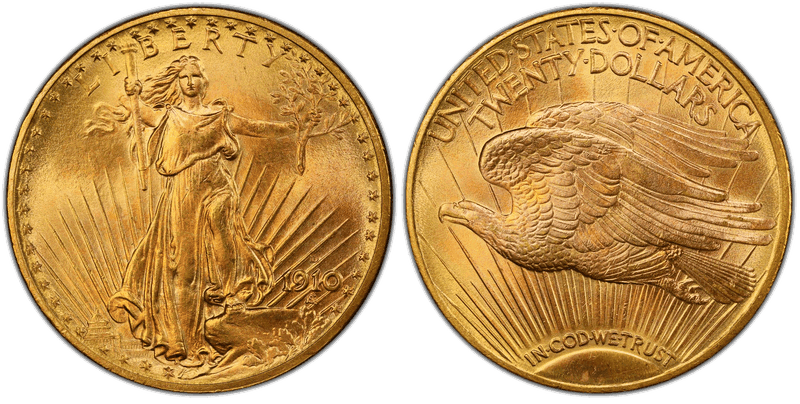
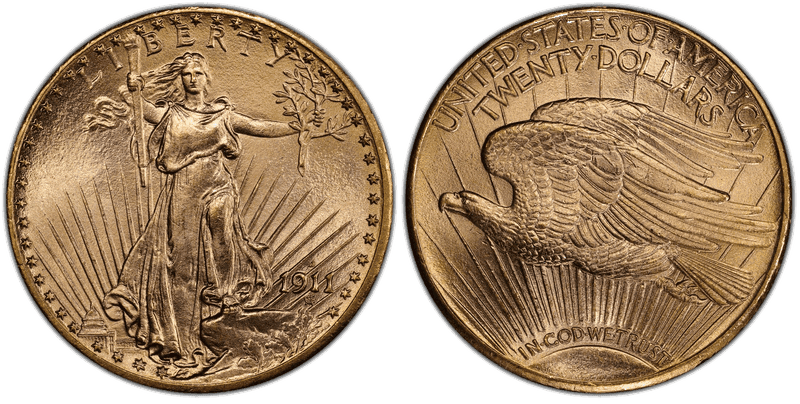
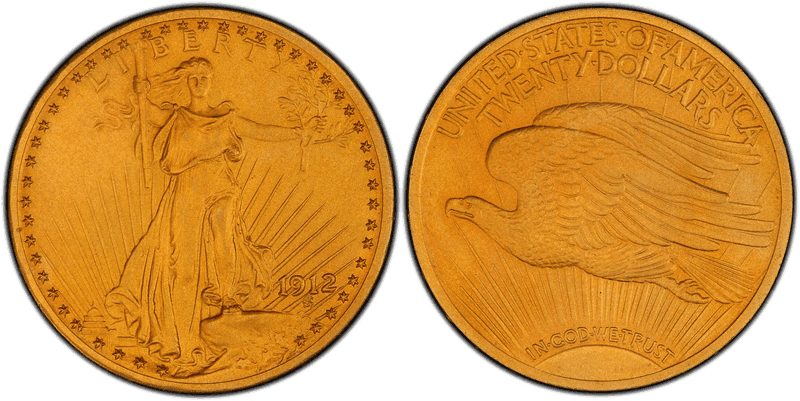
The 1930 St. Gaudens Double Eagle is a United States Gold Double Eagle from the St. Gaudens Double Eagles 1907-1933 series — a late issue, 21st of 24 years in the series. In 1930, coins were struck at the San Francisco Mint with a combined mintage of 74,000. This represents the lowest annual mintage in the entire series, below the series median of 1.9 million. The obverse features Liberty striding forward holding a torch and olive branch, with rays of sunlight behind her — widely considered the most beautiful U.S. coin design and the reverse displays a flying eagle with the rising sun behind it. Struck during the Great Depression, when mintages dropped sharply and the United States abandoned the gold standard in 1933. Struck in 90% gold, 10% copper, weighing 33.4 grams, 34 mm in diameter, with a lettered edge. Across its variants, estimated values range from $27K to $122K depending on mint mark, grade, and strike type. A notable auction result reached $372K in MS66+ grade at Stack's Bowers. Designed by Augustus Saint Gaudens.
Value Estimates
Values as of May 2026 — range across all strike types, reflecting typical grades (G-4 through MS-63). Coins in lower or exceptional grades may fall outside this range.
Specifications
Strike Types & Varieties(1)
Other Base Coins in This Series
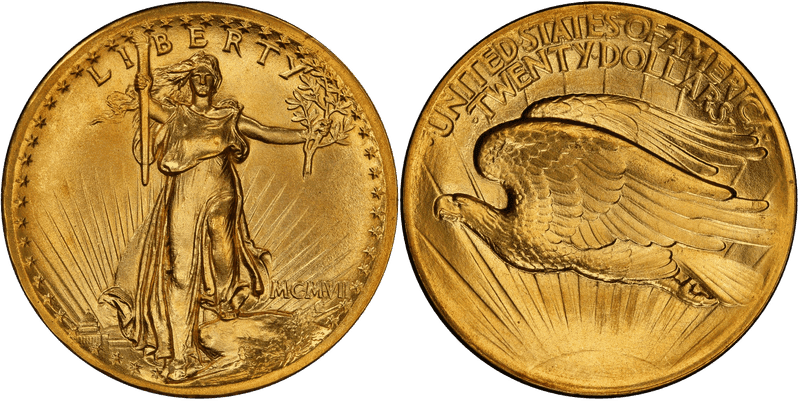
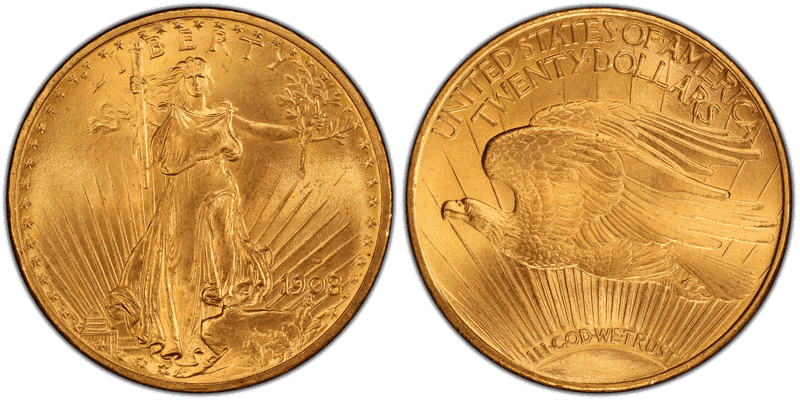
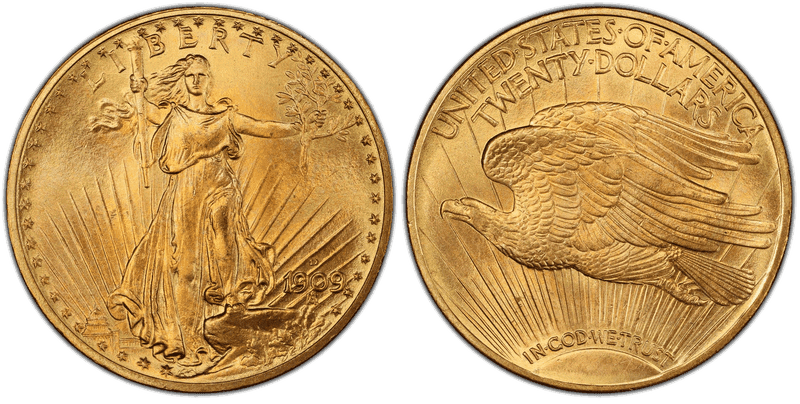
Collector Essentials
Tools and references for building and protecting your coin collection.
10x-20x Jeweler's Loupe
A must-have for examining coin details, mint marks, and surface quality
Red Book — Guide to U.S. Coins
The essential annual reference for U.S. coin values, history, and mintages
Coin Albums & Storage
Archival-quality albums and holders to protect and display your collection
USB Digital Microscope
Capture detailed images for documentation and community submissions
As an Amazon Associate, NumisDex earns from qualifying purchases.