
1921-D VAM-8A
Error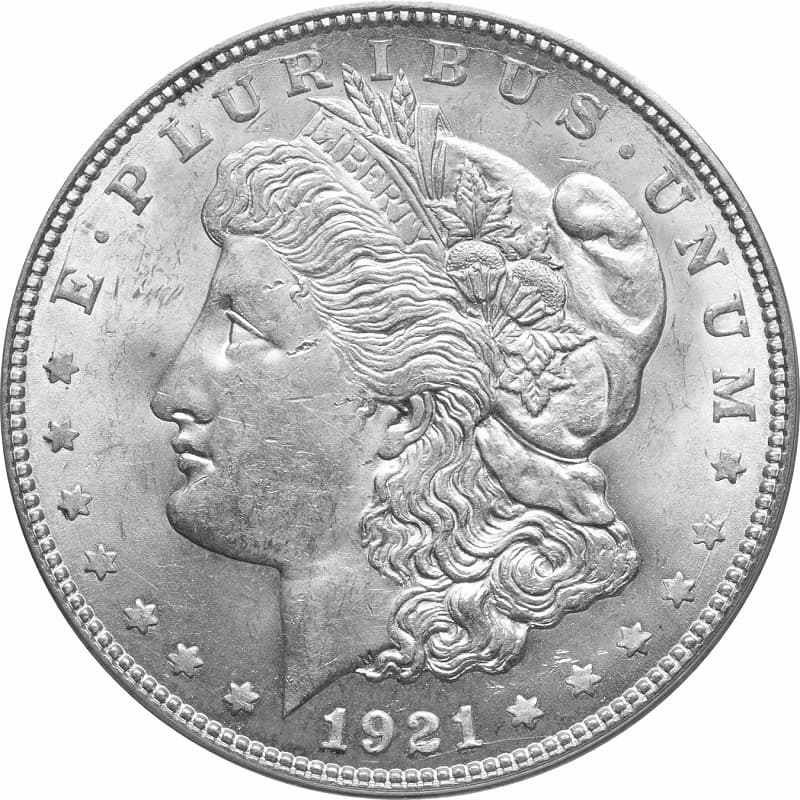
Description
=1921-D VAM-8A Flagged R Die Break R of AMERICA= VAM-1C Discovered May 1998. VAM-8A, Jeff Oxman discovered doubling, Mar 2001. 8A (revised) IV 7 D2d (Doubled Left Stars & Reverse, Die Chip Above R, Line Left Wing) (189) Reverse D2d- Extensive polishing lines in both wings and tail feathers with long diagonal polishing line in lower middle of eagle's left wing. Late die states show large die chip above R in AMERICA. (formerly 1C) DPIS – In 1921 dates were part of the master die so there is no variation in position. ;Emission Sequence :Obverse: :Reverse: Comments: # Using a VAM-8A coin as reference, in August 2007, Leroy updated the listing for the 1921-D VAM-8, shown below. The new 8A description will likely be the same but w/ reference to the R break. Obverse IV 7 - Slight doubling of all left stars and E-P towards rim. Right stars very slightly doubled to tripled towards rim. Reverse D2d - Fine die scratches in various directions on over polished tail feathers around eagle's right leg, between eagle's left wing and body and in middle of both wings. Die marker - Long diagonal polishing line in lower middle of eagle's left wing. # VAM-8A has a prominent die break above the R in AMERICA. The break is triangular, forming a small flag on top of the R. Additionally, the obverse stars to the left of the date are doubled and the reverse is doubled slightly around UNITED STATES. # Note: This variety is sometimes confused with the 1921-D VAM-1B1 break, which occurs in the same location above the R. Several examples of VAM-8A, misattributed as the more widely known 1921-D VAM-1B1, have come to light, even on coins in professionally certified holders. Unlike the triangular VAM-8A die break, 1921-D VAM-1B1 is a rounded semicircle. The two are easily differentiated when reference photos of both are available.