
1896 Proof Nickel Pattern - J-1772
Strike Type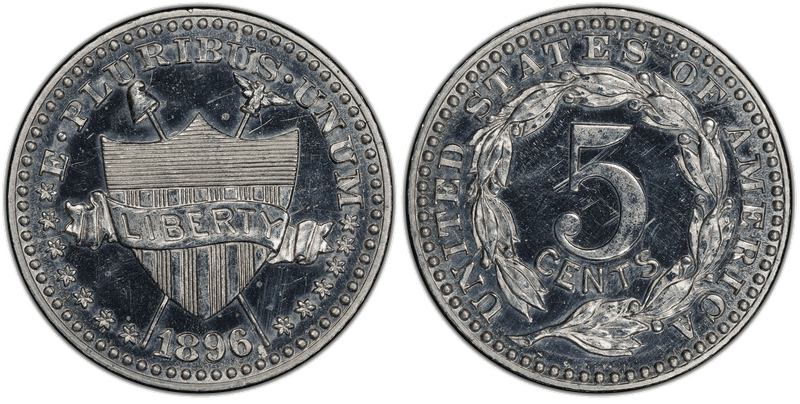
Coin Details
Auction Record
$9,988 PR64 11-06-2014 Heritage Auctions
Description
Judd-1772 is a proof pattern five-cent piece struck in aluminum with a plain edge, representing the lightest alloy tested for the five-cent denomination during the 1896 Congressional alloy evaluation program. The obverse shares the shield design used across all 1896 five-cent patterns, with a striped shield, LIBERTY designation, crossed poles bearing a Phrygian cap and eagle, E PLURIBUS UNUM above, and the date 1896. The reverse displays 5 CENTS within a curved olive sprig and UNITED STATES OF AMERICA. The aluminum composition makes this piece dramatically lighter than its nickel and copper-nickel counterparts, weighing only a fraction of the standard five-cent piece's five grams. Official Mint reports concluded that aluminum was "too soft and not durable enough for circulating coins," effectively disqualifying it from serious consideration for the five-cent denomination. The metal's tendency to scratch easily, develop a dull gray patina, and lose design detail rapidly under circulation wear made it impractical despite its cost advantages. Aluminum's failure in both the cent and five-cent pattern tests effectively ended the United States Mint's nineteenth-century experimentation with the metal, and it would not resurface as a serious coinage candidate until World War II-era emergency considerations in other nations. The 1896 aluminum patterns remain popular with collectors for their unusual heft and distinctive appearance among American coins.
Rarity Notes
R-6 to R-7. Approximately 10 to 15 examples exist. Aluminum surfaces are often impaired by handling.
Cross References
Judd J-1772, Pollock P-1989
External References
Error Varieties
No listings found
This category doesn't have any child listings yet.
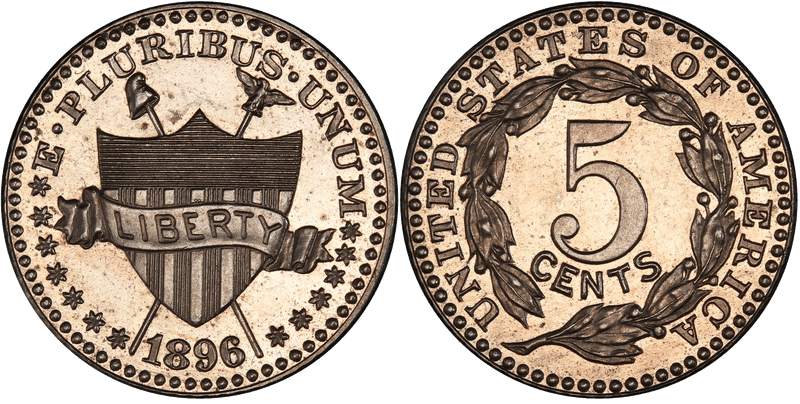
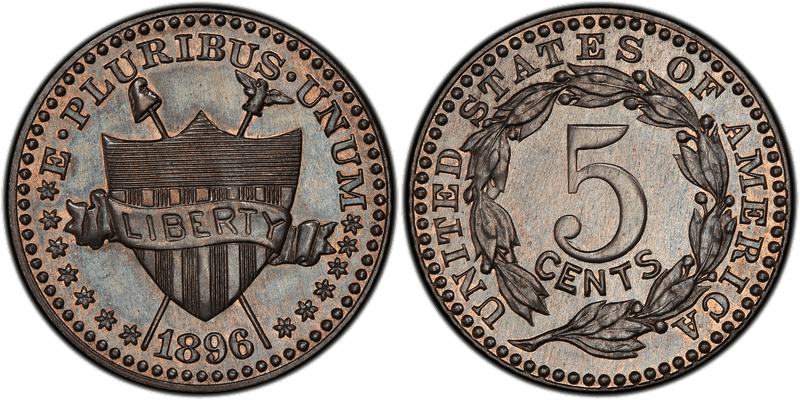
Other Strike Types in This Series
Collector Essentials
Tools and references for building and protecting your coin collection.
10x-20x Jeweler's Loupe
A must-have for examining coin details, mint marks, and surface quality
Red Book — Guide to U.S. Coins
The essential annual reference for U.S. coin values, history, and mintages
Coin Albums & Storage
Archival-quality albums and holders to protect and display your collection
USB Digital Microscope
Capture detailed images for documentation and community submissions
As an Amazon Associate, NumisDex earns from qualifying purchases.