
1882 Hawaiian Plantation Token - Haiku, One Rial
Strike Type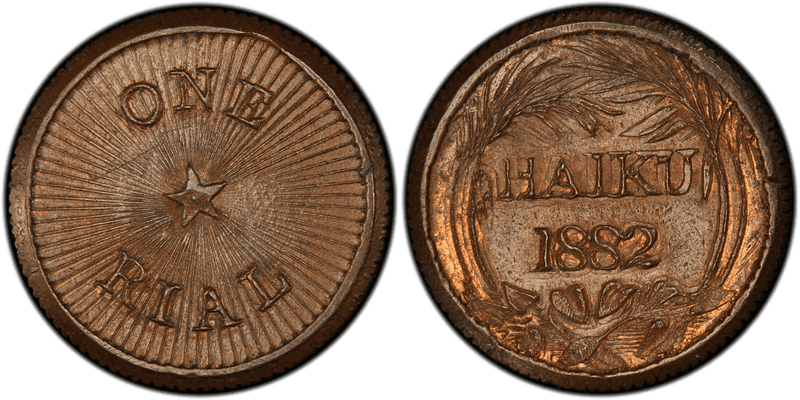
Coin Details
Auction Record
$7,187 MS64 02-01-2009 Superior Galleries
Description
The Haiku Sugar Company one-rial token of 1882 represents one of the smaller and more remote Maui plantations that adopted scrip currency. Haiku Plantation, located on the windward side of Maui near the town of Haiku, began sugar production in the 1850s and grew to become an important part of the Alexander and Baldwin agricultural empire. The plantation's location on the wet, verdant slopes below Haleakala volcano provided ideal growing conditions for sugar cane but also placed it far from Honolulu's commercial center, making adequate coinage supply a persistent challenge. The one-rial copper token, struck at 22mm diameter, served as the primary medium of exchange at the Haiku plantation store. Like the Wailuku tokens, Haiku adopted the Spanish real denomination system, with one rial equaling 12.5 cents. The 1882 date places this token just one year before the Hawaiian Kingdom issued its own official coinage under King Kalakaua, which partially alleviated the chronic coin shortage that had driven plantations to produce their own tokens. Despite the arrival of official Hawaiian coins in 1883, plantation tokens continued to circulate for years afterward as plantations maintained their store-based economies.
Rarity Notes
Rare. Haiku Plantation tokens are among the scarcer Hawaiian plantation issues due to the relatively small size of the operation. NGC-certified examples are particularly uncommon.
Cross References
PCGS #600518; NGC #765684; Medcalf-Russell Hawaiian Money; Rulau-Fuld Hawaii listings
External References
Error Varieties
No listings found
This category doesn't have any child listings yet.
Other Strike Types in This Series
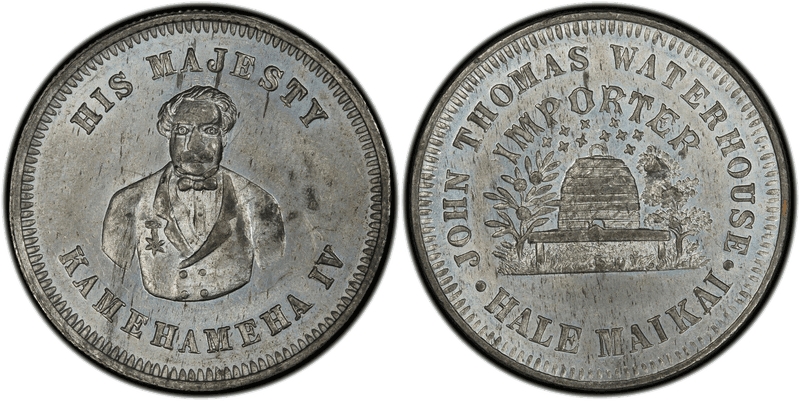
1860 Hawaiian Plantation Token - Waterhouse, White Metal
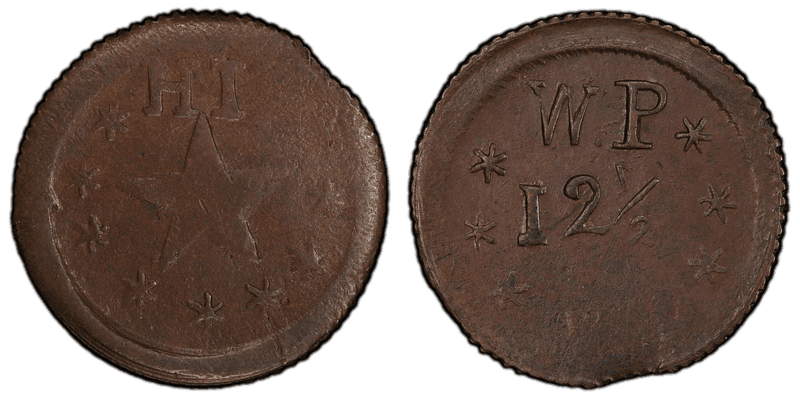
1871 Hawaiian Plantation Token - Wailuku, 12-1/2 Cents, Broad Starfish
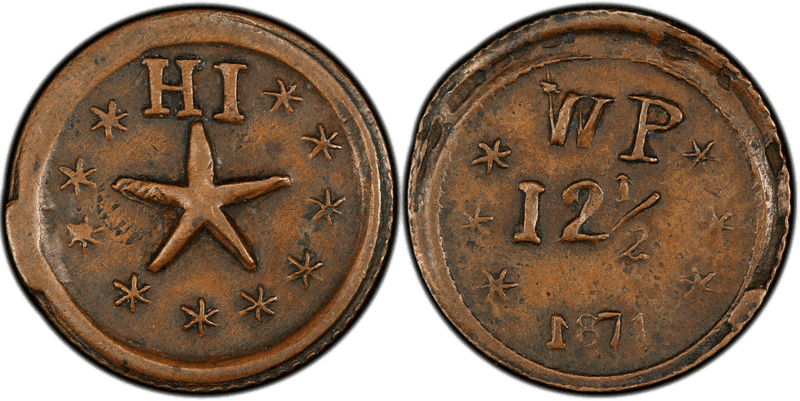
1871 Hawaiian Plantation Token - Wailuku, 12-1/2 Cents, Narrow Starfish
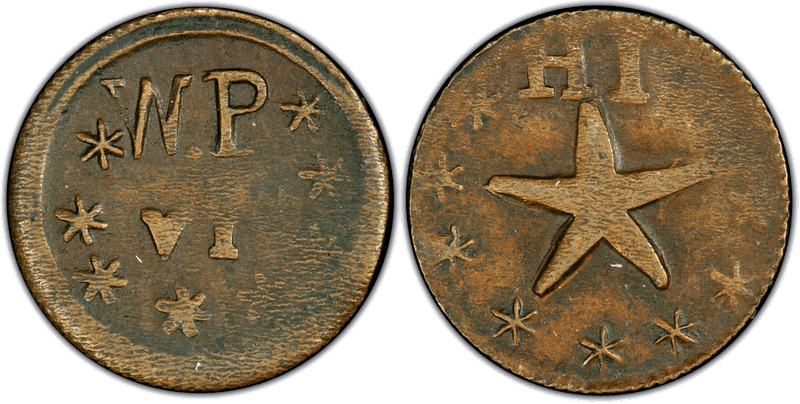
1871 Hawaiian Plantation Token - Wailuku, Half Rial, Narrow Starfish
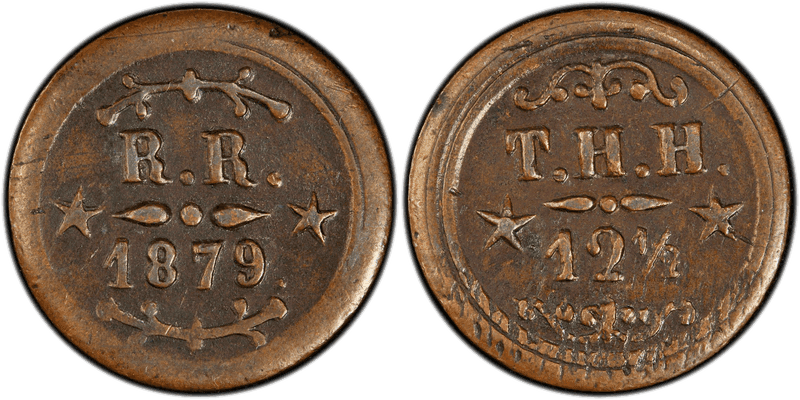
1879 Hawaiian Plantation Token - T. Hobron, 12-1/2 Cents, 2/2 Stars
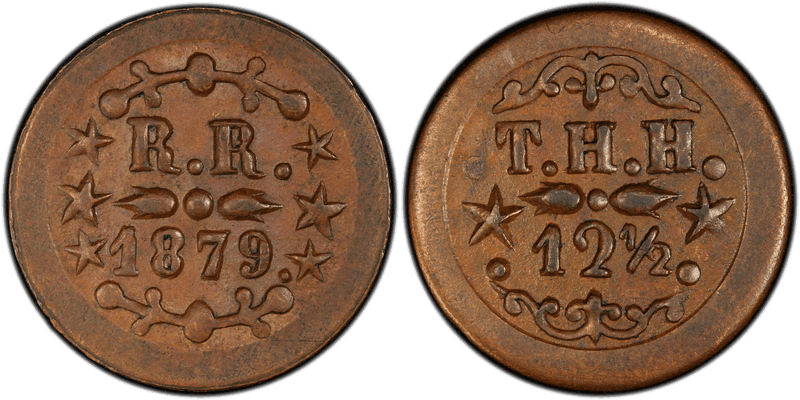
1879 Hawaiian Plantation Token - T. Hobron, 12-1/2 Cents, 2/6 Stars
Collector Essentials
Tools and references for building and protecting your coin collection.
10x-20x Jeweler's Loupe
A must-have for examining coin details, mint marks, and surface quality
Red Book — Guide to U.S. Coins
The essential annual reference for U.S. coin values, history, and mintages
Coin Albums & Storage
Archival-quality albums and holders to protect and display your collection
USB Digital Microscope
Capture detailed images for documentation and community submissions
As an Amazon Associate, NumisDex earns from qualifying purchases.