
(1863) Civil War Store Card F-880D-2a, Julian & Co. OH
Strike Type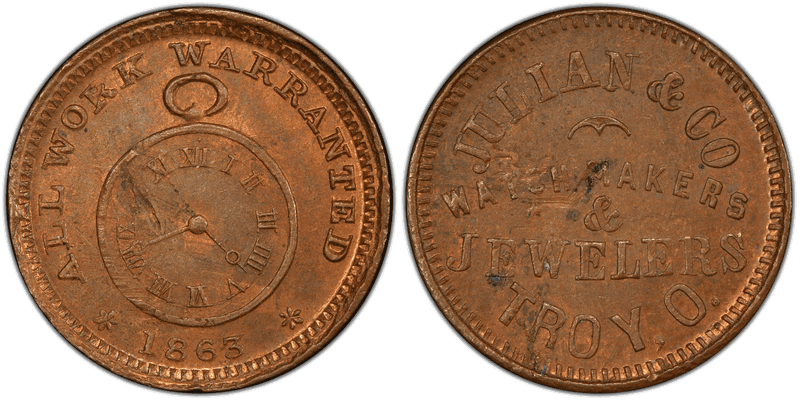
Coin Details
Description
Store card of Julian & Co. in Troy, Ohio, struck during the 1862-1864 token era. Troy was a manufacturing center on the Hudson River known for its iron and steel production, including horseshoe and railroad spike industries. With 2 known varieties, Julian & Co. produced a modest number of token types. This copper striking (Fuld 880D-2a) is common among the known varieties. Die sinkers offered merchants a choice of metals, with copper being cheapest and most common, while silver and gold were struck for collectors. The token era ended when Congress authorized new federal small-denomination currency and criminalized private token production in 1864. After Congress banned private coinage in 1864, the U.S. Mint dramatically increased production of small-denomination coins, and the new bronze two-cent piece helped alleviate the shortage. Surviving specimens are tangible artifacts of the wartime monetary crisis that affected every commercial transaction in the Northern states.
Rarity Notes
Copper strikings are generally the most common metal variant for Civil War store cards, as copper was the standard planchet material mimicking the federal cent. With 2 cataloged varieties, Julian & Co. was a limited producer of Civil War tokens.
Cross References
Fuld 880D-2a
External References
Error Varieties
No listings found
This category doesn't have any child listings yet.