
1860 Clark, Gruber & Co. Ten Dollar Die Trial - Brass
Strike TypeCoin Details
Description
This brass die trial from Clark, Gruber & Company's ten-dollar eagle dies demonstrates the firm's testing of their $10 coinage in a golden-toned base metal. Brass — an alloy of copper and zinc — was a natural choice for die testing because its yellow color approximated the appearance of gold, allowing the coiners to evaluate the visual impact of their design on a piece that roughly resembled the intended final product. Clark Gruber's $10 piece featured the Pikes Peak motif that appeared across all their denominations, establishing a consistent visual identity for their coinage. The eagle denomination was an important part of Clark Gruber's product line: while the $20 double eagle was the prestigious flagship coin, the $10 eagle was more practical for everyday high-value transactions in the mining camps and trading posts of Colorado Territory. The firm's coins were valued for their reliability — independent assays generally confirmed that Clark Gruber coins contained gold equal to or very close to their stated denomination, a claim that not all private coiners could make. This brass die trial is a behind-the-scenes artifact of the firm's quality control process, created before gold production to verify die condition and striking characteristics. The Pikes Peak Gold Rush that sustained Clark Gruber's operation began in 1858 and brought an estimated 100,000 people to the region within a few years, creating the monetary demand that justified private coinage on this scale.
Rarity Notes
Extremely rare. Brass die trials from Clark Gruber are known in only a tiny number of specimens; die trials in any base metal from the firm are highly prized territorial artifacts.
Cross References
Clark, Gruber & Company; Pikes Peak Gold Rush territorial coinage
External References
Error Varieties
No listings found
This category doesn't have any child listings yet.
Other Strike Types in This Series
1860 Clark, Gruber & Co. Five Dollar Die Trial - Copper
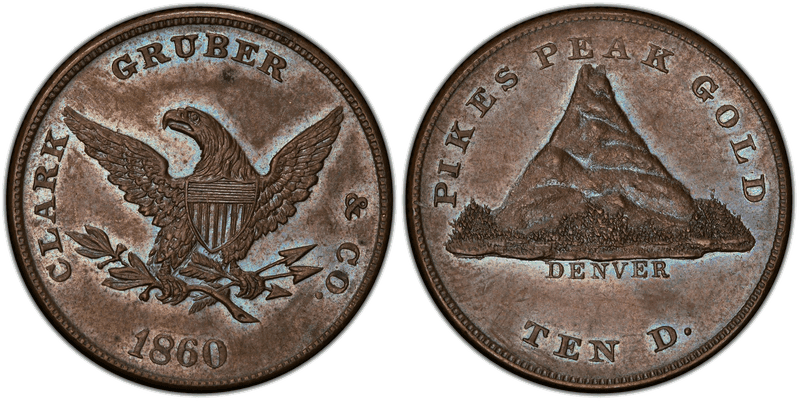
1860 Clark, Gruber & Co. Ten Dollar Die Trial - Copper
1860 Clark, Gruber & Co. Twenty Dollar - Bronze, K-4c, Gilt
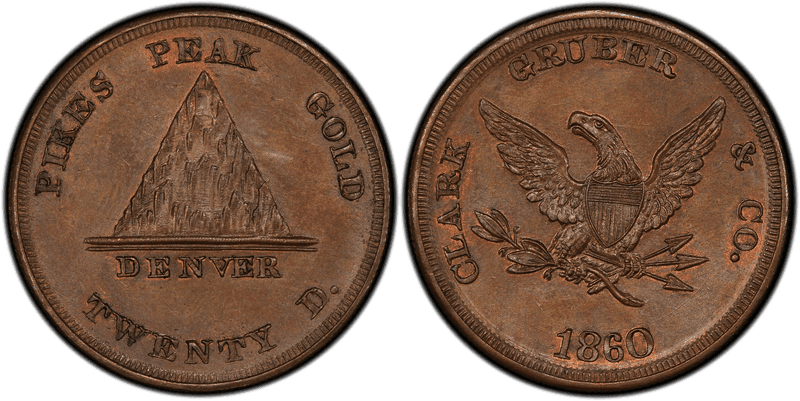
1860 Clark, Gruber & Co. Twenty Dollar Die Trial - Copper
1860 Clark, Gruber & Co. Twenty Dollar Die Trial - K-4b, Gold-Plated Copper
1860 Clark, Gruber & Co. Twenty Dollar Die Trial - Silver
Collector Essentials
Tools and references for building and protecting your coin collection.
10x-20x Jeweler's Loupe
A must-have for examining coin details, mint marks, and surface quality
Red Book — Guide to U.S. Coins
The essential annual reference for U.S. coin values, history, and mintages
Coin Albums & Storage
Archival-quality albums and holders to protect and display your collection
USB Digital Microscope
Capture detailed images for documentation and community submissions
As an Amazon Associate, NumisDex earns from qualifying purchases.