
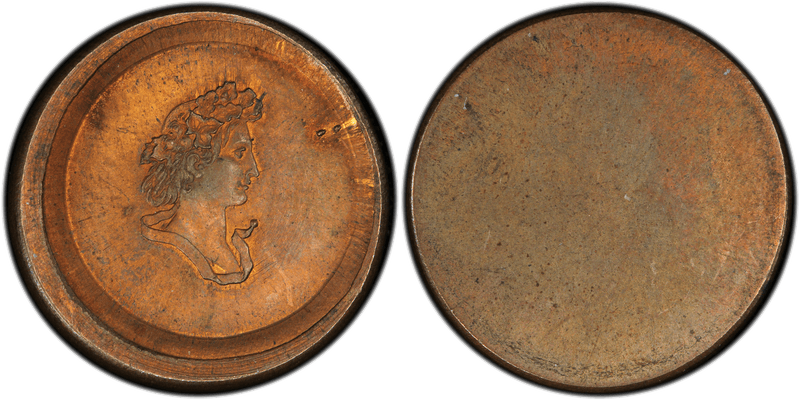
1858 Cent Die Trial - J-A1858-1
Strike Type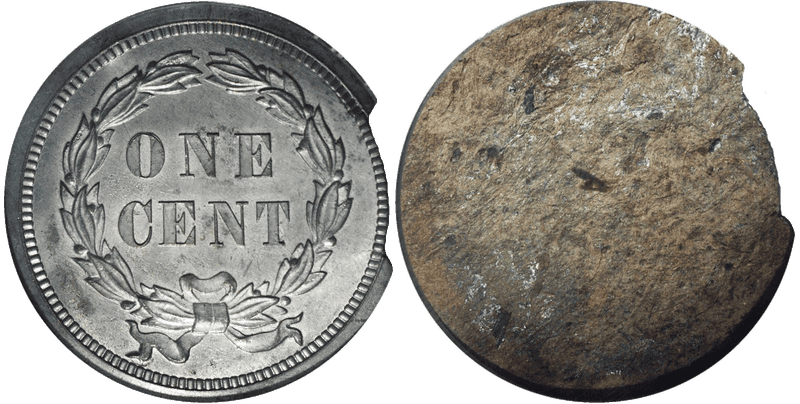
Coin Details
Auction Record
$12,650 MS64 01-04-2006 Heritage Auctions
Description
This die trial of an 1858 cent captures the final full year of the Flying Eagle cent, a denomination that would be replaced by the Indian Head design in 1859. The Flying Eagle cent, designed by James Barton Longacre, had been introduced in 1857 as a radical departure from the large copper cents that had circulated since the 1790s. The new small cent was struck in a copper-nickel alloy (88% copper, 12% nickel) at a reduced diameter of 19 millimeters — roughly the size of the modern cent. The obverse features Longacre's adaptation of the flying eagle motif that Christian Gobrecht had originally designed for the reverse of the Gobrecht dollar, showing an eagle in full flight with outstretched wings. The reverse displays a wreath enclosing "ONE CENT." Despite its beautiful design, the Flying Eagle cent suffered from a significant production problem: the high-relief eagle on the obverse and the dense wreath on the reverse created opposing design elements that made it difficult for the dies to fully strike both sides simultaneously. This die-stress issue ultimately led to the design's abandonment after only three years of regular production. The Judd-A1858-1 die trial documents the Mint's testing of these problematic dies, in an effort to evaluate die life or experiment with relief modifications. The 1858 cent had a large mintage of 24,600,000 pieces, reflecting strong public demand for the new small cents, but maintaining adequate die quality throughout such a production run was a constant challenge.
Rarity Notes
Very rare. Die trials of the Flying Eagle cent are extremely scarce, as the denomination was produced for only three years of regular coinage (1857-1858).
Cross References
Judd-A1858-1
External References
Error Varieties
No listings found
This category doesn't have any child listings yet.
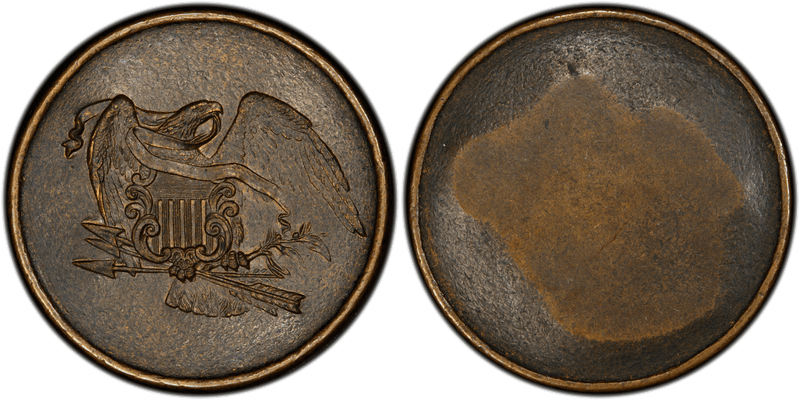
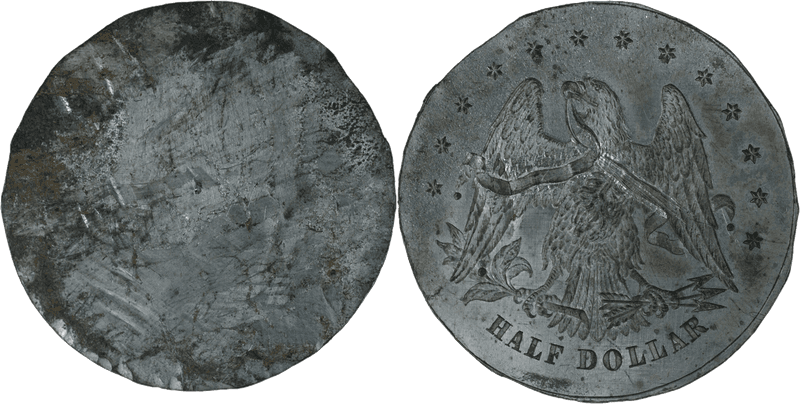
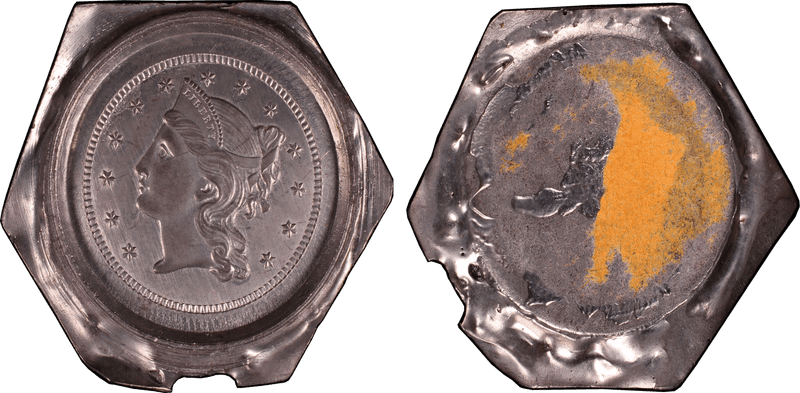
Related Strike Types in This Denomination
Collector Essentials
Tools and references for building and protecting your coin collection.
10x-20x Jeweler's Loupe
A must-have for examining coin details, mint marks, and surface quality
Red Book — Guide to U.S. Coins
The essential annual reference for U.S. coin values, history, and mintages
Coin Albums & Storage
Archival-quality albums and holders to protect and display your collection
USB Digital Microscope
Capture detailed images for documentation and community submissions
As an Amazon Associate, NumisDex earns from qualifying purchases.