
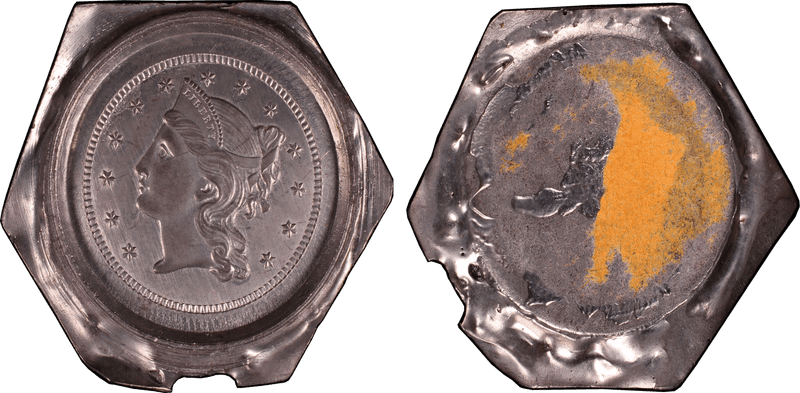
1857 Double Eagle Hub Trial - J-A1857-5, Reverse
Strike Type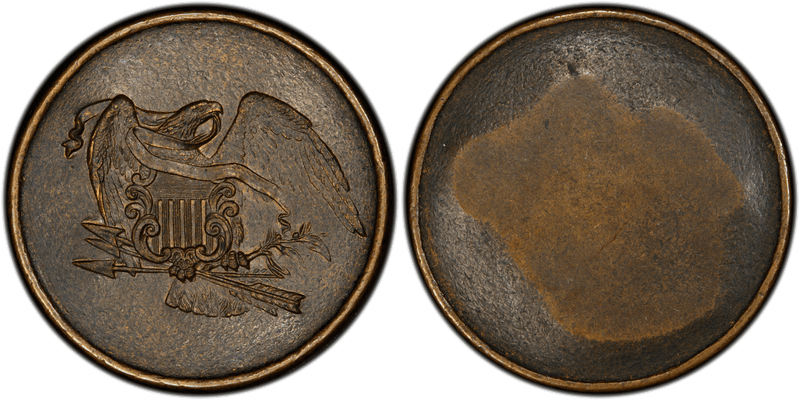
Coin Details
Description
This reverse hub trial of an 1857 double eagle tests the master hub rather than a working die — a distinction that places it one step higher in the die-making hierarchy. In the production chain of 19th-century coinage, the process began with the master die (engraved by hand), which was used to create a master hub (a positive impression), which in turn was used to sink multiple working dies (negative impressions). A hub trial tests the master hub itself, verifying that the engraver's design transferred correctly from the original master die to the hub. If a defect existed in the hub, it would be replicated in every working die produced from it, making hub quality control of paramount importance. This reverse hub trial captures the eagle side of the double eagle denomination — Longacre's spread eagle with shield, olive branch, arrows, and inscriptions. The hub impression may look subtly different from a die trial because the hub is the positive version of the design (relief, like the finished coin), while a die is the negative (incuse). Testing the hub ensured that the relief height, detail sharpness, and letter placement were all correct before the Mint invested the labor of sinking multiple working dies. Hub trials are considerably rarer than die trials because far fewer hubs existed than working dies — typically only one or two master hubs served an entire year's production, while dozens of individual working dies might be consumed.
Rarity Notes
Extremely rare. Hub trials of the double eagle denomination are among the rarest Mint artifacts, as each hub produced many working dies and far fewer test impressions were needed.
Cross References
Judd-A1857-5
External References
Error Varieties
No listings found
This category doesn't have any child listings yet.
Other Strike Types in This Series


Collector Essentials
Tools and references for building and protecting your coin collection.
10x-20x Jeweler's Loupe
A must-have for examining coin details, mint marks, and surface quality
Red Book — Guide to U.S. Coins
The essential annual reference for U.S. coin values, history, and mintages
Coin Albums & Storage
Archival-quality albums and holders to protect and display your collection
USB Digital Microscope
Capture detailed images for documentation and community submissions
As an Amazon Associate, NumisDex earns from qualifying purchases.