
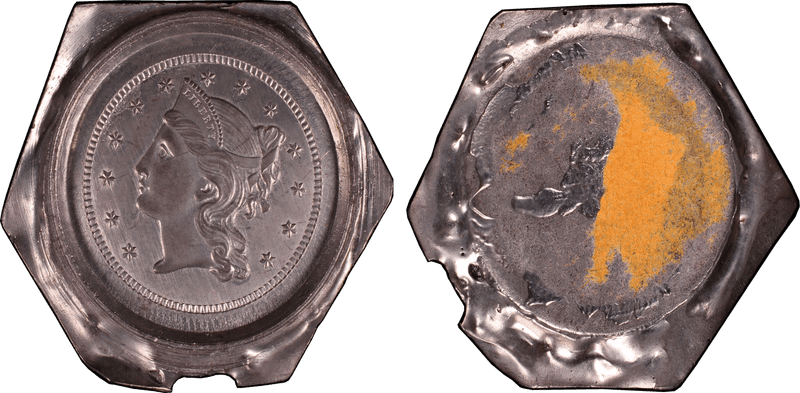
1857 Double Eagle Die Trial - J-A1857-7, Reverse
Strike Type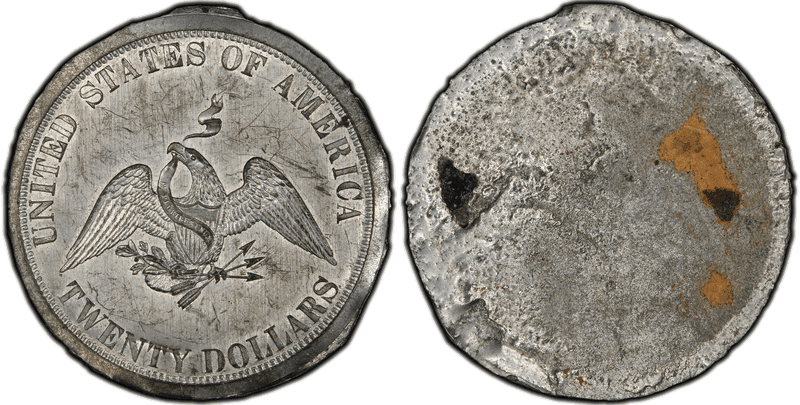
Coin Details
Auction Record
$7,050 MS64 10-31-2014 Stack's Bowers
Description
This die trial captures the reverse of an 1857 Liberty Head double eagle ($20 gold coin), the largest regular-issue denomination produced by the United States Mint. The reverse features James Barton Longacre's heraldic eagle design with a shield on its breast, clutching an olive branch and arrows, with "UNITED STATES OF AMERICA" above and "TWENTY D." below, encircled by a ring of stars and rays. The double eagle was introduced in 1850 to accommodate the vast quantities of gold flowing from California, and by 1857 the denomination was well established in American commerce. Reverse-only die trials like this specimen were struck to test a single die in isolation, which allowed Mint technicians to inspect its condition without the complication of a paired obverse die. The material composition is unspecified in catalog records, indicating it was struck on whatever blank was convenient — a common practice for internal die testing. The 1857 date falls within the prolific mid-century production of double eagles, with 439,375 pieces struck at Philadelphia alone that year. Die trials from high-denomination gold dies are particularly significant because they document the Mint's quality control for its most valuable coins.
Rarity Notes
Very rare. Reverse die trials of Liberty Head double eagles are seldom encountered, with most individual varieties known in one to three specimens.
Cross References
Judd-A1857-7
External References
Error Varieties
No listings found
This category doesn't have any child listings yet.
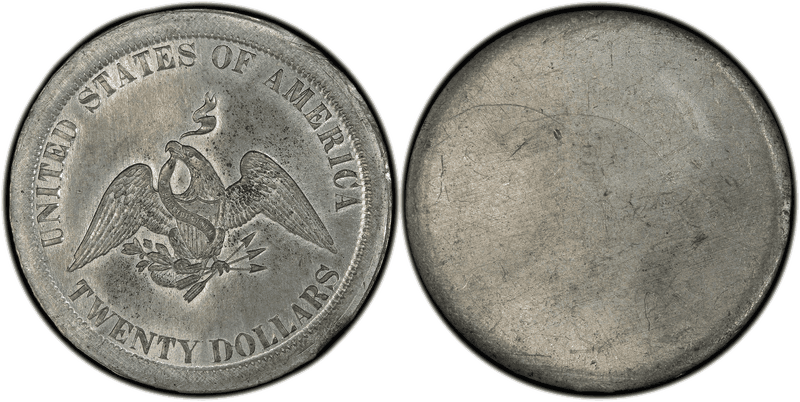
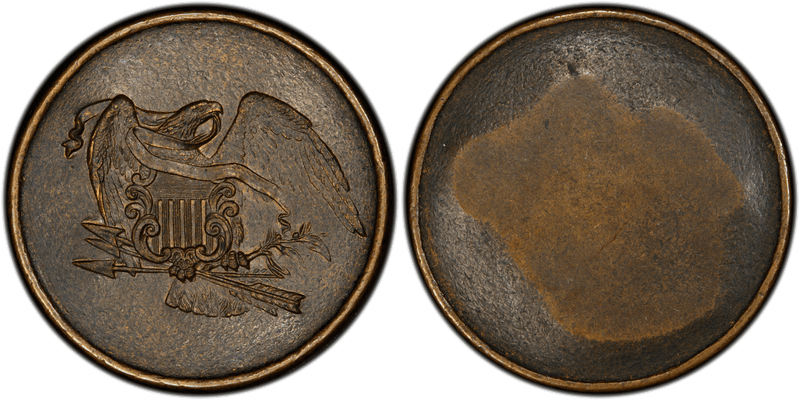
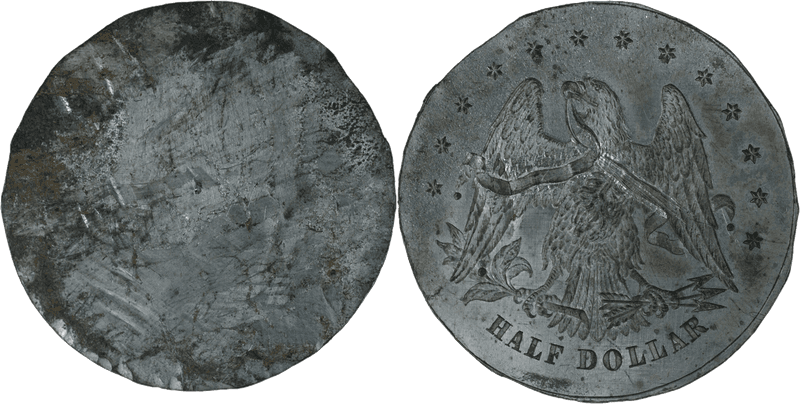
Other Strike Types in This Series


Collector Essentials
Tools and references for building and protecting your coin collection.
10x-20x Jeweler's Loupe
A must-have for examining coin details, mint marks, and surface quality
Red Book — Guide to U.S. Coins
The essential annual reference for U.S. coin values, history, and mintages
Coin Albums & Storage
Archival-quality albums and holders to protect and display your collection
USB Digital Microscope
Capture detailed images for documentation and community submissions
As an Amazon Associate, NumisDex earns from qualifying purchases.