
1851 State of California, K-3 Gold Eagle
Strike TypeCoin Details
Auction Record
$15,000 PR65 03-01-1980 Bowers & Ruddy
Description
The 1851 State of California K-3 gold eagle is a ten-dollar denomination from California's unique experiment in state-authorized coinage. The eagle was the largest denomination struck under the program overseen by State Assayer Frederick D. Kohler, and at ten dollars it represented a substantial concentration of gold that magnified the underweight controversy plaguing the state coinage from its inception. The State of California eagle is among the most significant territorial gold coins in terms of governmental authority. While numerous private firms struck gold coins during the Gold Rush, only the State of California operated under direct legislative authorization, making its coins something between private issues and federal coinage in legal standing. This quasi-governmental status gives State of California gold a special appeal to collectors interested in the constitutional boundaries of coinage authority in American history. Despite the scandal that ended the program, State of California eagles circulated in Gold Rush commerce and served their intended economic purpose before the San Francisco Mint rendered all territorial coinage obsolete. Surviving examples command substantial premiums reflecting both their rarity and their unique governmental provenance.
Rarity Notes
Very rare. Fewer than 15 examples estimated. The eagle denomination is scarcer than the quarter eagle.
Cross References
K-3 (Kagin). State of California $10 gold eagle. Frederick D. Kohler, State Assayer.
External References
Error Varieties
No listings found
This category doesn't have any child listings yet.
Other Strike Types in This Series
1851 California Two and a Half Dollar - K-1b Restrike
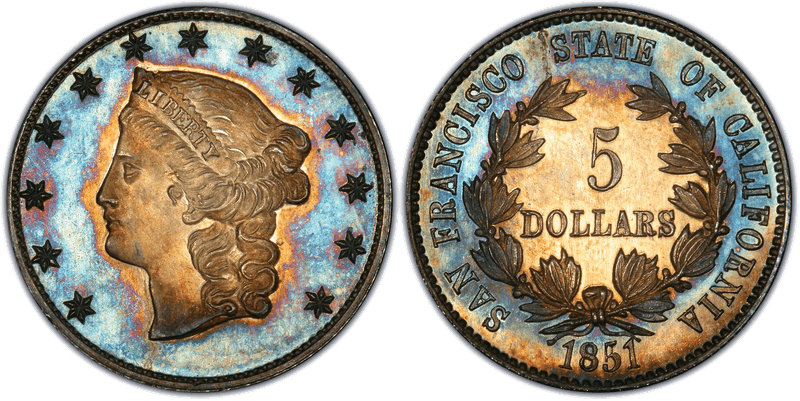
1851 Half Eagle Die Trial - K-2, State of California, Silver
1851 Half Eagle Die Trial - K-2a, State of California, Copper
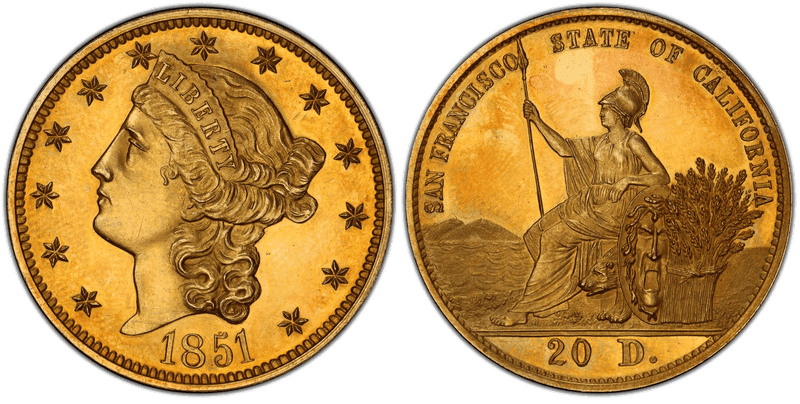
1851 Silver State of California, Gilt Gold Double Eagle
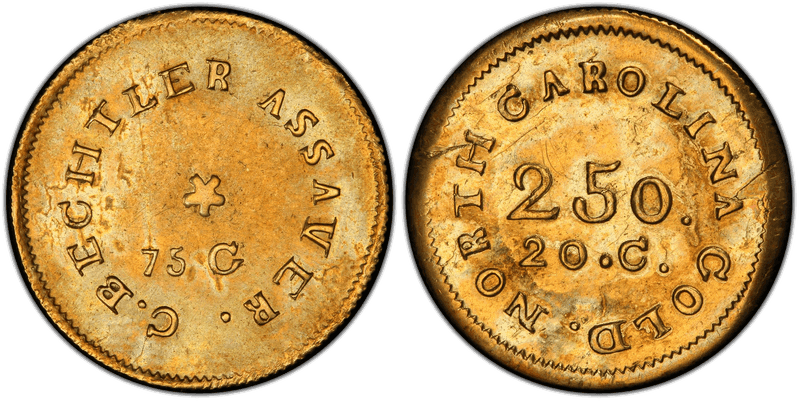
1851 State of California K-1a Gold Quarter Eagle
1851 State of California Ten Dollar - Copper
Collector Essentials
Tools and references for building and protecting your coin collection.
10x-20x Jeweler's Loupe
A must-have for examining coin details, mint marks, and surface quality
Red Book — Guide to U.S. Coins
The essential annual reference for U.S. coin values, history, and mintages
Coin Albums & Storage
Archival-quality albums and holders to protect and display your collection
USB Digital Microscope
Capture detailed images for documentation and community submissions
As an Amazon Associate, NumisDex earns from qualifying purchases.