
1851 State of California, K-1 Gold Quarter Eagle
Strike Type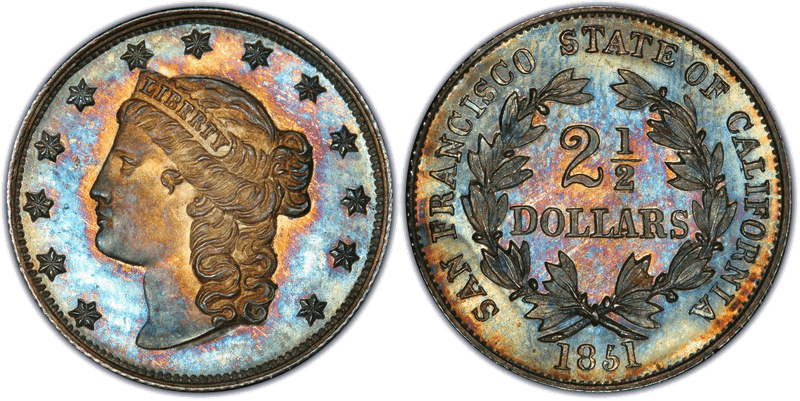
Coin Details
Auction Record
$23,000 GEM UNC 10-01-2007 Stack's
Description
The 1851 State of California K-1 gold quarter eagle is a product of the only official state-authorized coinage operation in California Gold Rush history. In 1851, the California legislature authorized production of gold coins under supervision of Frederick D. Kohler, the State Assayer, creating a unique category of territorial gold that carried quasi-governmental authority rather than purely private backing. This two-and-a-half dollar piece features designs specific to the state authorization, with markings identifying it as an official California state issue. The K-1 designation in the Kagin catalog identifies this as the first die variety of the quarter eagle denomination. The State of California coinage program was controversial from the outset. The coins were found to contain significantly less gold than their face value, causing a public scandal that undermined confidence in the state's monetary authority. This underweight controversy was particularly damaging because the coins carried official state sanction. Despite the historical controversy, these coins are highly prized today as the only gold coins struck under the authority of an American state government, a distinction that gives them unique constitutional and numismatic significance.
Rarity Notes
Rare. Estimated 20-35 known examples. Demand exceeds supply due to the unique state coinage historical status.
Cross References
K-1 (Kagin). Frederick D. Kohler, State Assayer. California state-authorized coinage of 1851.
External References
Error Varieties
No listings found
This category doesn't have any child listings yet.
Other Strike Types in This Series
1851 California Two and a Half Dollar - K-1b Restrike
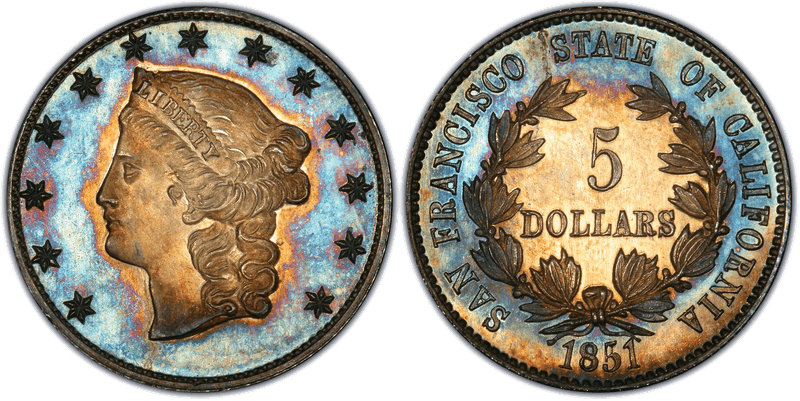
1851 Half Eagle Die Trial - K-2, State of California, Silver
1851 Half Eagle Die Trial - K-2a, State of California, Copper
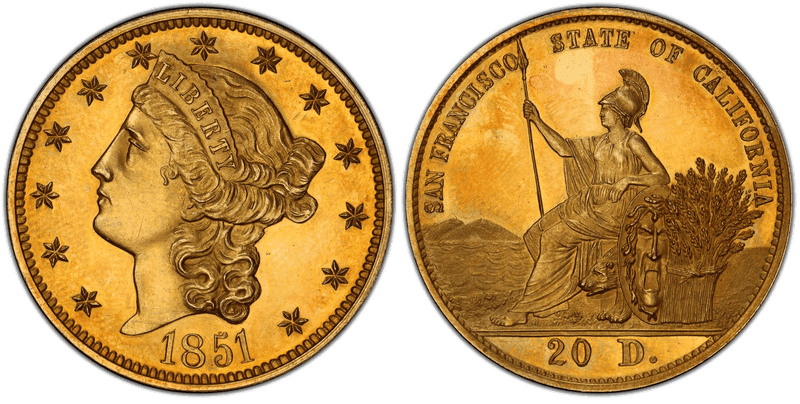
1851 Silver State of California, Gilt Gold Double Eagle
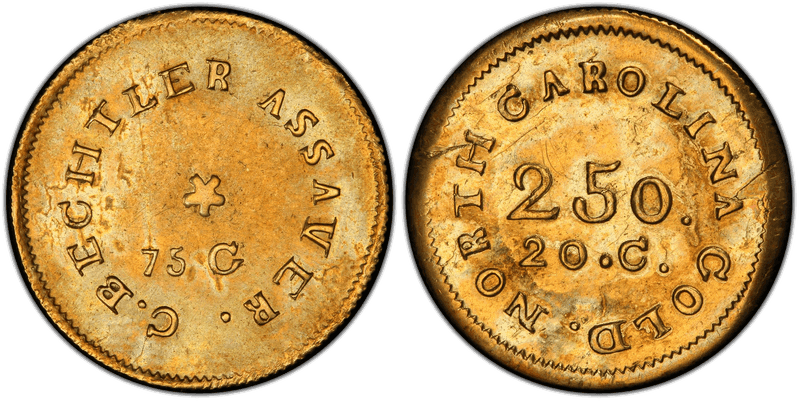
1851 State of California K-1a Gold Quarter Eagle
1851 State of California Ten Dollar - Copper
Collector Essentials
Tools and references for building and protecting your coin collection.
10x-20x Jeweler's Loupe
A must-have for examining coin details, mint marks, and surface quality
Red Book — Guide to U.S. Coins
The essential annual reference for U.S. coin values, history, and mintages
Coin Albums & Storage
Archival-quality albums and holders to protect and display your collection
USB Digital Microscope
Capture detailed images for documentation and community submissions
As an Amazon Associate, NumisDex earns from qualifying purchases.