
1849 Proof Dollar Pattern - J-116
Strike TypeCoin Details
Description
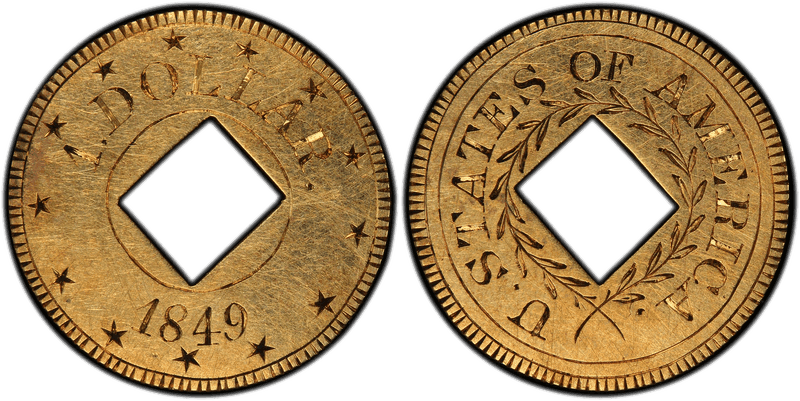
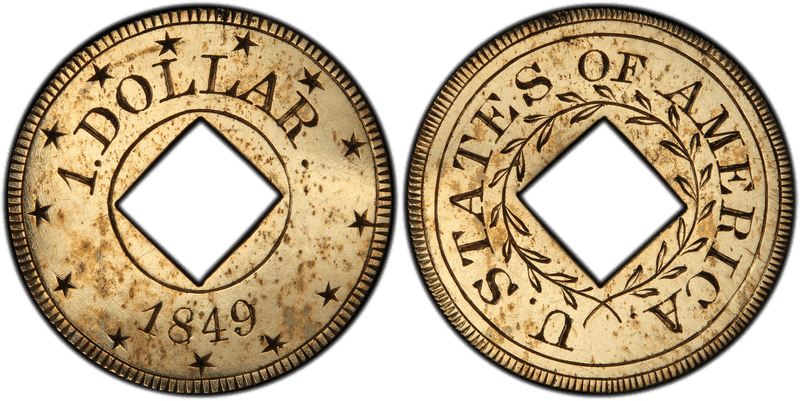
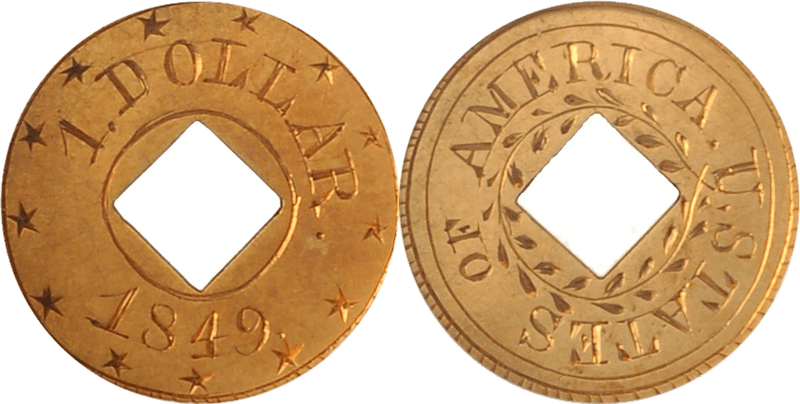
Judd-116, Pollock-131, is the gold-plated silver (or low-karat gold) version of the 1849 perforated dollar pattern, closely related to J-115. The obverse features the same ring-format design with 1 DOLLAR and 1849 arranged around a central perforation, and the reverse carries a laurel wreath with UNITED STATES OF AMERICA. The composition has been the subject of considerable numismatic debate, as metallurgical analysis of surviving specimens has produced varying results. Several examples traditionally described as gold-plated silver have proven upon scientific examination to be struck in low-karat gold alloys, indicating the Mint was experimenting with reduced-fineness gold compositions as well as alternative planchet formats. This dual experimentation — simultaneously testing both the ring format and different alloy compositions — demonstrates the thoroughness with which the Mint approached the introduction of the new denomination. The 1849 gold dollar patterns are among the most studied pieces in the Judd catalog because they document a pivotal moment in American monetary history. The California Gold Rush had created an unprecedented supply of gold, driving down its value relative to silver and making a gold dollar economically feasible for the first time. Chief Engraver Longacre prepared multiple design concepts, and these perforated patterns represent his most innovative proposal. That the Mint struck them in varying compositions — gold, gilded silver, and copper — indicates serious consideration of the ring concept before the conventional solid-planchet design was selected for production.
Rarity Notes
R.8. Approximately 4-5 examples known. Composition varies between true gold-plate-on-silver and low-karat gold alloys.
Cross References
Judd-116; Pollock-131; cf. J-115 (gold version)
External References
Error Varieties
No listings found
This category doesn't have any child listings yet.
Other Strike Types in This Series
Collector Essentials
Tools and references for building and protecting your coin collection.
10x-20x Jeweler's Loupe
A must-have for examining coin details, mint marks, and surface quality
Red Book — Guide to U.S. Coins
The essential annual reference for U.S. coin values, history, and mintages
Coin Albums & Storage
Archival-quality albums and holders to protect and display your collection
USB Digital Microscope
Capture detailed images for documentation and community submissions
As an Amazon Associate, NumisDex earns from qualifying purchases.