
1849 Oregon Five Dollar - Gold Restrike
Strike TypeCoin Details
Description
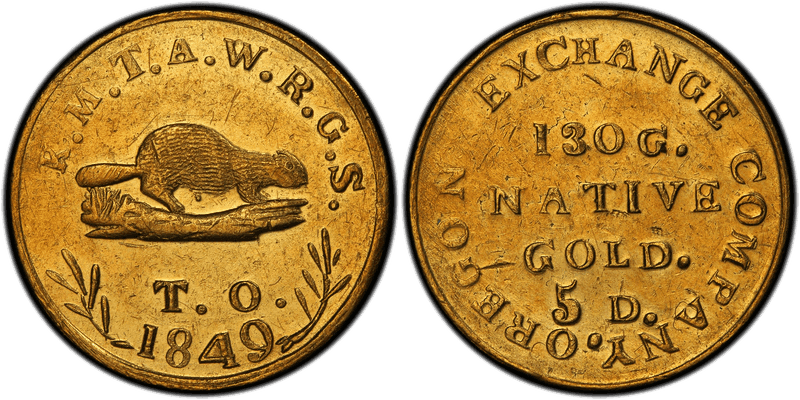
The 1849 Oregon Exchange Company Five Dollar gold restrike is a later impression from the original dies used to produce the territorial coinage in Oregon City. After the Oregon Exchange Company ceased minting operations in 1849, the original dies survived and eventually came into the possession of collectors and numismatic entrepreneurs. Restrikes were produced at various points during the nineteenth century, from the 1850s through the 1870s, using the original obverse and reverse dies paired with gold planchets that may differ in weight and fineness from the original 1849 issues. The restrikes share the iconic beaver obverse and wreathed denomination reverse of the originals, though careful examination reveals differences in strike quality, planchet preparation, and overall sharpness that distinguish them from the 1849 production strikes. The restrikes were typically struck with greater care than the hastily produced originals, resulting in sharper detail on the beaver's fur and clearer inscriptions — paradoxically giving the copies a more refined appearance than the genuine frontier products. While these restrikes are not original 1849 coinage, they occupy an important place in Oregon numismatic history. They were produced using the authentic dies that Hamilton Campbell and Victor Wallace engraved for the territorial mint, making them direct impressions from the tools of the only private mint to operate in the Oregon Territory. The gold restrikes are considerably rarer and more valuable than the white metal and copper restrikes also known from these dies.
Rarity Notes
Very rare. Substantially fewer gold restrikes exist than original 1849 strikings. An estimated 10-20 gold restrikes survive. These command strong prices despite their restrike status due to the use of original dies and gold composition.
External References
Error Varieties
No listings found
This category doesn't have any child listings yet.
Other Strike Types in This Series
Collector Essentials
Tools and references for building and protecting your coin collection.
10x-20x Jeweler's Loupe
A must-have for examining coin details, mint marks, and surface quality
Red Book — Guide to U.S. Coins
The essential annual reference for U.S. coin values, history, and mintages
Coin Albums & Storage
Archival-quality albums and holders to protect and display your collection
USB Digital Microscope
Capture detailed images for documentation and community submissions
As an Amazon Associate, NumisDex earns from qualifying purchases.