
1849 Double Eagle Die Trial - Cincinnati Mining & Trading, Reverse
Strike Type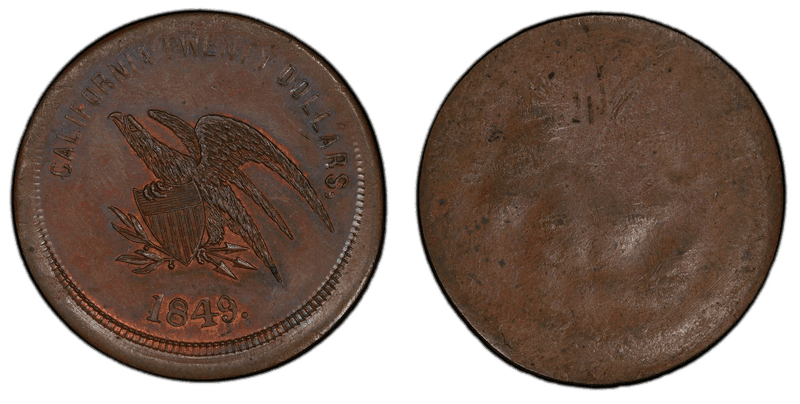
Coin Details
Description
This reverse-only die trial preserves one side of the twenty-dollar gold piece produced by the Cincinnati Mining & Trading Company during the California Gold Rush. The discovery of gold at Sutter's Mill in January 1848 created an unprecedented monetary crisis in California — enormous quantities of raw gold dust and nuggets circulated as currency, but there was no government mint to convert them into standardized coins. Private firms rushed to fill this void, and the Cincinnati Mining & Trading Company was among those that struck gold coins for commercial use. Their twenty-dollar piece was the largest denomination attempted by any private Gold Rush coiner, reflecting the vast quantities of gold available and the need for high-value coinage in a booming economy. This reverse die trial, struck from only the reverse die, was produced to test that die in isolation. Single-die impressions allowed the coiner to inspect one die's performance without the complicating effects of a paired strike. The Cincinnati Mining & Trading Company's operations were brief, and their coins are among the rarest of all California Gold Rush private issues. The reverse design typically features an eagle or heraldic motif with the company's name and denomination. Die trials from Gold Rush private minters are extraordinary survivals of frontier American commerce.
Rarity Notes
Extremely rare, unique. Reverse die trials from Cincinnati Mining & Trading are among the rarest territorial numismatic items; the company's gold coins themselves are great rarities.
Cross References
Cincinnati Mining & Trading Company; California Gold Rush territorial coinage
External References
Error Varieties
No listings found
This category doesn't have any child listings yet.
Other Strike Types in This Series
Collector Essentials
Tools and references for building and protecting your coin collection.
10x-20x Jeweler's Loupe
A must-have for examining coin details, mint marks, and surface quality
Red Book — Guide to U.S. Coins
The essential annual reference for U.S. coin values, history, and mintages
Coin Albums & Storage
Archival-quality albums and holders to protect and display your collection
USB Digital Microscope
Capture detailed images for documentation and community submissions
As an Amazon Associate, NumisDex earns from qualifying purchases.